
How Many Btu Ac For 1000 Sq Ft

Alright, let's be real. You've been there. It’s the middle of summer, the sun is blazing like a forgotten broiler, and your house feels less like a home and more like a human-sized oven. You crank the AC, cross your fingers, and... nothing. Or maybe it’s doing something, but it’s still vaguely tropical indoors. That's when you start hearing whispers about "BTUs" and "square footage," and suddenly, cooling your home feels like advanced rocket science.
Fear not, my sweat-prone friend! We're here to demystify the great BTU puzzle, especially for that magic number: 1000 square feet. Think of this as your breezy, no-sweat guide to understanding why your AC might be struggling, and how to make sure it’s got enough oomph to turn your personal sauna into a chilled-out oasis.
What in the World is a BTU Anyway?
Before we dive into square footage, let's tackle the elephant in the sweltering room: what's a BTU? It sounds like a secret government agency or a new brand of energy drink, right? But it's actually super simple. BTU stands for British Thermal Unit. In plain English? It’s basically the unit of measurement for heat energy. More specifically, one BTU is the amount of energy it takes to raise the temperature of one pound of water by one degree Fahrenheit. Yeah, science! But here’s the casual version:
Must Read
Think of it as your AC's muscle. The higher the BTU number, the more heat-lifting power your AC unit has. It’s like comparing a tiny teacup poodle trying to pull a wagon to a mighty Samson pulling a truck. You want your AC to be a Samson, not a fluffy purse dog, especially when it's battling a heatwave!
So, 1000 Sq Ft... What's the Magic Number?
Okay, the million-dollar question for your 1000 sq ft pad! If you're looking for a quick and dirty answer, a very rough rule of thumb is that you generally need about 20 BTUs per square foot. So, for a standard 1000 sq ft space, you're looking at needing an AC unit with around 20,000 BTUs. Easy peasy, right?
Well, not quite. That's a great starting point, but it's like saying "a car needs an engine." True, but a sports car needs a different engine than a school bus, even if they both drive on roads. Your home has its own quirks and personality, and those quirks really matter when picking the right BTU size.

But Wait, There's More! The BTU Benders
This is where your house's specific vibe comes into play. Think of these as the "challenge levels" for your AC unit. Each one might push that 20,000 BTU estimate up or down a bit.
Your Home's Personality Matters
-
Sunny Disposition (or lack thereof): Does your living room have giant, south-facing windows that soak up sun all day like a lizard on a hot rock? Or do you have plenty of shade? A sunbeam superhighway means your AC has to work harder, possibly adding 10% more BTUs to the calculation.
-
Insulation Situation: Is your home a cozy, sealed thermos, or more like a leaky sieve from the turn of the century? Good insulation keeps the cool air in and the hot air out. Poor insulation means your AC is constantly battling the outside world, like a bouncer at a club trying to keep unwanted guests from sneaking in.
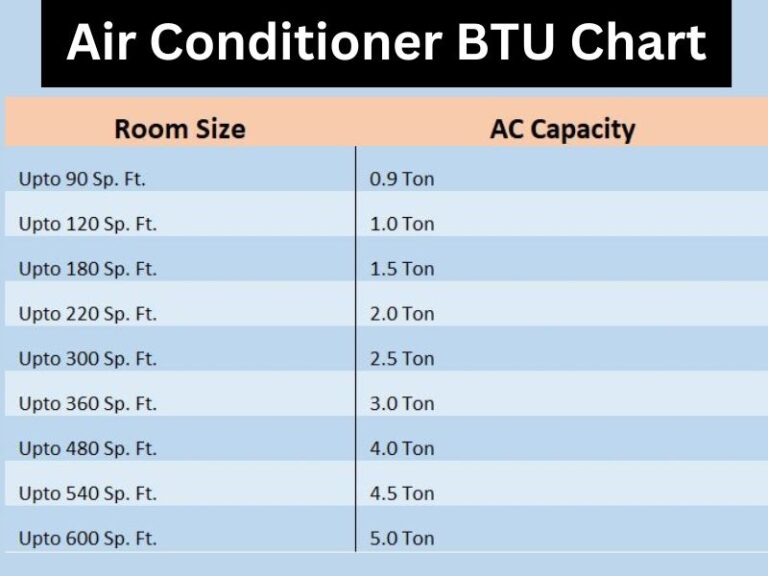
Air Conditioner BTU Calculator With Chart And Guide -
Ceiling Height Shenanigans: Standard 8-foot ceilings are one thing. But if you've got dramatic cathedral ceilings or vaulted spaces, you've got more air volume to cool. It's like trying to cool a normal-sized room versus cooling a mini-gymnasium – more space, more work for your AC.
-
People Power: Each warm body in your 1000 sq ft space is essentially a tiny, walking heater. If you often have a house full of friends, family, or a herd of teenagers, remember to factor in about 600 BTUs per person. Your AC is essentially fighting a constant internal heat generation battle!
-
Appliance Army: Think about it. Your big-screen TV, your computer, that oven you just used to bake cookies (bless your heart for baking in summer!) – they all generate heat. It's usually a minor factor, but if your 1000 sq ft is also home to a server farm, well, that's another story!

Air Conditioner Buying Guide - Handyman tips -
Local Climate Check: Are you battling the relentless humidity of Florida or the milder summers of the Pacific Northwest? Obviously, a place that regularly hits triple digits will demand more BTU firepower than one that enjoys gentle breezes.
The Goldilocks Principle: Not Too Much, Not Too Little
You might think, "Heck, I'll just get the biggest BTU AC unit I can find and blast that heat into oblivion!" And while that sounds like a tempting power move, it’s actually a classic rookie mistake. Sizing your AC isn't just about raw power; it's about finding the perfect balance.
When Your AC's Got Too Much Swagger (Too Many BTUs)
An AC unit that's too powerful for your 1000 sq ft space is like putting a Formula 1 engine in a golf cart. It'll get the job done super fast, but then it'll shut off. And then turn on again for a super-short burst. This is called "short cycling." While it might cool quickly, it doesn't run long enough to effectively remove humidity. So, you end up with a house that feels cool, but also strangely clammy and damp – not exactly the refreshing haven you were hoping for. Plus, it wears down your unit faster and can be less energy efficient.

When Your AC's Trying Its Best, But It's Just Not Enough (Too Few BTUs)
This is the scenario most of us dread. Your AC is working overtime, huffing and puffing like a marathon runner up a mountain, but it never quite reaches the finish line. It runs constantly, struggling to keep up with the heat load. Your energy bills will skyrocket because it’s always on, and your house will still feel uncomfortably warm. It’s the definition of a losing battle, and you'll be left feeling sticky and frustrated.
The Takeaway: Don't Sweat It (Literally!)
So, for your 1000 sq ft home, while 20,000 BTUs is a fantastic starting point, remember that it's just the appetizer, not the whole meal. The real secret sauce comes from considering all those little details about your home's unique personality.
The best advice? Use this information to understand the factors at play, but when it comes down to making the final decision, always call in a qualified HVAC professional. They can do a proper "load calculation" for your specific home, taking into account all the quirks and features that make your 1000 sq ft space unique. They'll ensure you get a system that’s just right – not too big, not too small, but perfectly suited to keep you cool, comfortable, and blissfully sweat-free. Now go forth and conquer that heat!