
How Many Amps Is A Well Pump

Alright, settle in, grab your imaginary coffee (or a real one, I won't judge), because we're about to dive into one of life's great mysteries, one that keeps plumbers, homeowners, and even the occasional curious cat up at night: How many amps does a well pump pull?
Now, if you were expecting a snappy, one-word answer like "seven!" or "enough to make your hair stand on end!", then buckle up, buttercup. Because the truth, much like a good story, is a little more nuanced. It's less a single number and more a wild, unpredictable dance, a performance worthy of a Broadway stage.
Think of it this way: asking "how many amps does a well pump pull?" is a bit like asking "how much does a car cost?" Is it a rusty jalopy with three wheels and a squirrel powering the radio? Or is it a sleek, supercharged beast that drinks gasoline like it's a fine wine? See? It totally depends!
Must Read
The "It Depends" Tango: What Makes the Amps Swing?
So, what are the secret ingredients in this electrical stew? What makes one pump a polite sipper of electrons and another a ravenous, electricity-guzzling monster? Primarily, my friend, it comes down to a few key players:
- Horsepower (HP): The brawn.
- Voltage: The push.
- Pump Type: Is it a submersible superstar or a jet-powered dynamo?
- Well Depth & Water Pressure: How hard is it working?
Let's wrangle these factors one by one, shall we?
Horsepower Hysteria: The Bigger the Beast, the Thirstier It Is
This is probably the most obvious one. A tiny pony sips water; a Clydesdale guzzles it. Same goes for well pumps and electricity. Horsepower (HP) is essentially your pump's muscle rating. The more muscle it has, the more power it needs to flex.
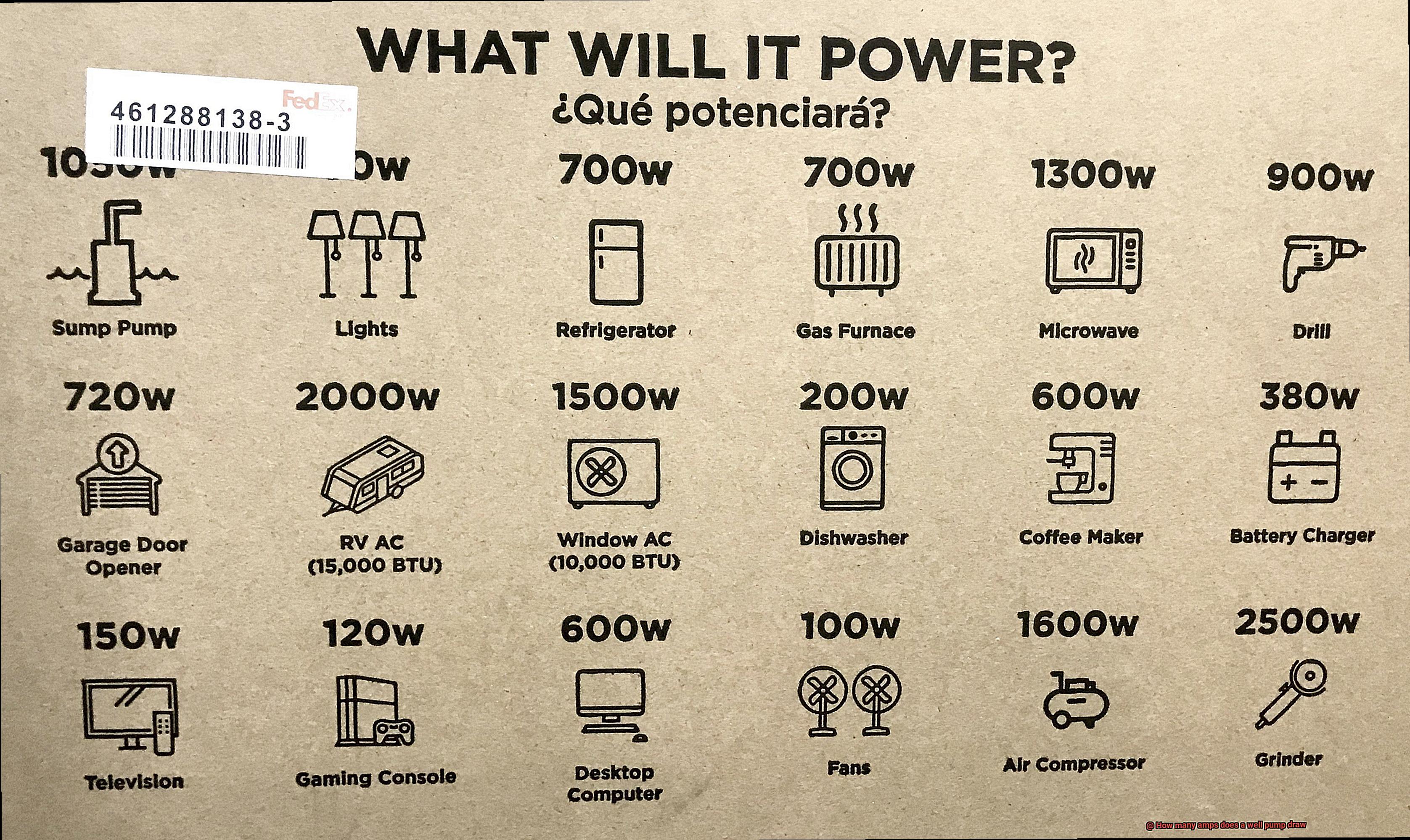
Here's a general, friendly neighborhood guide. Remember, these are like rough estimates from your favorite uncle who means well but sometimes exaggerates a little:
For a typical 1/2 HP well pump:
If it's running on 115 volts (your standard wall outlet juice, but beefier): Expect around 6 to 10 amps.
If it's a more efficient 230-volt setup: It’ll sip at about 3 to 5 amps. See? Higher voltage, lower amps for the same work! It's like magic, but with wires.
Stepping up to a 1 HP well pump:
On 115 volts: You're looking at something in the ballpark of 10 to 15 amps.
On 230 volts: It’ll be a more modest 5 to 8 amps. Notice how 230V almost halves the amperage? That’s why it’s often preferred for bigger motors – less strain on your wiring!
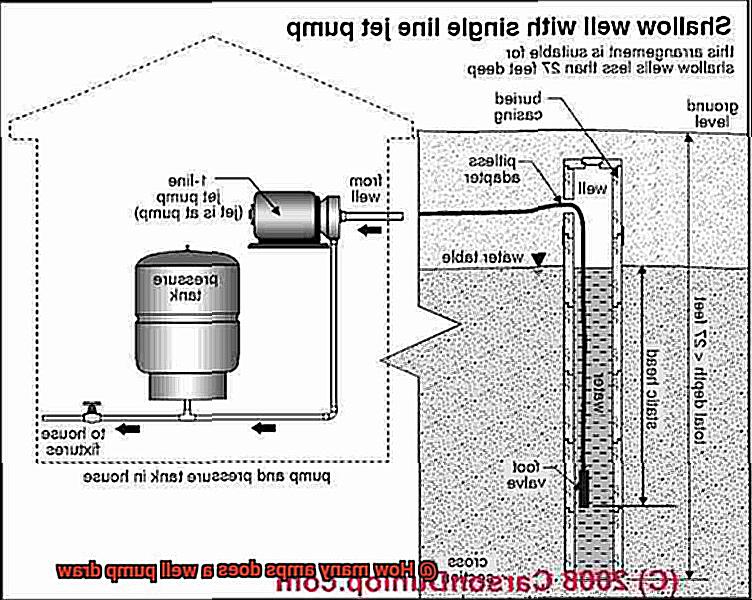
And for the popular 1.5 HP well pump:
If it's chugging along on 115 volts: Prepare for roughly 15 to 20 amps. This is getting into "dedicated circuit" territory, my friend.
On 230 volts: A much more manageable 7 to 10 amps. Still a robust pull, but less likely to trip your main breaker if you sneeze too hard.
Now, if you've got one of those industrial-strength, "suck-water-from-the-Earth's-molten-core" 3 HP or 5 HP monsters, well, those are almost always 230V or even higher, and they'll pull significantly more amps. But let's assume you're not trying to water a small continent from your backyard well.
The Silent Killer: Starting Amps (The Electrician's Nightmare Fuel)
Here's where it gets truly interesting, and where many a homeowner (and their electrical panel) has learned a harsh lesson. You see, a well pump, especially when it first kicks on, is like a drowsy teenager hitting the snooze button five times before finally deciding to conquer the day. It needs a huge jolt of energy to get going.
This initial surge is called Locked Rotor Amps (LRA) or Starting Amps. And it can be anywhere from 3 to 5 times higher than its normal running amps (Full Load Amps or FLA)! Yes, you read that right. That 10-amp running pump? It might momentarily demand 30-50 amps just to start.

Imagine trying to push a stalled car. The initial heave is always the hardest, right? Once it's rolling, it's easier to keep it going. Your well pump is the same. This is why a perfectly good 20-amp breaker might trip every time your pump starts, even if its running amps are well below 20. The breaker is saying, "Whoa there, cowboy! That's too much for my little wires!"
Why Should You Even Care About These Amps, Anyway?
"Okay, great," you might be thinking. "My pump is an electrical diva. So what?" Well, knowing these amp ratings is super important for a few reasons that can save you a headache (and potentially a small fortune):
- Breaker Sizing: Too small a breaker? Annoying trips. Too large? Fire hazard. Goldilocks zone, people!
- Wiring: You need wires thick enough to handle the current, especially those starting amps. Undersized wires mean overheating, inefficiency, and... you guessed it, fire risk.
- Generator Sizing: Planning for a power outage? Your generator needs to handle that monstrous starting surge! Many people buy a generator that can handle the running amps, only to find it chokes when the pump tries to start. Don't be that person.
- Overall Electrical Health: Knowing your pump's demands helps you understand its impact on your home's entire electrical system.
The Golden Rule: Check the Nameplate (Your Pump's ID Card)
Look, all these numbers are fantastic general guidelines. But your well pump isn't "a" well pump. It's your well pump. And like a snowflake or a particularly stubborn toddler, it's unique.
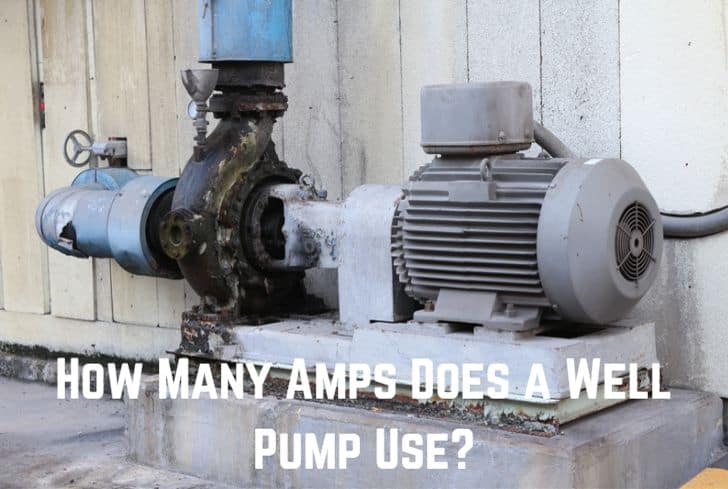
The absolute best way to know how many amps your specific well pump pulls is to find its nameplate. This is usually a sticker or a metal plate right on the pump itself (or sometimes on the control box if it's a submersible). On it, you'll find the manufacturer, model number, HP, voltage, and – drumroll please – the Full Load Amps (FLA). Sometimes it even lists the LRA! This is your pump's birth certificate, its driver's license, its entire life story condensed into a few crucial numbers.
If you can't find it (maybe it's buried deep in the well, or the sticker's faded from years of hard work), consult your pump's manual or call a qualified electrician or well professional. Please don't guess! Your home's electrical system isn't a game show.
The Grand Finale
So there you have it, the wild, wonderful, and slightly electrifying world of well pump amperage. It's not a simple answer, but understanding the factors involved – horsepower, voltage, and especially those sneaky starting amps – can make you feel like an electrical wizard (or at least someone who can confidently talk to one).
Next time you hear that familiar hum of your well pump kicking on, you'll know it's not just moving water; it's orchestrating a miniature electrical symphony, demanding just the right amount of juice to keep your taps flowing. And that, my friends, is pretty darn cool. Now, about that imaginary second coffee...