
How Many Amps For 10 Gauge Wire
Okay, let's untangle something that might sound as exciting as watching paint dry, but trust me, it’s got more drama than your last family reunion: electrical wire and how much juice it can handle. Specifically, we're diving into the curious case of the 10 gauge wire and its relationship with amps. If you've ever stared blankly at a wire roll at the hardware store, wondering if it's "the right one" for your latest DIY project, you're not alone. We've all been there, scratching our heads!
Think of electricity like water flowing through a pipe. Or, even better, like people trying to get into a concert.
What's a "Gauge"? (Hint: Smaller Number, Fatter Wire!)
"Gauge" refers to a wire's thickness. And here's the funny part: the smaller the number, the fatter the wire. Yeah, totally counter-intuitive, like ordering a "large" coffee that's actually small. So, a 14 gauge is thinner than a 12 gauge, which is thinner than our robust 10 gauge wire. Our 10 gauge is a pretty sturdy wire – like the bouncer at the club, capable of handling a good crowd. Thinner wires are like skinny straws; they get overwhelmed easily.
Must Read
Amps: The Oomph, The Push, The Crowd Size
Now, for amps. Amps (amperes) measure the electrical current flow. If our wire is the concert entrance, the amps are the sheer number of people trying to cram through it. Too many amps pushing through a wire that's too thin, and things get hot. Like, "melt your plastic outlets" hot. Not the fun kind of hot.
So, the big question: how many amps can our sturdy 10 gauge wire handle without throwing a tantrum, melting down, or making your circuit breaker scream "NOPE!" and trip?

The Magic Number for 10 Gauge Wire (Mostly)
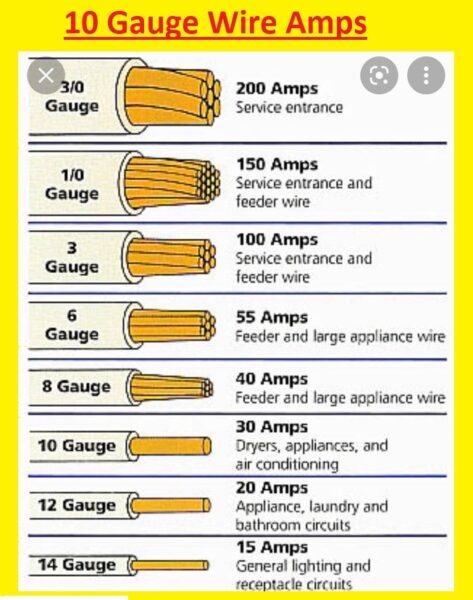
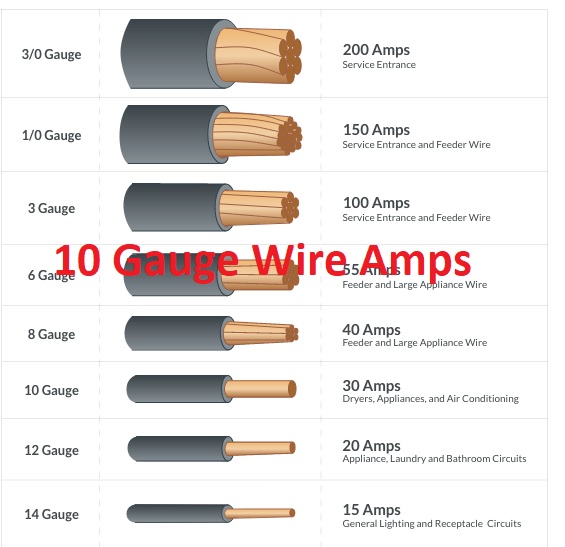
Drumroll please... For most typical household applications, a 10 gauge copper wire is generally rated for 30 amps. There it is! The golden number. This is the sweet spot where the wire can carry its electrical load without breaking a sweat (or dangerously overheating).
Think of it as the maximum passenger limit on a school bus. The bus could probably fit a few more kids if you really squished them, but it's not safe. Same with your wire. You could theoretically push a bit more through, but you'd be asking for trouble. Electricity isn't known for its patience.

But Wait, There's More! (Factors That Muddle the Waters)
Just when you thought it was a simple "30 amps and done," the electrical world throws a few curveballs. Several factors can make this rating more of a guideline.
Location, Location, Location! (Temperature Matters)
Is your wire baking in a scorching hot attic in July? Or chilling in a cool, insulated wall? Wires get hotter carrying current. If they're already starting hot, their capacity to safely dissipate heat is reduced. A wire sunbathing in an oven won't be as happy carrying 30 amps as one in a cool breezeway.
The Long and Short of It (Length of the Run)
Running that 10 gauge wire a few feet or across your entire property? Longer runs mean more resistance and "voltage drop." Imagine trying to talk through a really long garden hose; your voice gets weaker. For very long runs, you might need to size up your wire, even if the amp draw is nominally okay, just to combat that drop.

The Jacket It Wears (Insulation Type)
Wires come with different plastic coatings (insulation). Some are designed for higher temperatures (like "THHN" or "THWN"). This can subtly influence their allowable ampacity. However, for most DIY folks, sticking to the standard 30A for 10 gauge is the safest bet.
Real-Life Shenanigans and Why It Matters
Ever tried to plug a heavy-duty shop vac, a space heater, and a coffee maker into one measly extension cord, only for it to get suspiciously warm? Or worse, trip the breaker? That’s what happens when you try to pull too many amps through an inadequate wire. It becomes a bottleneck, a traffic jam of electrons.
Using the wrong wire gauge is like putting bicycle tires on a monster truck. It just won't end well. At best, you'll trip breakers. At worst, you risk overheating, melting insulation, and creating a serious fire hazard. Nobody wants to explain melted outlets to the fire department.
The Golden Rule: When In Doubt, Don't Be a Hero
While knowing that 10 gauge wire generally handles 30 amps is useful, electrical work isn't a game of "how close can I get to the edge?" It's serious business. If you're wiring something that draws significant power, like an electric oven or a water heater, always, always consult a qualified electrician. They speak the language of electrical codes and ensure your setup is not just functional, but safe.
So, next time you're at the hardware store, you can confidently point at the 10 gauge and know it's a solid choice for a 30-amp circuit. Just remember the school bus analogy, keep it cool, and don't try to cram too many concert-goers through a small door. Your house (and your peace of mind) will thank you.