
How Long Is A Windmill Blade
Ever been on a road trip, minding your own business, when suddenly, you spot them? Those majestic, towering wind turbines, gracefully spinning in the distance. You watch them for a moment, mesmerized by their silent power, and then a thought probably pops into your head: “Wow, those are big. But seriously, how long is one of those blades?”
It’s a fair question, isn’t it? Especially when they look like they could just… scoop up a cloud. We’re talking about an impressive piece of engineering, something that makes your average broomstick look like a toothpick. So, let’s peel back the curtain on the surprisingly colossal answer.
"Are We Talking School Bus Long, or...?"
Okay, let’s get straight to it. There isn't a single, neat answer, because just like people, windmills come in all shapes and sizes. But generally speaking, we’re talking about lengths that would make your jaw drop.
Must Read
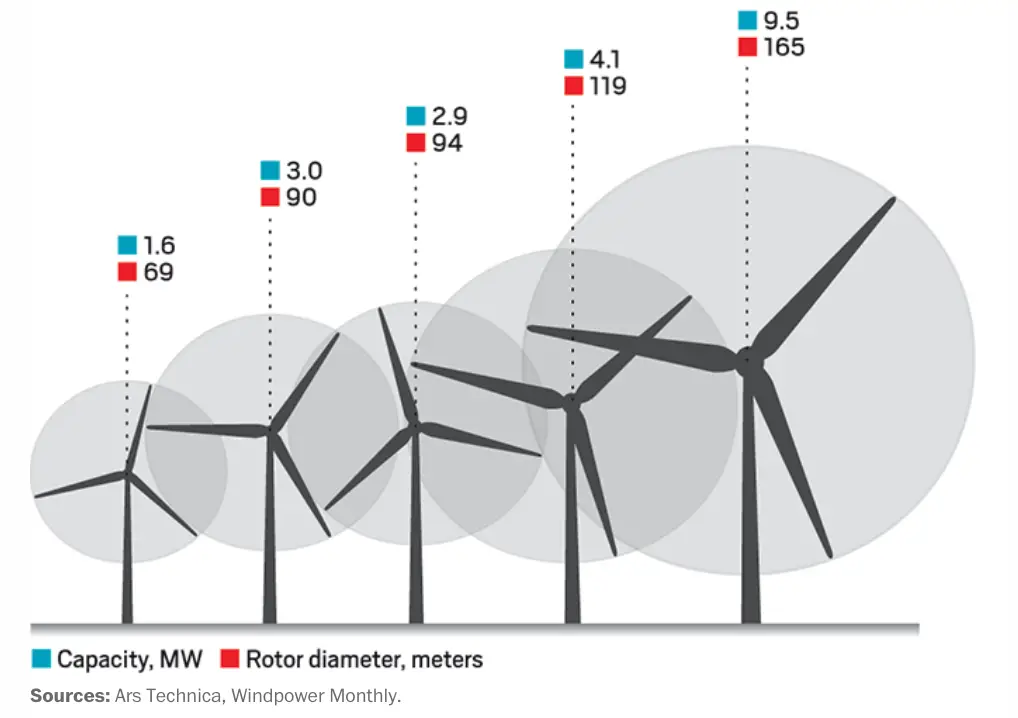
For your smaller, garden-variety utility-scale wind turbine (if you can call anything this massive "garden-variety"), a single blade can be around 30 to 45 meters long. That’s roughly the length of three school buses lined up nose to tail. Imagine trying to park that bad boy!
But wait, there's more! Venture into the world of truly giant, offshore wind farms or the really big onshore ones, and those blades get even more ridiculous.
When a Jumbo Jet Wing Feels Small
Some of the really big blades, especially for offshore turbines, can stretch out to an astonishing 80 to 120 meters (or even more!). Let that sink in for a second. We’re talking about blades longer than a standard American football field, end zone to end zone. Yes, you read that right. One blade. Not the whole spinning diameter, just a single arm.
Picture this: you’ve seen a jumbo jet, right? The wingspan on a Boeing 747 is about 64 meters. Some wind turbine blades are significantly longer than a jumbo jet’s entire wing. You could probably fit a whole soccer pitch on one of those blades and still have room for a hot dog stand.
Why So Stinking Long? It's All About the Breeze!
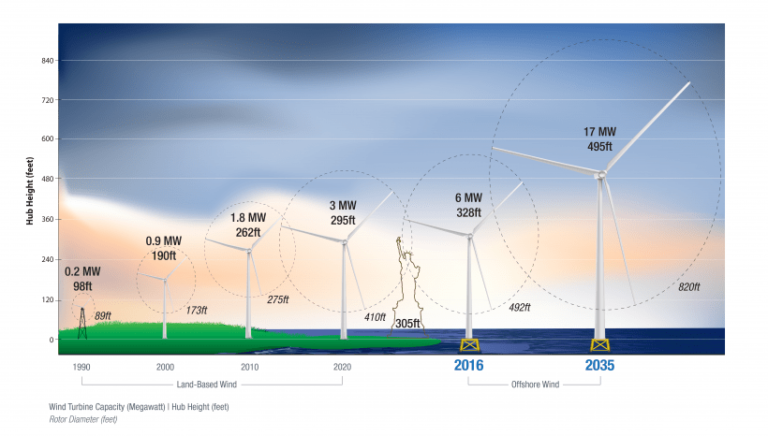
So, why the obsession with length? Is it just to make us marvel on our road trips? (Partially, yes, it works!) But primarily, it’s about simple physics. The longer the blade, the bigger the area it sweeps through. And the bigger the swept area, the more wind energy it can capture.
Think of it like trying to catch raindrops. You’ll catch more with a big umbrella than with a tiny thimble, right? These blades are essentially giant wind-catching umbrellas, tirelessly converting that breezy goodness into electricity for our homes.
It’s a delicate balance, of course. Longer blades are heavier and more expensive to build and transport. So engineers are always playing a high-stakes game of "how long can we make this thing without it becoming an impossible beast?"

The Logistics: Moving a Monster
And speaking of impossible beasts, have you ever actually seen one of these blades being transported? It’s not exactly popping down to the grocery store in your hatchback. These operations are a sight to behold.
Specialized trucks, sometimes with multiple steering axles, carefully navigate winding roads, often requiring police escorts and temporary road closures. Imagine trying to maneuver something the length of a skyscraper on its side around a tight corner. It’s a bit like trying to parallel park a cruise ship, but on land, and with a price tag that would make your eyes water.

Next time you're stuck behind a slow-moving, extra-long truck on the highway, take a peek. If it’s got a white, sleek, impossibly long thing stretching out behind it, you might just be witnessing a piece of a future giant making its grand journey. Give the driver a sympathetic nod – they're basically moving a piece of the sky!
The Gentle Giants Among Us
So, the next time you spot those elegant wind turbines, gracefully turning against the skyline, you’ll know a little secret. Those aren't just big arms spinning; they are often seriously, mind-bogglingly long pieces of engineering that rival football fields and jumbo jets.
They’re a testament to human ingenuity, harnessing the invisible power of the wind. And perhaps, just perhaps, knowing their true scale will make you smile and appreciate these gentle giants even more. They're out there, silently doing the heavy lifting, one colossal sweep at a time.