How Long Does It Take For Metal To Decompose
Ever wondered what happens to that old soda can you tossed out months ago? Or that rusty bicycle frame abandoned in your backyard? We often think of "forever" when it comes to metal, picturing ancient swords or sunken ships. But the truth is, even metal eventually says goodbye – it just takes a really, really long time. So, how long does it take for metal to decompose? Let's dive in!
Rust Never Sleeps (Especially on Metal)
The term "decompose" can be a little misleading when we talk about metal. It doesn’t exactly rot like an apple core. Instead, it usually breaks down through a process called corrosion. Think of it as metal slowly returning to its original, more natural state, often through oxidation. Rust is the most famous example of this – that reddish-brown flaky stuff on iron and steel.
Think about it like this: your shiny new metal object is essentially fighting a constant battle against the elements. Rain, humidity, salty air, even the chemicals in the soil all gang up to break it down. It's a bit like a tiny, metal-flavored war being waged all around us!
Must Read
The Great Metal Decomposition Time Tournament
Different metals decompose at different speeds. It's like a decomposition time tournament, and some metals are definitely in it for the long haul:
- Iron and Steel: These are the rust-prone champions. Under the right (or wrong!) conditions, a steel can could completely disappear in 50-100 years. Think of that sad, forgotten swing set slowly turning into a pile of reddish dust.
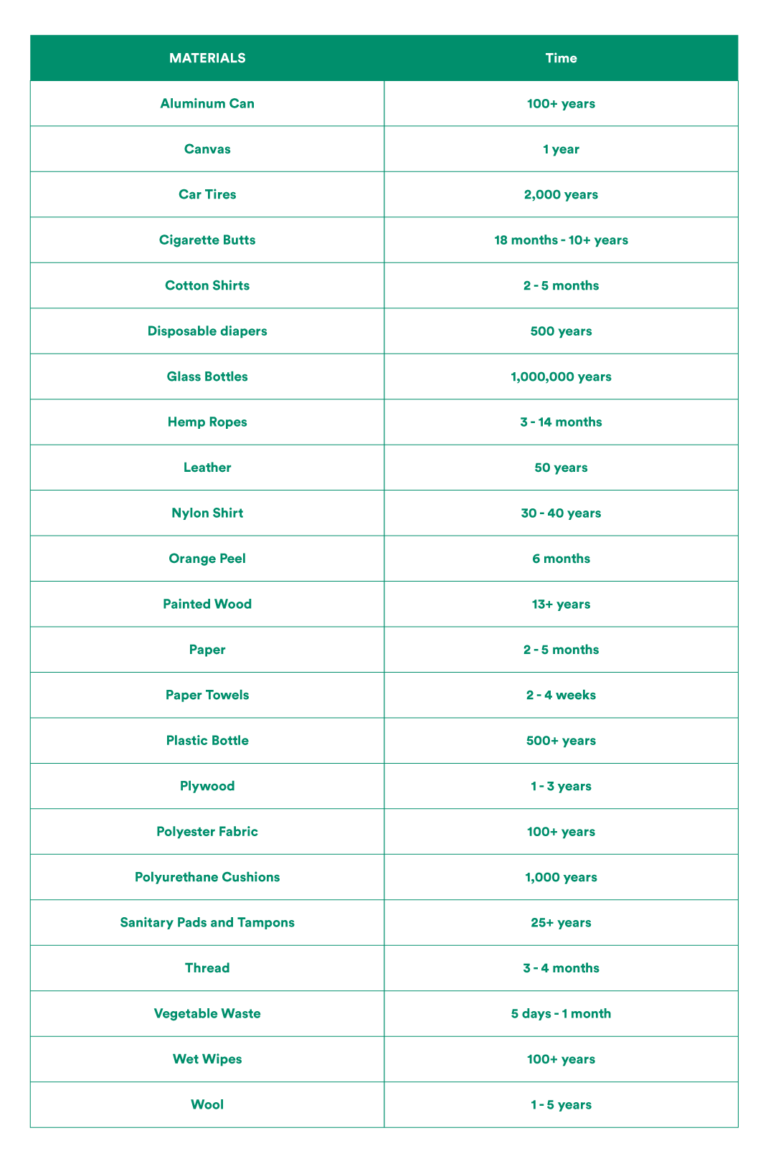
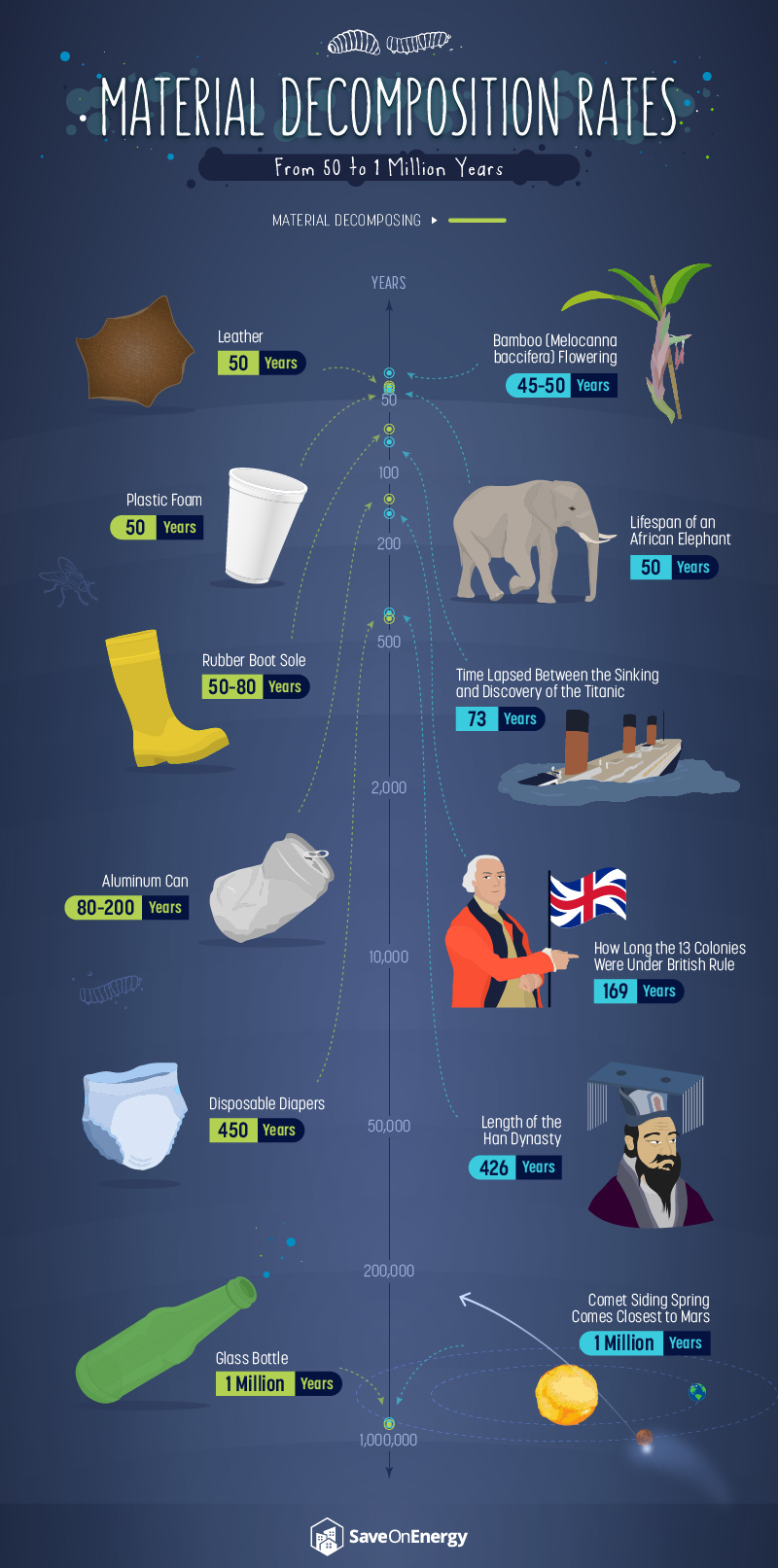
- Aluminum: Aluminum is more corrosion-resistant than iron. That soda can we mentioned earlier? It might take 80-200 years to decompose completely. It's like the tortoise of the metal world – slow and steady wins the race (or, in this case, the decomposition time tournament).
- Copper: Remember those shiny pennies? Copper can last for centuries, even millennia! Think of ancient Roman coins still being unearthed today. Copper forms a greenish layer called patina that actually protects it from further corrosion. It's like a natural shield against the elements!
- Gold: Gold is the ultimate survivor. It's practically inert, meaning it doesn't react easily with other substances. Gold artifacts from ancient civilizations are still perfectly intact, looking as good as new. It's the immortal rockstar of the metal world!
Location, Location, Location! (Decomposition Edition)
Where metal ends up has a huge impact on how quickly it decomposes. A steel beam submerged in salty ocean water will corrode much faster than one buried in a dry desert. The presence of acids, pollutants, and even certain types of soil can accelerate the process. It's like choosing the right battlefield for our tiny, metal-flavored war – some locations are simply more hostile than others!

Consider this: a shipwreck becomes a bustling ecosystem, but it's also gradually being eaten away by the sea. The salt, the pressure, the marine life – it all contributes to the metal's slow but inevitable decay.
Why Should We Care? (Besides Being Super Interesting)
Okay, so metal decomposes eventually. Big deal, right? Well, actually, it is a big deal! All that corroded metal can release harmful substances into the environment, polluting soil and water. Plus, think about the sheer volume of metal waste we generate every year. Landfills are already overflowing, and the longer metal takes to break down, the more space it occupies.
That's where recycling comes in! Recycling metal not only reduces the amount of waste ending up in landfills but also conserves precious natural resources. Think of it as giving old metal a new lease on life, preventing it from slowly rusting away and potentially harming the environment. It's a win-win!
So, the next time you toss out a can or an old appliance, take a moment to think about its journey. It might take decades, even centuries, for it to fully decompose. By making conscious choices about waste disposal and embracing recycling, we can help reduce our environmental impact and ensure a healthier planet for future generations. Plus, who wants to live in a world overrun by rusty swing sets?
Let's be metal heroes, not metal villains!