
How Is The Wind Used To Produce Electricity
Ever watch a kite dance in the sky and wonder about all that whooshing power? Well, guess what? We can grab that power and turn it into electricity! Think of it as catching the wind and making it do our bidding. It's like having a super-powered, invisible friend helping us keep the lights on.
Windmills: Not Just for Fairytales Anymore
Forget those old-timey windmills grinding grain. Today's wind turbines are sleek, modern marvels. They're like giant, graceful pinwheels reaching for the sky. You've probably seen them dotting the landscape. These aren't your grandma's windmills, though. They're a whole new level of awesome.
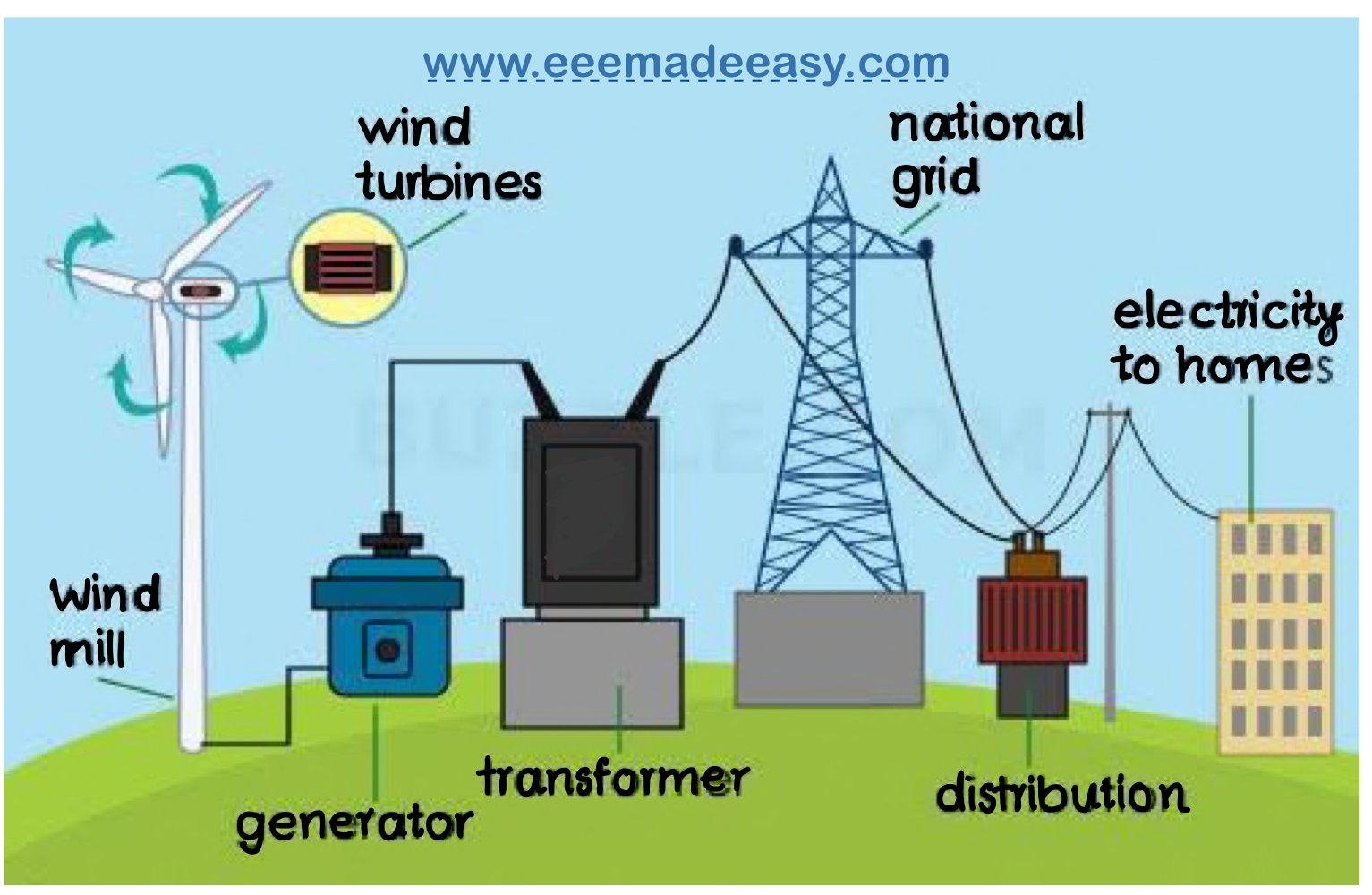
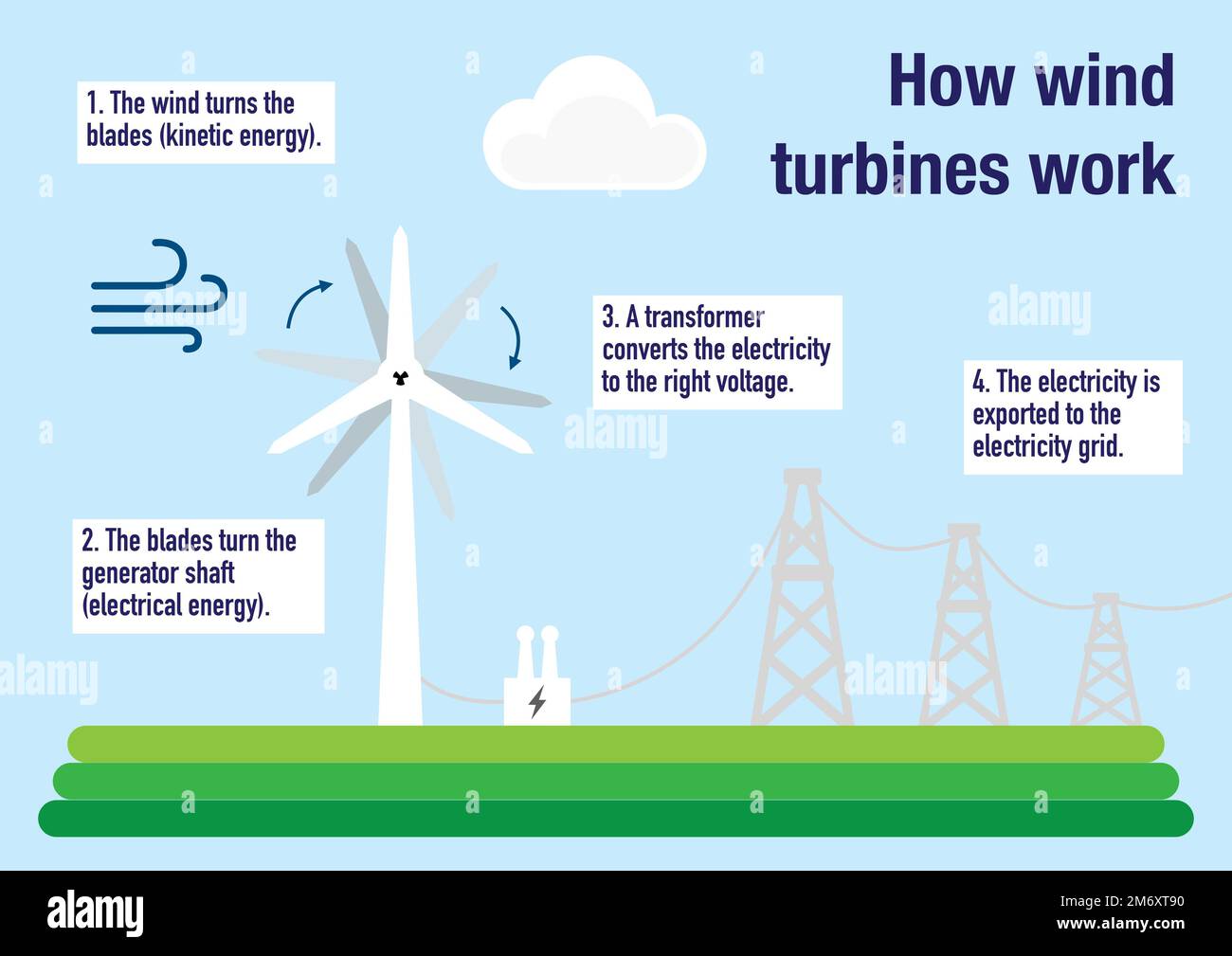
So, how do these giant things actually work? It's surprisingly straightforward. The wind blows, hitting the blades of the turbine. These blades are carefully designed to catch as much wind as possible, like a sail on a boat. The wind pushes the blades, causing them to rotate. That's where the magic begins!
Must Read
As the blades spin, they turn a shaft inside the turbine. This shaft is connected to a generator. Now, generators are cool contraptions. They use the spinning motion to create electricity. It's all about converting mechanical energy (the spinning) into electrical energy (the stuff that powers your phone and TV).
Think of it like riding a bike. You pedal (creating mechanical energy), and that turns the wheels, making the bike move. In a wind turbine, the wind is the pedal-pusher, and the generator is the thing that makes electricity instead of movement.
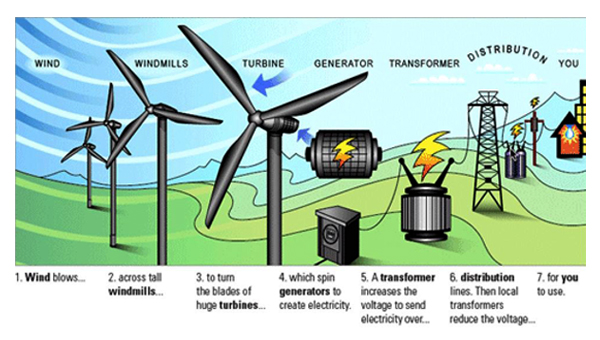
The electricity generated by the turbine travels down cables to a substation. At the substation, the voltage (think of it as the electricity's pressure) is increased, allowing it to travel efficiently across long distances through power lines. Eventually, it ends up in your home, ready to power your gadgets and gizmos!
Why Wind Power is a Big Deal
Here's the really exciting part. Wind power is renewable. That means we won't run out of it! The wind is always blowing (sometimes too much, right?). Unlike fossil fuels, like coal and oil, wind is a clean energy source. It doesn't pollute the air or contribute to climate change. That's a big win for the planet!
Using wind power helps us reduce our reliance on those dirty fossil fuels. It's like trading in a gas-guzzling car for a super-efficient electric one. We're still getting where we need to go (keeping the lights on), but we're doing it in a much cleaner and greener way.
Plus, wind farms can create jobs! Building, maintaining, and operating these turbines requires skilled workers. So, wind power isn't just good for the environment; it's good for the economy too.
Fun Facts About Wind Power
Did you know some wind turbines are taller than the Statue of Liberty? That's a lot of tower! And the blades can be longer than a football field. Imagine one of those things spinning around!

Wind power is also becoming more and more affordable. As technology improves, it's getting cheaper and easier to harness the wind's energy. That means we can generate more electricity from wind without breaking the bank. In some places, wind power is already cheaper than electricity from fossil fuels!
Of course, wind power isn't perfect. Wind doesn't always blow steadily. Sometimes it's calm, and sometimes it's a gale. That means we need other sources of energy to fill in the gaps. But as battery technology improves, we'll be able to store excess wind energy and use it when the wind isn't blowing. Pretty cool, huh?

So, next time you see a wind turbine, take a moment to appreciate the ingenuity and power it represents. It's a symbol of a cleaner, more sustainable future, powered by the unending force of the wind. Who knew something as simple as the breeze could be so incredibly powerful?
Think of the possibilities! Maybe one day, you'll be the one designing the next generation of wind turbines. Or perhaps you'll be involved in building and maintaining a massive offshore wind farm. The future of energy is in our hands, and the wind is definitely on our side!
Consider exploring resources from organizations like the American Clean Power Association (ACP) or the Department of Energy (DOE) to learn more. They offer in-depth information and statistics about wind energy.