
How Is Solar Energy Used To Make Electricity
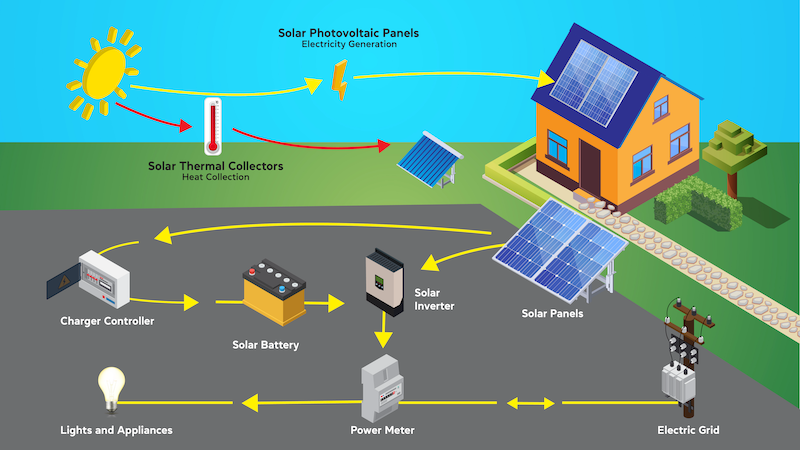
Ever felt that blast of sun on your face after walking out of a dim movie theater? That's pure, unadulterated solar energy, my friend! And believe it or not, we can actually harness that fiery orb in the sky to power our homes, charge our phones, and even keep the lights on at that very movie theater. So, how exactly do we turn sunshine into electricity? Let's dive in – no lab coat required.
The Magic of Photovoltaics (PV): Solar Panels 101
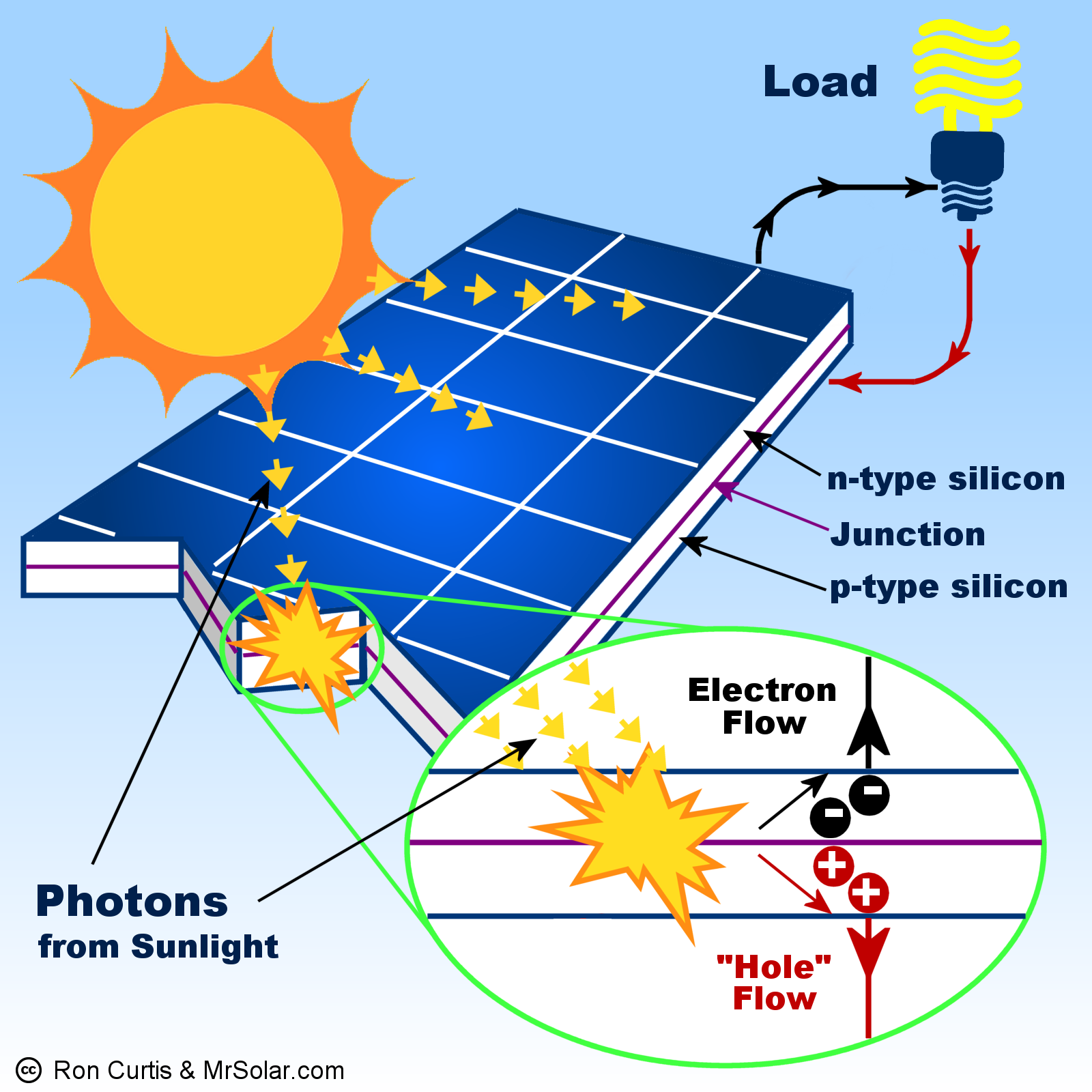
The most common way we snag solar energy is through photovoltaic, or PV, cells. Think of these cells as tiny, super-efficient sunbathers. They're usually made of silicon, the same stuff used in computer chips. Now, silicon all by itself isn't that exciting. It's like a regular Joe on a beach – needs a little encouragement to get moving.
That's where the clever part comes in. Scientists tweak the silicon with other elements to create a special arrangement that's a bit like a carefully orchestrated dance. When sunlight – those energetic little photons – hits the silicon, it bumps the electrons (tiny particles with a negative charge) out of their comfy spots.
Must Read
Imagine it like this: the sunbeams are tiny bouncy balls, and the electrons are kids just trying to chill. BOOM! The sunbeam hits 'em, and they're launched into action! All of this activity generates an electric current, which we can then use to power our stuff.
These PV cells are grouped together to form what we know as solar panels. Think of it as forming a team of sunbathers to get the best tan, and gather the most solar energy!
From Sunshine to Socket: The Conversion Process
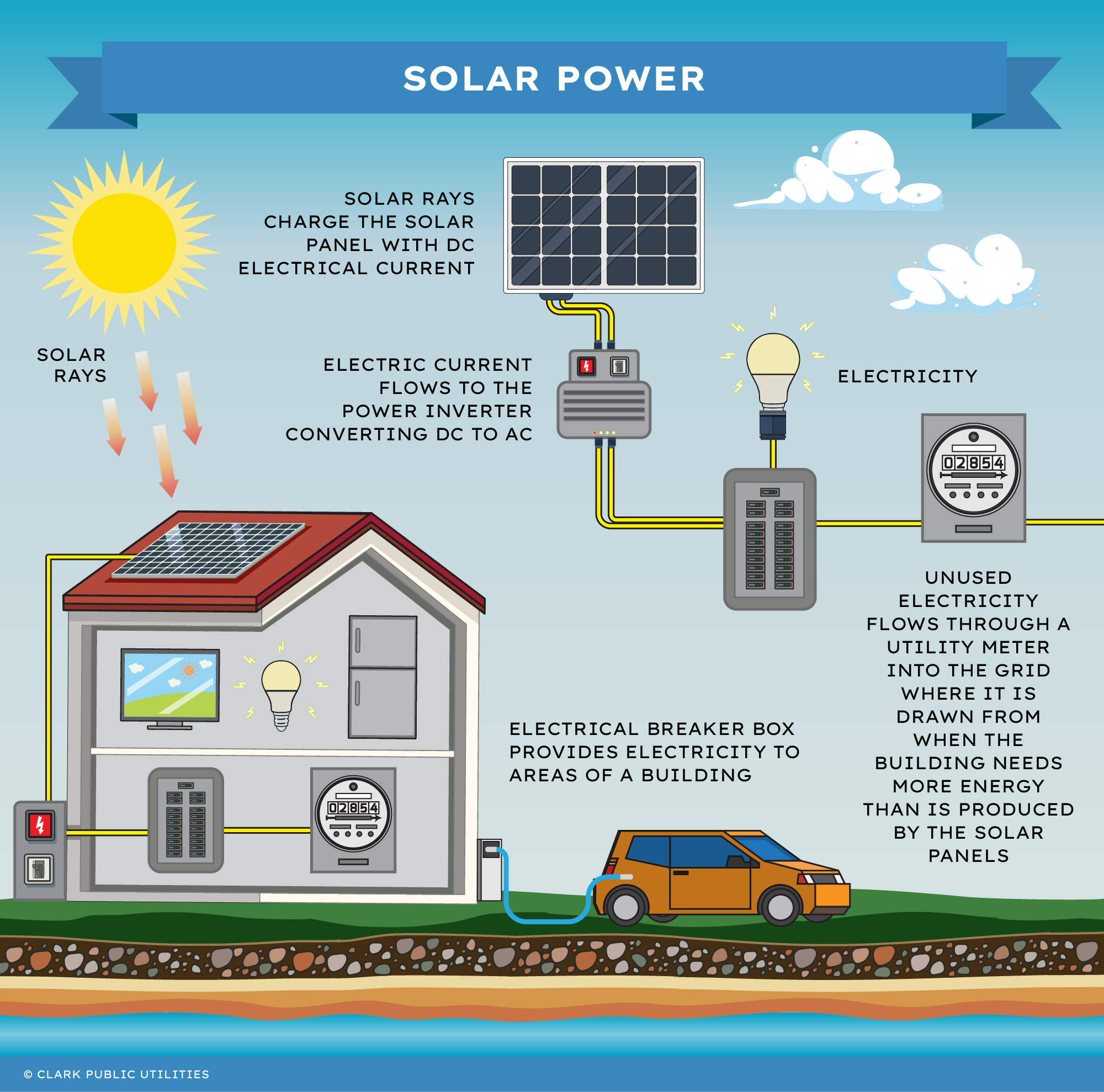
Now, the electricity generated by solar panels is a bit like the wild west – it's in what we call Direct Current (DC). That's all well and good for some things, like batteries. But most of our homes and appliances run on Alternating Current (AC). So, how do we tame this DC electricity and make it play nice with our toasters and TVs?
Enter the inverter! This handy device is like a translator, converting the DC electricity from the solar panels into AC electricity that your house can actually use. It's the unsung hero of the solar energy system. You don't usually see it, but it is working hard to make sure all the appliances can function correctly.
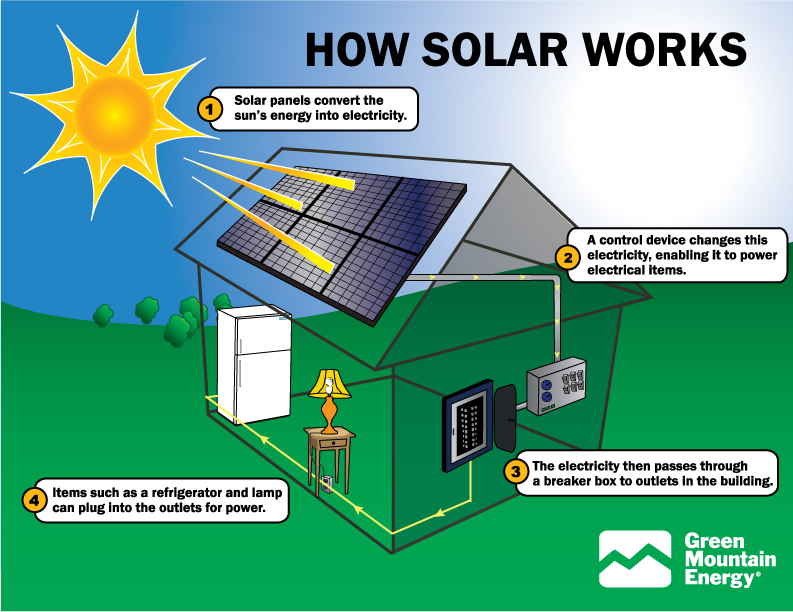
Think of it this way: DC is like speaking French, and AC is like speaking English. The inverter is like a fluent interpreter, making sure everyone understands each other. Otherwise, you'd have a bunch of confused appliances!
Grid-Tied, Off-Grid, and Everything In Between
So, you've got your solar panels, your inverter, and a burning desire to power your life with sunshine. Now what? Well, you've got a couple of options.
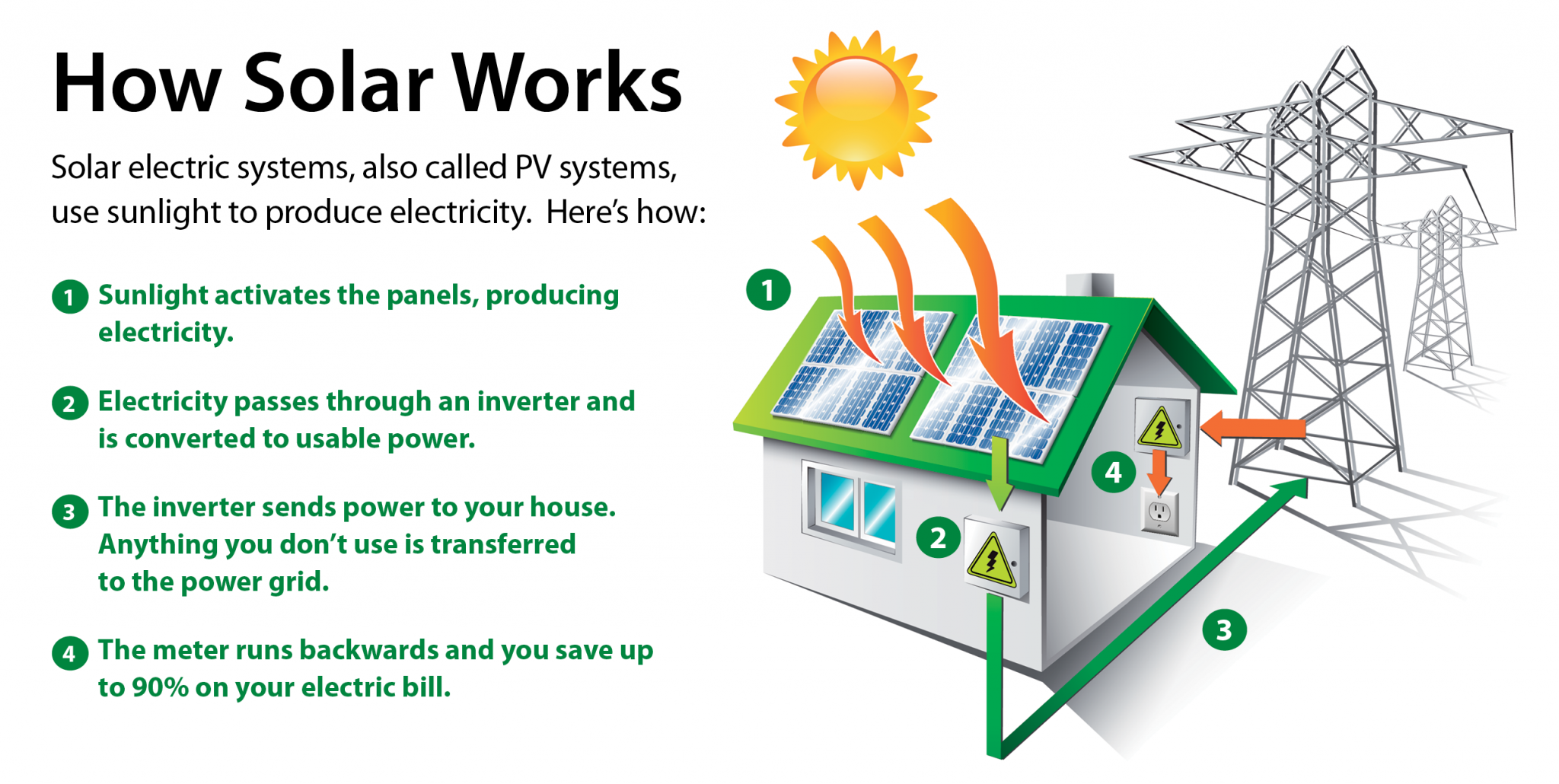
Grid-tied systems are the most common. This means your solar panels are connected to the public electricity grid. During the day, when your panels are soaking up the sun, you use the solar electricity to power your home. If you generate more electricity than you need, you can even sell the excess back to the grid. It's like getting paid to tan! This is called net metering. It’s a win-win: you’re saving money on your electricity bill, and you’re helping to reduce the reliance on fossil fuels.
Off-grid systems, on the other hand, are completely independent. They're perfect for remote cabins, boats, or anyone who wants to be completely self-sufficient. Off-grid systems usually involve batteries to store the excess solar electricity, so you can still have power at night or on cloudy days. Think of it as having your own personal sunshine bank!
And then there are hybrid systems, which combine the best of both worlds. They’re connected to the grid, but also have battery storage, so you can weather power outages and maximize your solar usage.
Solar Energy: It's Not Rocket Science (Okay, Maybe a Little Bit)
While the science behind solar energy can get pretty complex, the basic concept is surprisingly straightforward. Sunlight hits solar panels, generates electricity, and then we use that electricity to power our lives. It's a clean, renewable, and increasingly affordable way to fuel our future.
So, the next time you feel the warmth of the sun on your skin, remember that you're experiencing a powerful force – one that we can harness to create a brighter, more sustainable world. And who knows, maybe one day you'll be powering your own life with sunshine! Now that's something to smile about.