How Is Oil Turned Into Petrol

Ever pull up to the pump, hit the "unleaded" button, and just… fill 'er up? It's one of those everyday rituals we barely give a second thought. But have you ever paused to wonder about the incredible journey that liquid takes before it powers your morning commute or your next road trip adventure? Trust us, it's a far cry from simply pouring some black goo into your tank. It's a fascinating blend of ancient history, cutting-edge science, and a dash of industrial magic!
Meet the Main Ingredient: Crude Oil
Our story begins deep beneath the Earth's surface, where for millions of years, tiny marine organisms and plants have been cooked under immense heat and pressure. The result? A thick, black, sticky liquid we call crude oil. It’s often referred to as "black gold," and for good reason – it's the raw material for so much of modern life, from plastics to pharmaceuticals, and of course, the very petrol that fuels our cars.
This crude oil isn't uniform; it's a complex cocktail of thousands of different hydrocarbons (molecules made of hydrogen and carbon atoms). Think of it like a giant, very unappetizing smoothie with all sorts of ingredients mixed in. Our goal is to separate out the delicious (and useful!) petrol from everything else.
Must Read
The Grand Transformation: Inside the Refinery
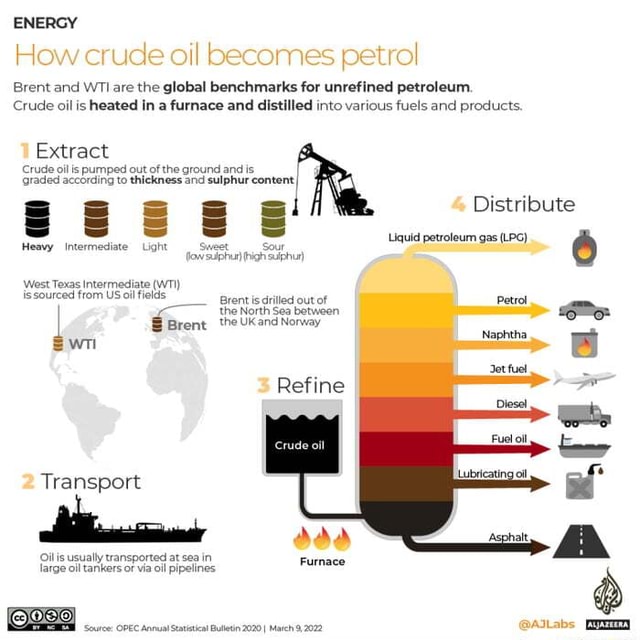
Once crude oil is extracted, it’s transported – often by massive tankers or extensive pipelines – to a refinery. Picture a vast, sprawling industrial complex with towering structures, pipes crisscrossing everywhere, and the subtle hum of constant activity. This is where the magic happens, and the first major step is called fractional distillation.
Heating Things Up: Fractional Distillation
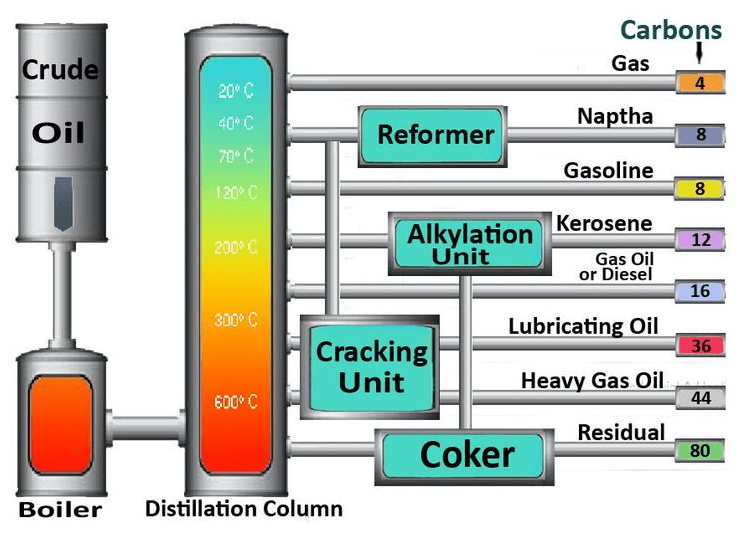
Imagine a giant, multi-story oven and a very tall chimney. That's essentially what happens. The crude oil is first heated to incredibly high temperatures (we're talking 350-400°C!) in a furnace, turning most of it into a hot vapor and some remaining liquid. This superheated mix is then pumped into the bottom of a tall, cylindrical structure called a distillation column.

Inside this column, there are dozens of trays at different levels. As the hot vapor rises, it starts to cool. Different hydrocarbons have different boiling points, so they condense back into liquid at specific temperatures, or rather, at specific heights in the column. The lighter, more volatile components (like petrol and gases) rise highest before condensing, while the heavier components (like diesel, fuel oil, and asphalt) condense lower down.
It’s like making different layers of a cake, but with heat! At the very top, you get gases (like LPG, used for heating and cooking). Just below that, our star player: petrol (gasoline). Further down, you'll find jet fuel and kerosene. Below that, diesel and heating oil. And at the very bottom, residual fuel oil, bitumen (for roads!), and lubricants. Each fraction is collected separately.
Fine-Tuning the Fuel: Cracking and Reforming
While distillation gives us a rough petrol fraction, it’s not quite ready for your car yet. Refineries often use additional processes to maximize petrol production and improve its quality. Two key steps are cracking and reforming.
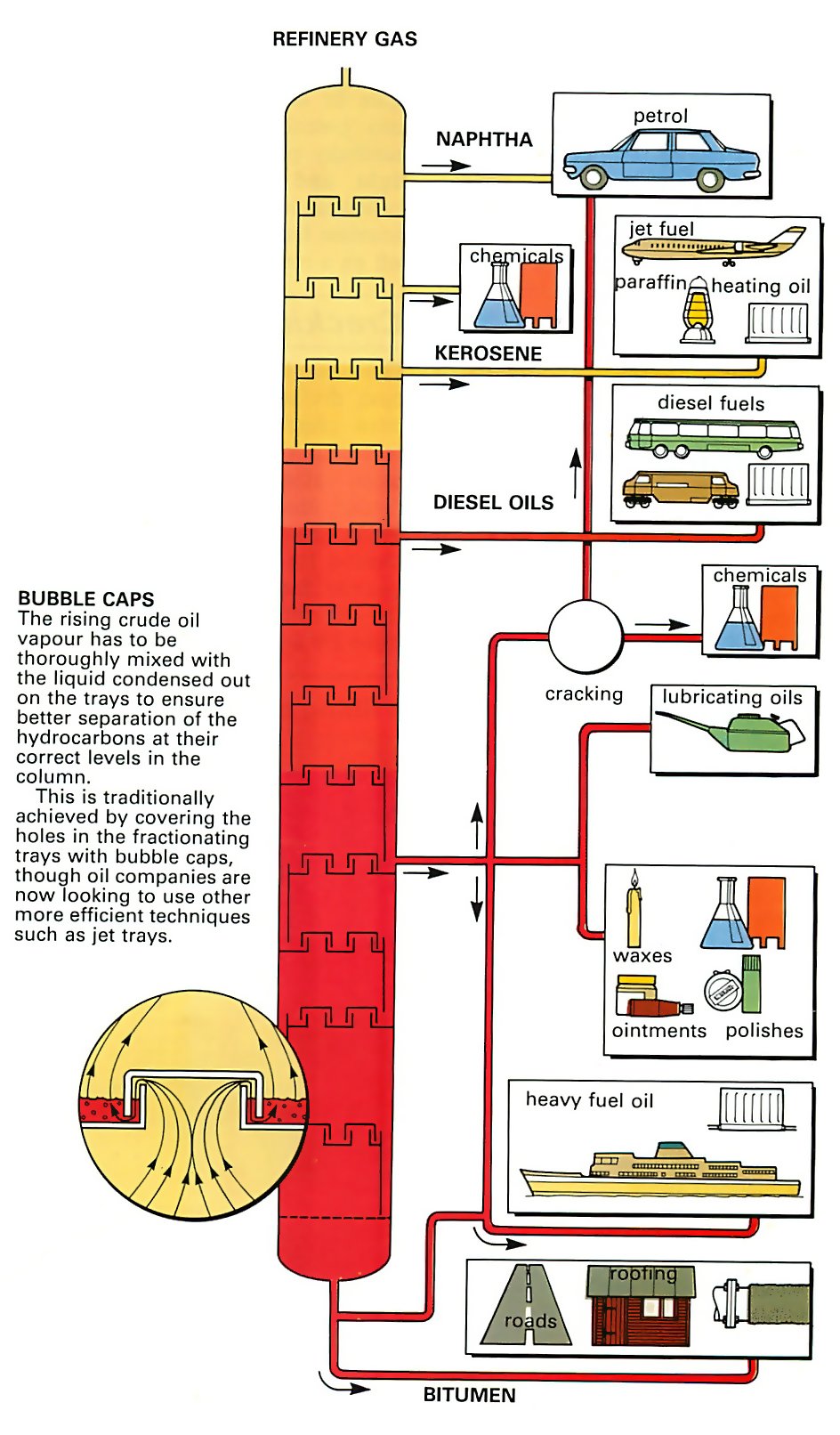
Cracking involves taking those heavier, less valuable fractions (like heavy fuel oils) and literally "cracking" their large molecules into smaller, lighter, and more desirable ones, like more petrol! This is done using heat and catalysts. Think of it like breaking down a really long, clunky LEGO structure into smaller, more useful pieces.
Reforming, on the other hand, is about rearranging the molecular structure of the petrol we already have to make it burn more efficiently and prevent engine knock. This process increases the octane rating of the petrol. That 91, 95, or 98 you see at the pump? That’s its octane rating – a measure of its resistance to knocking or pinging during combustion. Higher octane is often preferred for high-performance engines.
The Final Blend: Additives and Delivery
Before it reaches your tank, petrol isn't just one pure substance. It's a carefully engineered blend! Refineries mix different petrol streams to meet specific seasonal and regional requirements. Then, a dash of science is added in the form of additives.
These aren't just for show! Additives include detergents to keep your engine clean, anti-rust agents to protect fuel lines, and de-icers to prevent fuel from freezing in cold weather. It’s a bit like adding vitamins and minerals to a health drink to make it perform its best. Once blended, it's rigorously tested for quality and then shipped via pipelines, trains, trucks, or barges to your local petrol station.
So, the next time you hear the satisfying click of the petrol nozzle, take a moment to appreciate the incredible journey that complex liquid has made. From ancient organic matter buried deep underground, through massive industrial processes, to a carefully crafted blend designed to power your life, it's a testament to human ingenuity. It’s a good reminder that even the simplest everyday actions are often powered by truly astounding science and engineering!