How Is Natural Gas Transformed Into Electricity

Ever wondered how that invisible gas that heats your home or cooks your dinner actually helps power your entire neighborhood? We're talking about natural gas, and its fascinating journey from the ground to your electrical outlet. It's not magic, though it might seem like it! Understanding how natural gas is transformed into electricity is not only cool trivia, but also gives you a better appreciation for the complex energy infrastructure that keeps our modern lives humming.
So, what's the big idea? The main purpose is simple: to convert the chemical energy stored in natural gas into electrical energy we can use. Natural gas power plants are like giant engines, meticulously designed to extract that energy efficiently. One of the key benefits of using natural gas is its relatively abundant supply and, compared to some other fossil fuels, its cleaner burning properties, resulting in lower emissions of certain pollutants. This makes it a crucial part of the energy mix in many countries, especially as a bridging fuel towards more renewable energy sources.
Alright, let's break down the process. The most common method is using a gas turbine. Think of it like a jet engine, but instead of propelling an airplane, it spins a generator. Here’s the step-by-step process:
Must Read
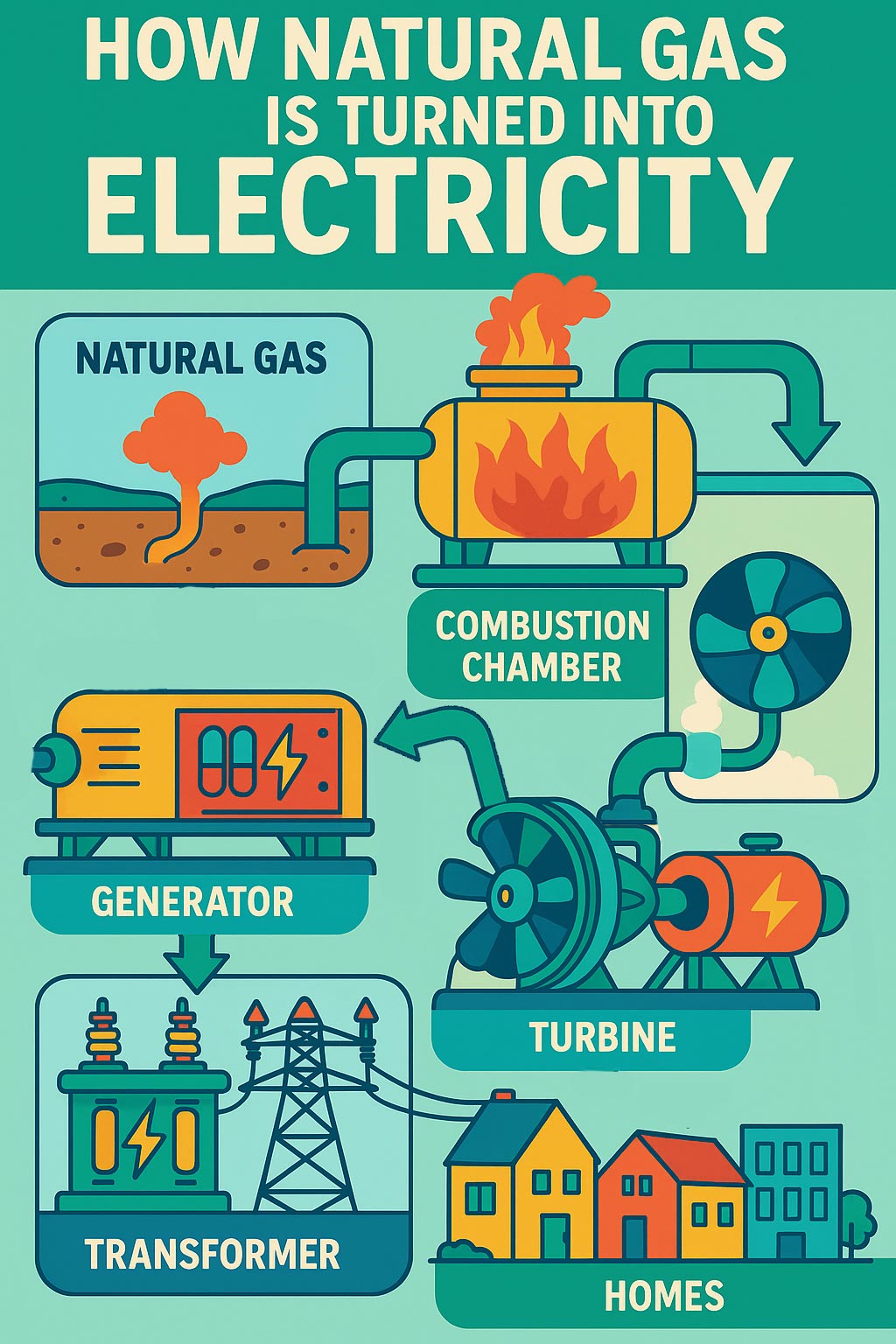
- Combustion: Natural gas is mixed with air and burned under high pressure in a combustion chamber. This creates extremely hot, rapidly expanding gases.
- Turbine Rotation: These hot gases are then directed at the blades of a turbine. The force of the gas spins the turbine, similar to how wind turns a windmill.
- Generator Activation: The turbine is connected to a generator. As the turbine spins, it causes the generator to rotate, which converts the mechanical energy into electrical energy through electromagnetic induction – basically, moving magnets around a coil of wire.
- Electricity Transmission: The electricity produced is then sent through transformers to increase the voltage, making it suitable for transmission across long distances through power lines. Finally, it reaches your home or business.
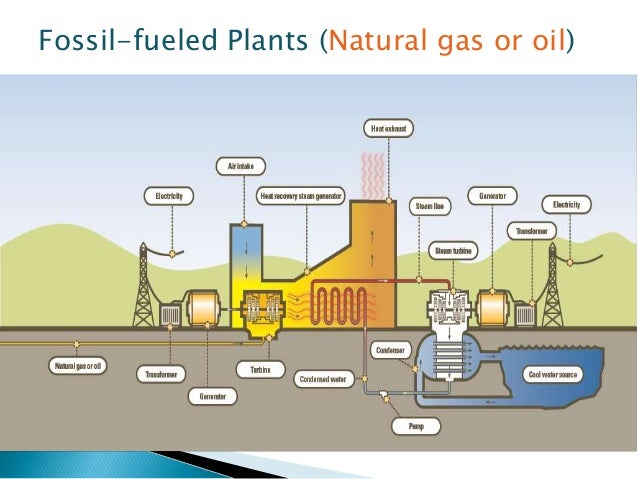
Another method, though less common, involves using steam turbines. In this case, the natural gas is burned to heat water and produce steam. This high-pressure steam then turns a turbine connected to a generator, similar to how coal-fired power plants work. These plants are often referred to as combined-cycle plants because they utilize both gas and steam turbines for increased efficiency.
While natural gas plays a significant role in electricity generation, it's important to remember that no energy source is without its challenges. There are ongoing efforts to improve the efficiency of natural gas power plants, reduce emissions further, and explore alternative fuels that can be used in these facilities, paving the way for a more sustainable energy future. So, the next time you flip a light switch, remember the intricate process behind the scenes, turning a simple gas into the power that fuels our world!