
How Is Geothermal Used To Generate Electricity

Ever imagined tapping into the Earth's own personal hot tub to power your house? Well, that's essentially what geothermal energy does! It's like having a gigantic, underground kettle constantly brewing, and we're just clever enough to siphon off some of that steamy goodness to light up our lives.
The Earth's Internal Furnace: A Really, REALLY Big Heater
Okay, so maybe it's not exactly a kettle. But deep down inside the Earth, things are seriously toasty. We're talking temperatures that could melt rock (spoiler alert: they do!). This heat is a leftover from the Earth's formation (think: cosmic construction debris) and from the decay of radioactive materials (tiny atomic powerhouses!). It's a massive, constant source of energy, just waiting for us to use it.
Think of it this way: imagine burying a giant slow cooker at the bottom of your garden and leaving it on for, oh, say, four and a half billion years. That's roughly the scale of the geothermal heat source we're talking about!
Must Read
How We Tap the Earth's Internal Radiator
So, how do we get this subterranean sizzle to power our toasters and televisions? There are a few ways, but the general idea is to bring that heat to the surface and use it to spin a turbine, which then generates electricity. It's a bit like how a steam engine works, but instead of burning coal, we're using the Earth's natural heat.
Direct Steam Plants: The Simplest (and Steamiest) Approach
This is the most straightforward method. In areas where geothermal activity is high, like near volcanoes or geysers (think: Iceland, Yellowstone National Park), the Earth naturally vents steam and hot water. We can simply drill wells into these steam reservoirs and pipe the steam directly to a turbine. Voila! Electricity! It's like Mother Nature is doing half the work for us.

Imagine sticking a straw into a giant, boiling pot of soup and using the steam to power a tiny fan. That's the basic principle! It's not always that simple, of course, but you get the idea.
Flash Steam Plants: Adding a Little Sparkle
Sometimes, the geothermal resource is extremely hot water under high pressure. When this water is brought to the surface, the sudden drop in pressure causes some of it to "flash" into steam – just like when you open a bottle of fizzy drink. This steam is then used to spin a turbine. It's like giving the steam a little extra oomph to get the job done.

Binary Cycle Plants: A More Gentle Approach
These plants are a bit more sophisticated. Instead of using geothermal water directly, they use it to heat a secondary fluid with a lower boiling point. This secondary fluid then turns into vapor and spins the turbine. This is useful for geothermal resources that aren't quite as hot, as it allows us to still extract energy efficiently. Think of it like using the hot water to warm up a different liquid that boils at a lower temperature – it’s a more versatile and gentle process.
Geothermal: The Earth's Gift That Keeps On Giving
The best part about geothermal energy is that it's a renewable resource. The Earth's core isn't going to cool down anytime soon (at least, not within our lifetimes!), so we can keep tapping into this heat for generations to come. Plus, it's relatively clean, producing very little greenhouse gas emissions compared to fossil fuels.
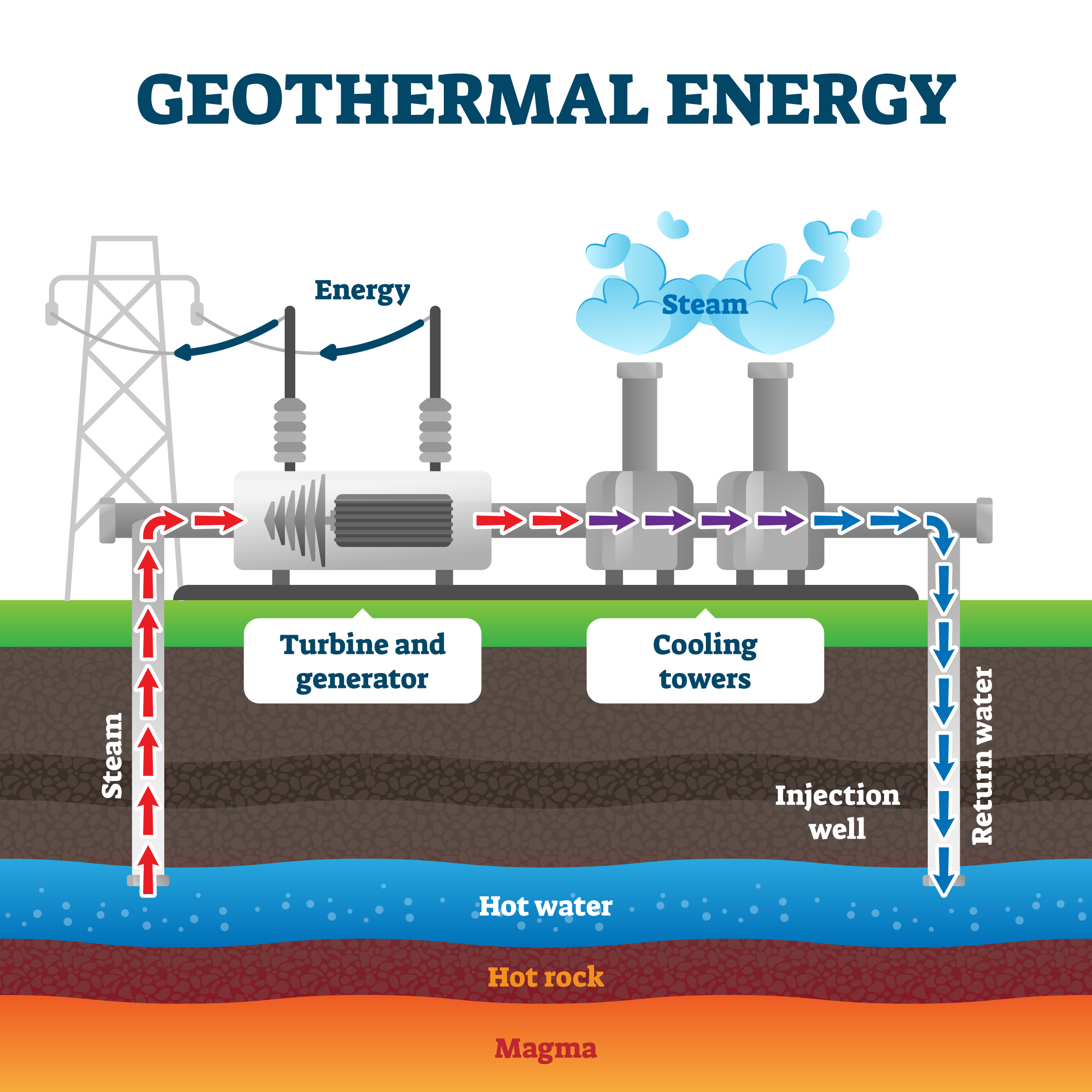
While geothermal energy isn't available everywhere (you need to be in a geologically active area), where it is available, it's a fantastic way to generate electricity sustainably. It's like having a secret, eco-friendly superpower hidden beneath our feet!
So next time you flip on a light switch, remember that the power might just be coming from deep within the Earth – a truly amazing and sustainable source of energy!
"Geothermal energy: Tapping into the Earth's internal sunshine!"
