How Is Geothermal Energy Used To Create Electricity

Imagine the Earth as a giant, simmering pot of stew. Not a stew you'd actually want to eat, mind you – we're talking molten rock and intense pressure. But beneath our feet, far, far down, that’s essentially what's going on! And that crazy heat is the secret ingredient to a surprisingly clean and clever way of making electricity: geothermal energy.
So, how do we tap into this underground crock-pot? Well, it's not as simple as sticking a giant spoon in and stirring. Think of it more like this: imagine finding a naturally occurring hot spring. You wouldn’t just look at the bubbling water, you’d want to use it, right? Geothermal power plants do something similar, but on a much, much larger and more sophisticated scale.
The Geothermal Plumbing System
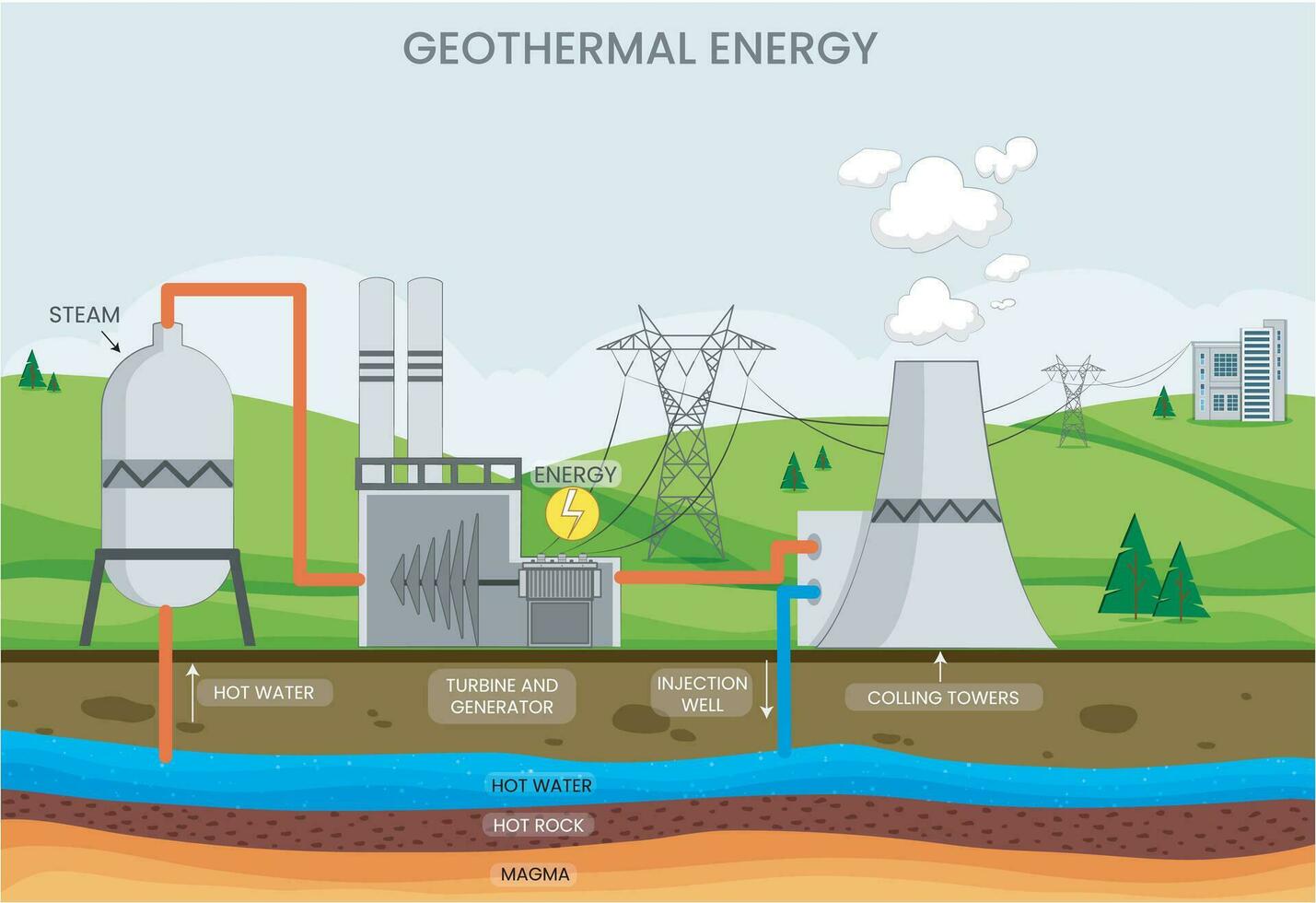
At its heart, a geothermal power plant is really just a fancy, earth-powered plumbing system. Instead of relying on fossil fuels like coal or gas to boil water, it utilizes the Earth’s own internal heat. The process usually involves drilling deep into the earth – sometimes miles down – to access reservoirs of hot water or steam. These reservoirs can be naturally occurring, or they can be "enhanced" or "engineered" by injecting water down to hot, dry rocks deep underground. Think of it as giving the Earth a giant, underground shower!
Must Read
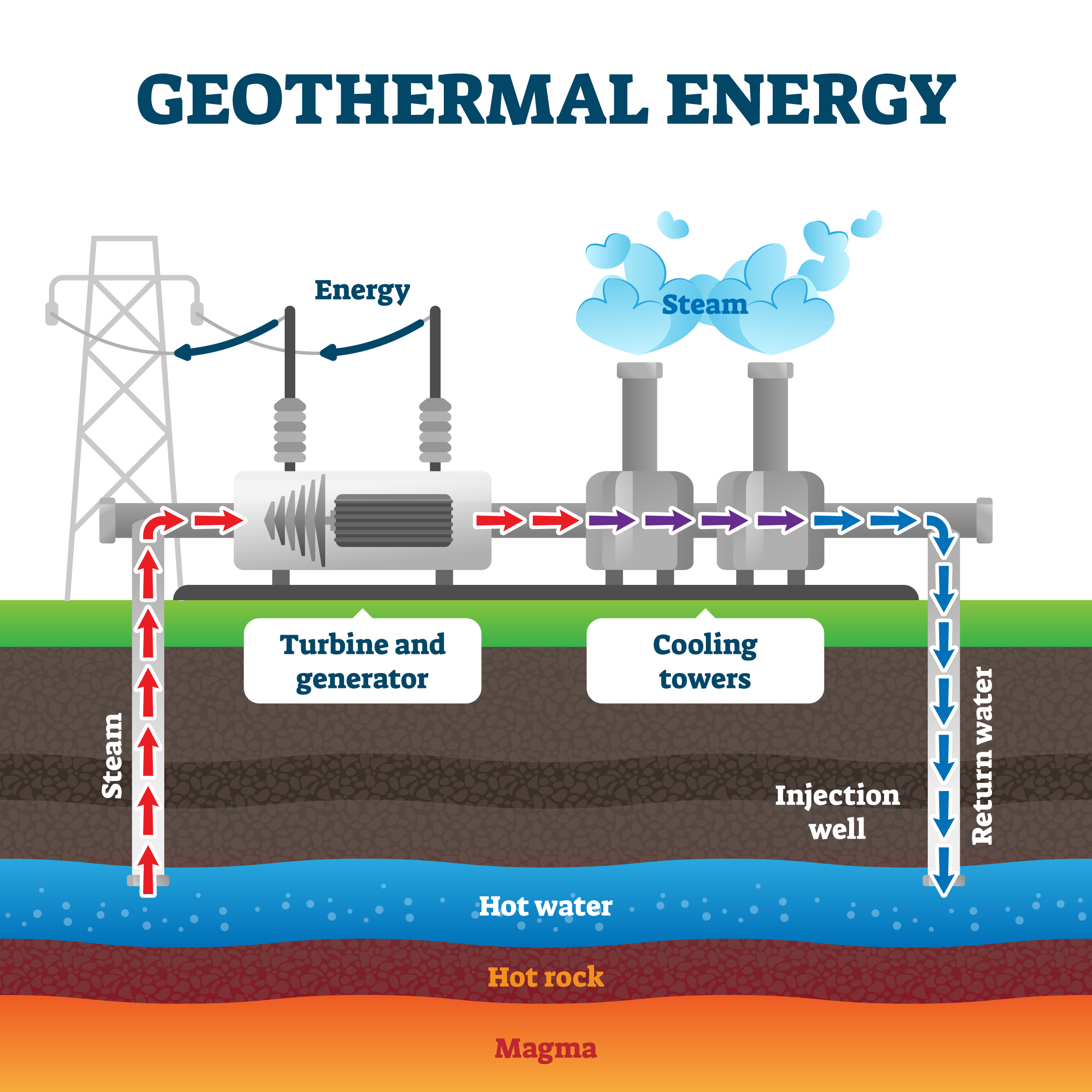
Once that superheated water or steam is found, it's piped up to the surface. Now, this is where things get interesting. Because we're dealing with the Earth, things can be unpredictable! Sometimes, what comes up is pure, beautiful steam, ready to spin a turbine. Other times, it's a mix of hot water and steam, which needs to be separated. And sometimes, let's just say the water contains…interesting…minerals. Think of it as the Earth's way of adding a little extra flavor to the process. Okay, maybe “flavor” isn’t the right word. More like “challenges for the engineers!"
Spinning Turbines with Earth's Breath
Regardless of what comes up, the goal is the same: to use that geothermal resource to spin a turbine. Turbines are basically giant, incredibly precisely engineered windmills inside a power plant. When the steam (or the steam separated from the hot water) blasts against the turbine blades, it causes them to spin. This spinning motion is then converted into electricity using a generator. Voila! Earth-powered electricity!

There are a few different types of geothermal power plants, each suited to different geological conditions and resource temperatures. Some, called dry steam plants, are the simplest and oldest. They directly use the steam from the geothermal reservoir to spin the turbine. Others, called flash steam plants, take hot water, reduce the pressure, which causes some of it to rapidly "flash" into steam, and then use that steam to spin the turbine. And then there are binary cycle plants, which are really clever. They use the hot water to heat a secondary fluid (like isobutane) with a much lower boiling point. This fluid then turns to vapor and spins the turbine. This type is great for lower-temperature geothermal resources.
The (Surprisingly Heartwarming) Aftermath
Here's where the story gets even better. Once the steam has spun the turbine, it's not just dumped into the atmosphere. Most geothermal power plants use advanced cooling systems to condense the steam back into water and then, crucially, re-inject that water back into the geothermal reservoir. This helps to replenish the resource and ensure that it remains sustainable for years to come. It's like giving the Earth a little thank-you hug for all its hard work!
And speaking of hugs, geothermal energy is a relatively clean and sustainable source of power. While it's not completely emissions-free (some greenhouse gases can be released from the geothermal reservoir), it produces far fewer emissions than fossil fuels. Plus, it's a renewable resource, meaning it won't run out as long as the Earth continues to be…well, Earth! This makes geothermal a hero in the fight against climate change.
So, the next time you flip a light switch, remember the Earth's giant, simmering stew and the clever plumbing that brings that heat to life. It's a reminder that sometimes, the most powerful solutions are right beneath our feet. And who knows, maybe one day you'll be able to visit a geothermal power plant and witness this amazing process for yourself. Just try not to imagine that you are about to eat that underground stew!