
How Is Geothermal Energy Made Into Electricity
Ever felt that blast of heat coming up from a subway grate in the middle of winter? Or maybe you’ve dug your toes into the sand at the beach and noticed that even a foot down, it’s surprisingly warm? That, my friend, is a hint of what we're talking about today: geothermal energy. It's basically the Earth's hidden hot water bottle, and we can tap into it to make electricity! Think of it as Mother Nature offering us a free (and kinda steamy) shower, and we're just figuring out how to use the showerhead.
So, How Do We Actually Grab This Underground Heat?
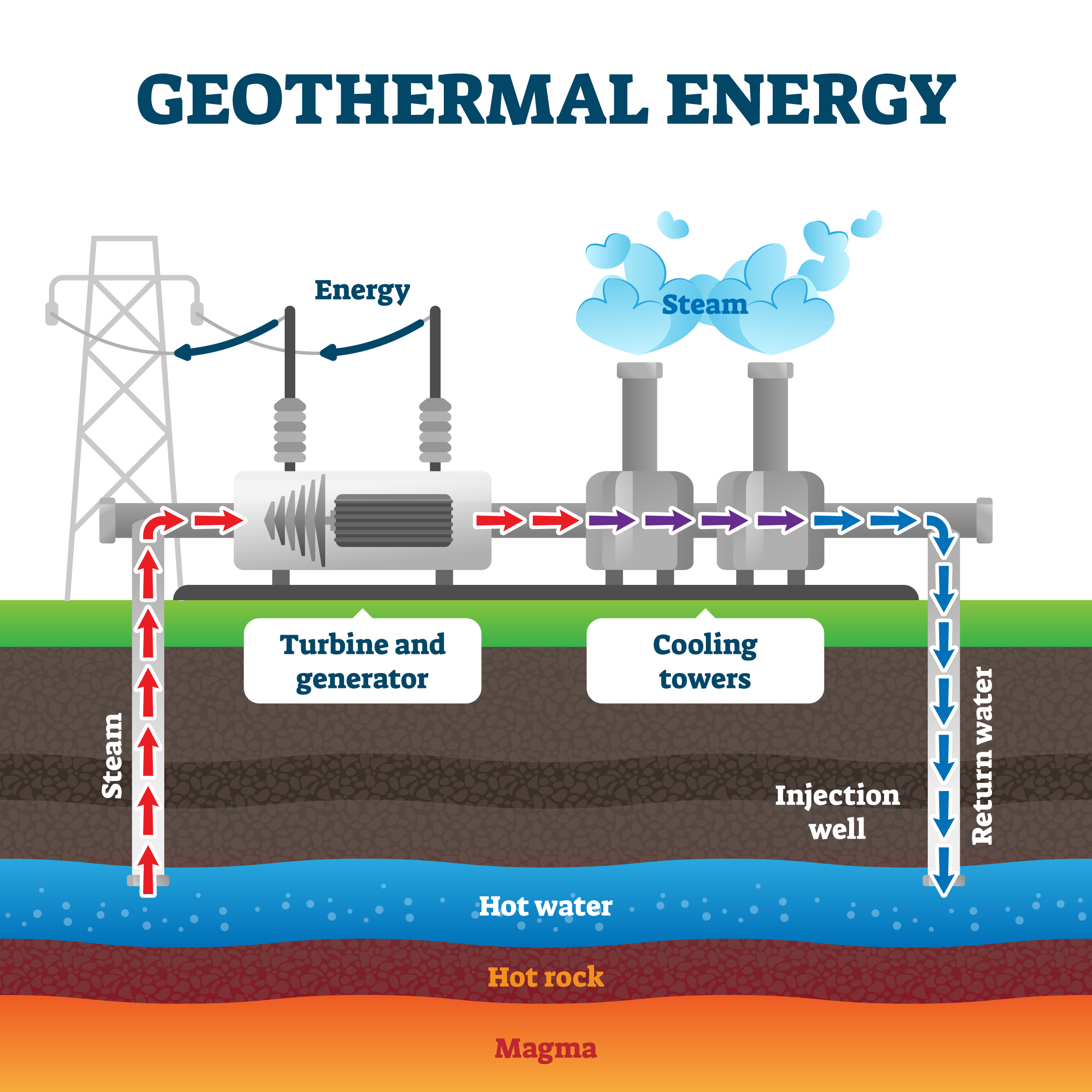
Okay, imagine you're trying to make a giant cup of tea. But instead of a kettle, your "kettle" is miles underground and heated by the Earth's core (a toasty 9,000 degrees Fahrenheit!). We need to get that hot water (or sometimes steam) to the surface. That's where geothermal power plants come in. They're like giant straws, sucking up that underground goodness.
There are a few different ways to do this, but the most common involve drilling wells. Think of it like sticking a really, REALLY long straw into a giant Earth-flavored milkshake (except, you know, hot and potentially sulfur-y).
Must Read
First up, we have Direct Steam Plants. These are the simplest, and honestly, the coolest. If you find a place where the Earth is basically screaming "STEAM!" from the ground, you can just pipe that steam directly into a turbine. The turbine spins, which turns a generator, and boom! Electricity! It's like finding a free, ready-to-go power source – the ultimate jackpot for renewable energy enthusiasts.
Next, we have Flash Steam Plants. These are a little more complicated, but still pretty straightforward. In these plants, we pump up high-pressure hot water. When that water reaches the surface and the pressure drops (think of opening a shaken-up soda), it "flashes" into steam. We then use that steam to spin a turbine and make electricity. Imagine it like opening a geyser and harnessing the erupting steam – pretty awesome, right?
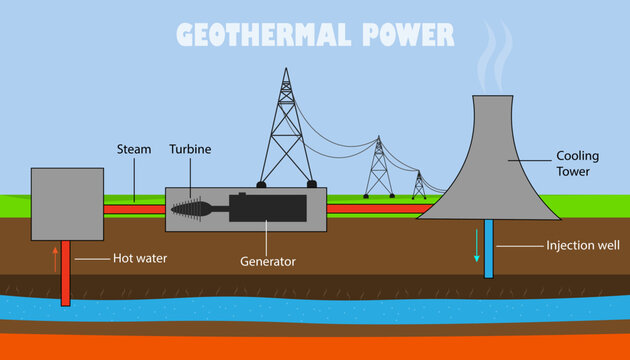
Finally, we have Binary Cycle Plants. These are the most common type and are super clever. Instead of directly using the geothermal water or steam, we use it to heat a second liquid with a lower boiling point (like butane – yeah, lighter fluid!). This second liquid turns to steam at a lower temperature, and that steam spins the turbine. It’s like using a hot water bottle to warm up your actual tea! The beauty of these is that they can use lower temperature geothermal resources, making geothermal energy accessible in more places.
What Happens After We Grab the Heat?
Okay, so we've spun our turbines and made electricity. Now what? Well, much like sending power from a regular power plant, the electricity goes into the grid and gets delivered to your home, powering your lights, your TV, and your all-important coffee maker.

But what about the water we used? Here's the cool part: most geothermal plants reinject the cooled water back into the ground. This helps replenish the geothermal reservoir and ensures that we can keep tapping into that underground heat for years to come. It's like returning the borrowed cup of sugar to your neighbor – good for community and good for the environment!
Why Geothermal is Kind of a Big Deal
So, why should you care about all this geothermal mumbo jumbo? Well, for starters, it's a renewable energy source. The Earth's core isn't going to cool down anytime soon (or at least, not in our lifetimes!), so we have a virtually endless supply of heat. Plus, geothermal plants are reliable. Unlike solar or wind power, they're not dependent on the weather. They can run 24/7, 365 days a year. Imagine never having to worry about your power going out during a storm – that's the potential of geothermal!

Of course, geothermal energy isn't perfect. It can be expensive to set up a plant, and there are some environmental concerns to consider. But overall, it's a clean, reliable, and sustainable way to generate electricity. And, let's be honest, tapping into the Earth's own heat source just sounds pretty darn cool. Who knows, maybe one day your house will be powered by the same energy that keeps volcanoes erupting and tectonic plates shifting! Think about that next time you're flicking on the lights. You might just be using a little piece of the Earth's fiery heart.
Next time you feel that unexpected warmth bubbling from the ground, remember there’s a whole lot of potential just waiting to be tapped.
/cdn.vox-cdn.com/uploads/chorus_asset/file/7807505/feature_geothermal_2017_inline1.jpg)