
How High Should A Co Detector Be Mounted
.jpg?format=2500w)
Alright, settle in, grab a virtual coffee, because we're about to dive into one of life's great mysteries, right up there with "why is there always one sock missing?" and "where did I put my keys?" Today, we're tackling the thrilling, often debated, and surprisingly important question: how high should your carbon monoxide detector be mounted?
You’ve done the responsible thing. You bought a CO detector. Bravo! Give yourself a pat on the back. You're practically a superhero in the making, bravely protecting your loved ones from the invisible, odorless villain known as carbon monoxide. But then you get home, unbox the little marvel, and suddenly, you're faced with a conundrum. Do you stick it to the ceiling like a shy bat? Or down near the baseboards, ready to scare the cat?
The Great CO Gravity Debate: High or Low?
This isn't just an aesthetic choice, folks. This is life and death. Okay, maybe a slight exaggeration for dramatic effect, but seriously, placement matters. And for years, people have whispered myths about CO like it's a shadowy urban legend. "It rises!" some proclaim, envisioning CO floating to the heavens. "No, it sinks!" others declare, convinced it's practically a basement-dwelling monster.
Must Read
Let me tell you, carbon monoxide, bless its invisible, odorless heart, isn't much for gravity games. It doesn't float like a helium balloon at a particularly enthusiastic birthday party, nor does it sink like a forgotten battleship in the bathtub.
Here’s the surprising fact, the mic-drop moment that will impress your friends at your next dinner party: While CO is technically, ever so slightly lighter than air, we're talking fractions here. It's like the difference between a regular feather and... a slightly smaller feather. It’s not enough to make it stratify and hang out exclusively at the ceiling or hug the floorboards.

Instead, CO pretty much behaves like that really rude guest at a party: it mixes evenly with the air. Yep, it just diffuses, infiltrates, and spreads out, mingling with everyone whether they're standing on chairs or hiding under the table. So, thinking it will "rise" or "sink" is about as useful as trying to herd cats with a laser pointer.
Where Should It REALLY Go? Think "Breathing Zone!"
So, if CO spreads out, where's the sweet spot? The answer is beautifully simple: at a height where you and your family are most likely to breathe it in. This means we’re generally talking about head height, or somewhere in that general vicinity. Think about where your head is when you’re sleeping, sitting on the couch, or walking around the house.
/fig 1.png?width=850&name=fig 1.png)
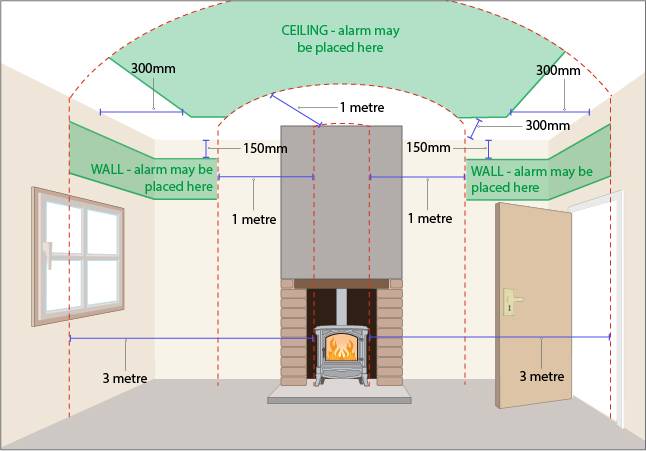
The National Fire Protection Association (NFPA) and manufacturers usually recommend mounting CO detectors on a wall about 5 feet (or 1.5 meters) from the floor. This puts it squarely in the breathing zone, ready to alert you before you're in too deep.
Now, here are a few more golden rules, like the secret handshake of home safety:
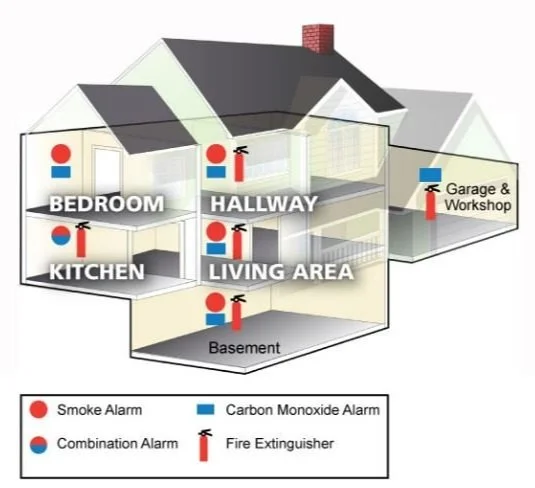
- On Every Level: You need one on every single level of your home, including the basement. Yes, even if your basement is just a storage portal for old holiday decorations and a questionable spider collection.
- Near Sleeping Areas: This is a biggie. Install them near or in every separate sleeping area. If CO strikes while you’re blissfully dreaming of unicorns, you need to be woken up. Fast.
- Away from Obstructions: Don't tuck it behind a giant curtain, a bookshelf, or that suspiciously large plant. It needs to be able to "breathe" and sample the air effectively.
- Steer Clear of Appliances: Avoid placing it right next to fuel-burning appliances (furnaces, water heaters, stoves) or directly above them. Why? Because these appliances can emit small, harmless bursts of CO during startup, potentially causing nuisance alarms. You don't want your detector crying wolf every time you boil water.
- No Direct Sunlight or Vents: Extreme temperatures (from direct sun or HVAC vents) can affect the detector's accuracy. Keep it out of direct drafts and extreme heat/cold.
- Give It Some Space: Keep it at least 15-20 feet away from sources of combustion. Think of it like giving a dramatic actor enough stage room for their big monologue.
Avoid These Hilarious (But Dangerous) Missteps
Let's have a laugh, shall we? Because imagining these scenarios is far better than living them:
Mounting it on the ceiling: Unless you plan on spending your days on a step ladder, constantly checking if your ceiling has a headache, aim lower. Plus, CO alarms are often loud for a reason – you want to hear them from your bed, not just from the rafters.
Mounting it on the floor: Your dog, Fido, does not need the existential dread of a false alarm from a rogue dust bunny or a particularly enthusiastic sneeze. Plus, if CO builds up on the floor first, you've probably got bigger problems than your detector being too sensitive.

The sweet spot, my friends, is that Goldilocks zone: not too high, not too low, but just right.
The Takeaway: Be Smart, Be Safe, Be Sniffy
So, forget the high-low drama. Think breathing zone. Think every level. Think near bedrooms. And please, for the love of all that is safe and sound, press that test button regularly. It’s like giving your little sentinel a reassuring pat on the back, "Good job, buddy! Keep sniffing!"
Your carbon monoxide detector is a silent guardian, a watchful protector, always on the lookout for that invisible foe. Give it the best possible chance to do its job, and you’ll sleep a whole lot sounder knowing you’re safe from the silent threat.