How Electricity Is Produced From Nuclear Energy
Alright, gather 'round, folks! Let me tell you a story about how we make electricity from... wait for it... nuclear energy! I know, I know, it sounds like something out of a sci-fi movie involving mutant turtles and glowing goo, but trust me, it's way cooler (and slightly less green).
So, imagine a tiny atom, right? Now, picture that atom wearing a tiny little hat labelled "Uranium-235" – because that's the star of our show. Uranium-235 is a special type of uranium that’s, shall we say, a bit… unstable. Think of it as the atom that always forgets to turn off the stove and leaves the house.
Here's where the fun begins. We take this atom and bombard it with a neutron. A neutron is like the annoying little brother of an atom, always poking and prodding. And when this neutron hits our Uranium-235, BAM! The atom splits! It's like setting off a microscopic firecracker inside a really strong coffee mug.
Must Read
This splitting is called nuclear fission. It sounds intimidating, but all it really means is "splitting the nucleus," which is the central part of the atom. And when that nucleus splits, it releases a whole bunch of energy. How much energy? Well, let’s just say a single kilogram of uranium can produce about the same amount of energy as burning thousands of kilograms of coal! Talk about efficient – if only losing weight was this easy!
Now, here's the kicker: When Uranium-235 splits, it doesn’t just release energy. It also releases more neutrons! It's like a chain reaction, but instead of awkward family gatherings, it’s a chain reaction of splitting atoms. One split releases neutrons, which split more atoms, which release more neutrons, and so on. It’s basically atomic dominos falling!
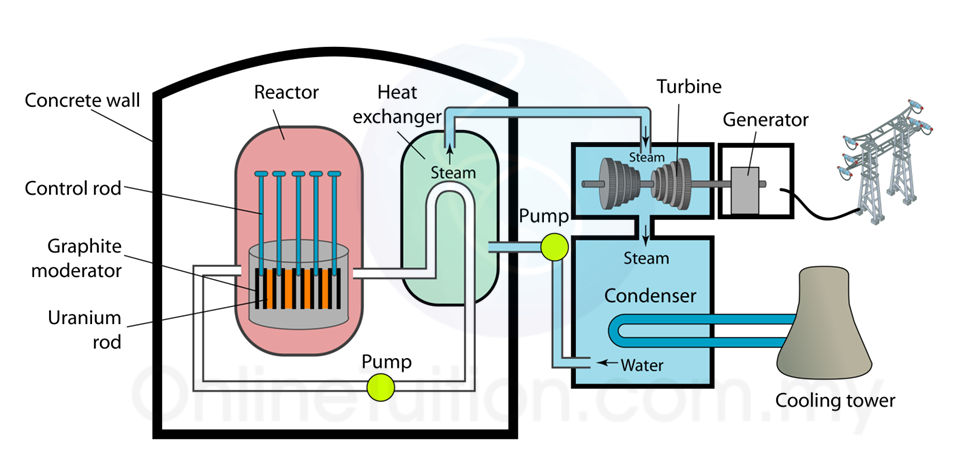
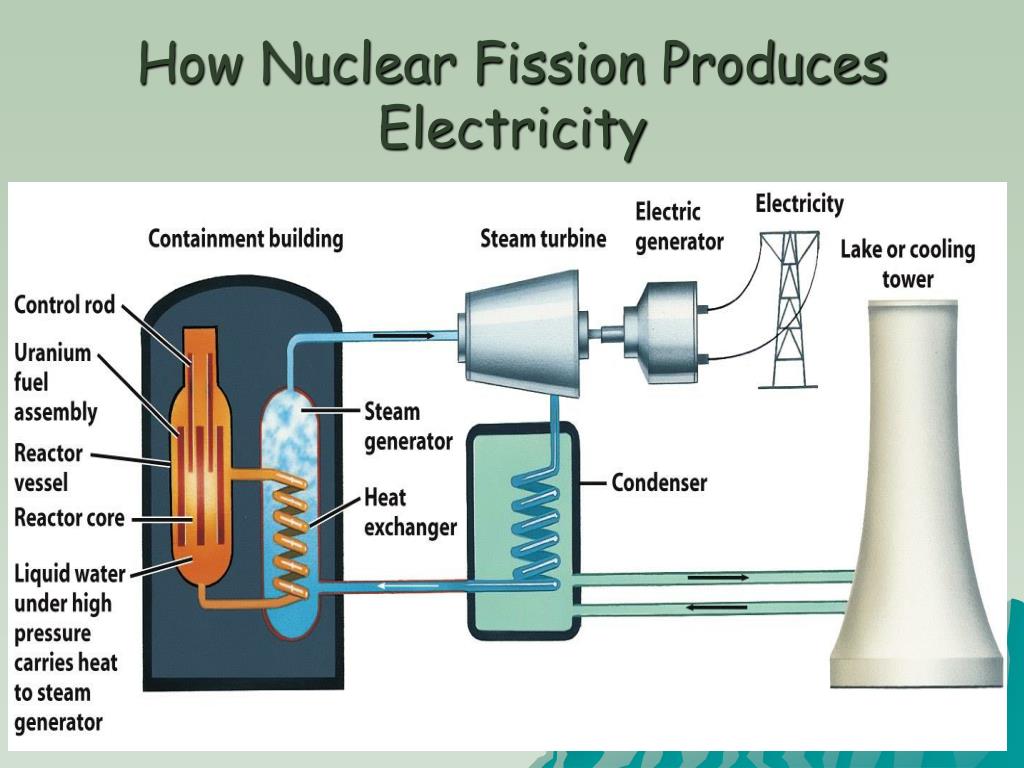
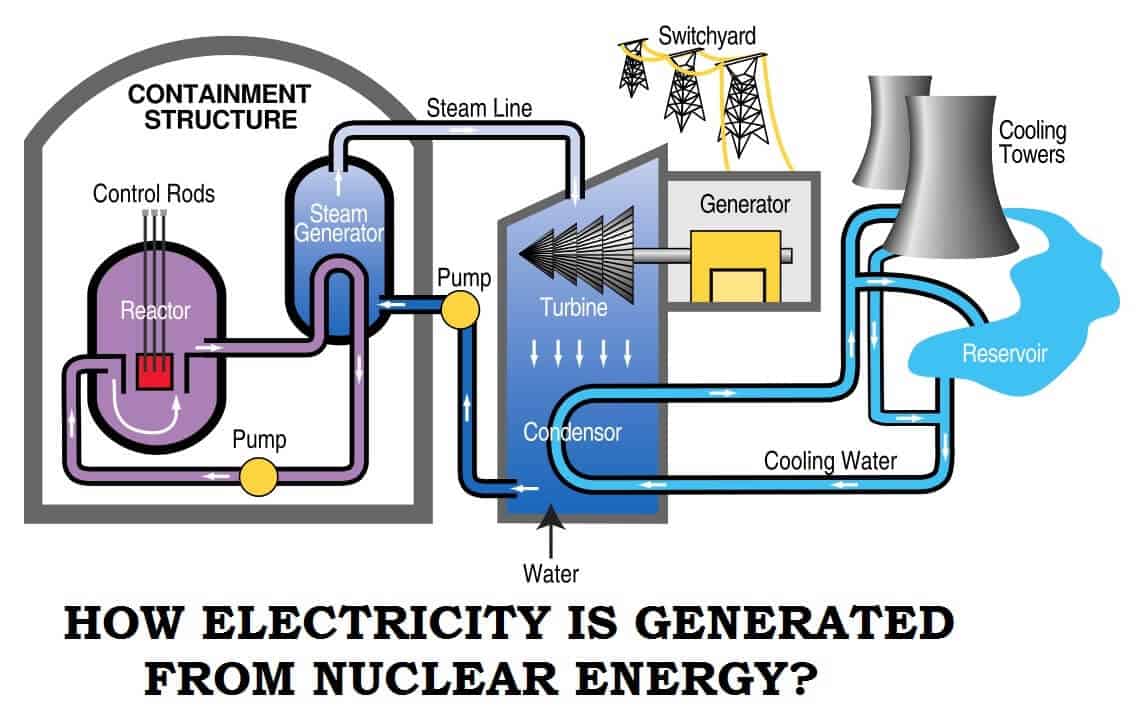
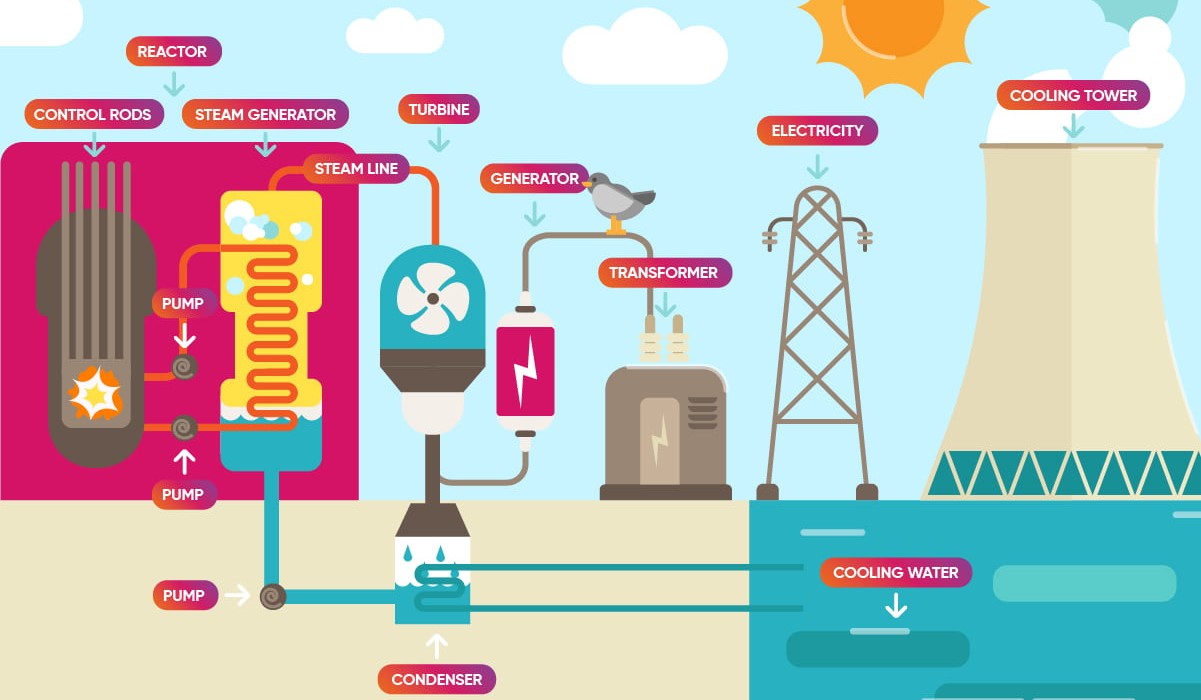
To keep things under control (we don't want a nuclear atom-ageddon, after all), we use what are called control rods. Think of these as atomic brakes. They’re made of materials like boron or cadmium, which are really good at absorbing those pesky neutrons. We can insert or withdraw these rods to speed up or slow down the chain reaction, like adjusting the volume on a nuclear boombox.
Okay, so we’ve got a controlled chain reaction happening, releasing a ton of heat. What next? Well, we use that heat to… wait for it… boil water! Yes, the power of nuclear fission is harnessed to make a giant, radioactive kettle. Mind blown, right?
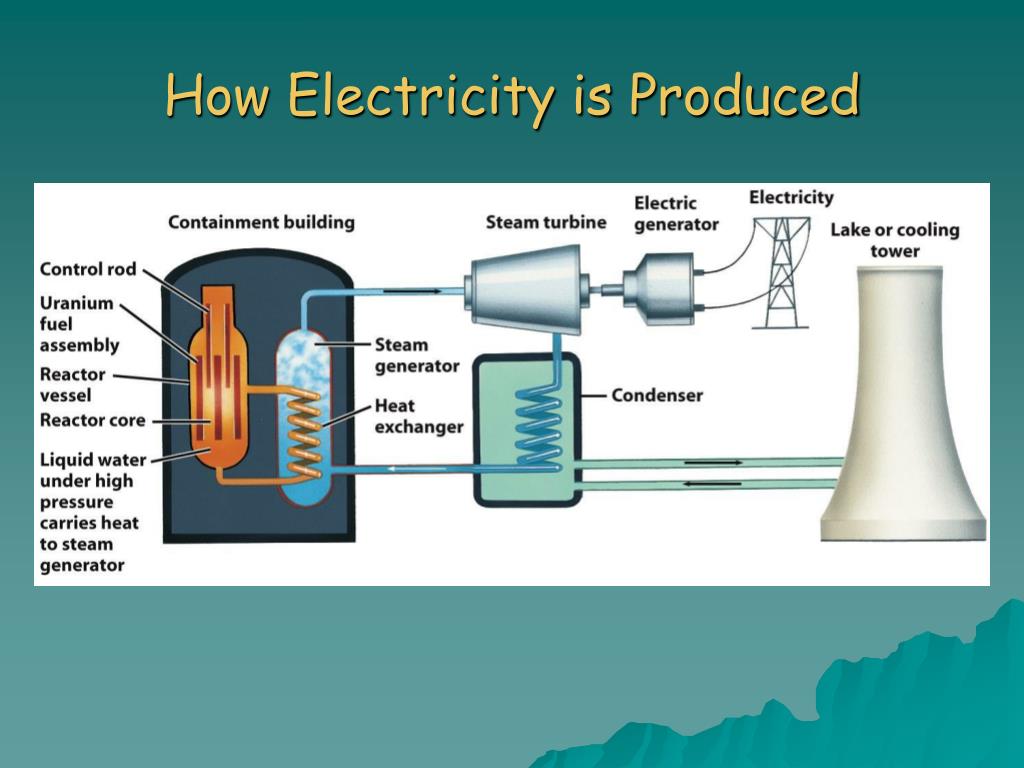
This boiling water creates high-pressure steam. And this steam? It's directed at a turbine, which is basically a giant fan connected to a generator. The steam spins the turbine, which spins the generator, and voila! Electricity! It's the same principle as a coal-fired power plant, just with a slightly more… explosive heat source.
So, to recap: we split atoms, release energy, boil water, spin a turbine, and generate electricity. It sounds complicated, but the basic idea is surprisingly simple. It's like building a Rube Goldberg machine, but instead of popping a balloon, you're powering a city.
Now, I know what you're thinking: “What about the waste?!” Nuclear waste is definitely a serious concern. Used nuclear fuel is radioactive, and it needs to be stored safely for, well, a long time. Think thousands of years. It's basically like having a radioactive houseguest who refuses to leave. Scientists are working on ways to reduce the amount of waste and to find better ways to store it, but it's a challenge that needs careful consideration.
However, it's also important to remember that nuclear energy doesn’t produce greenhouse gasses like coal or natural gas plants. So, while it has its drawbacks, it’s also a potentially important tool in the fight against climate change.
In summary: We split Uranium atoms, which boils water (very powerfully!). The steam turns a turbine, and voilà, you have electricity to power your phone, your toaster, and your collection of disco balls. It's a complex process, but hopefully, I've made it a little less…nuclear…to understand. And remember, the next time you flip a light switch, you might just be harnessing the awesome power of a splitting atom. Just try not to think about mutant turtles. You’re welcome!