How Does Wind Turbines Generate Electricity
Ever looked at a wind turbine, those giant, graceful pinwheels scattered across the landscape, and wondered exactly how they magically turn wind into electricity? It’s actually a pretty neat story, a blend of ancient principles and modern engineering that's surprisingly simple (once you get past the sheer size of the things!). Think of it like a super-sized, high-tech version of something you probably played with as a kid: a pinwheel.
From Breezy Day to Bright Lights
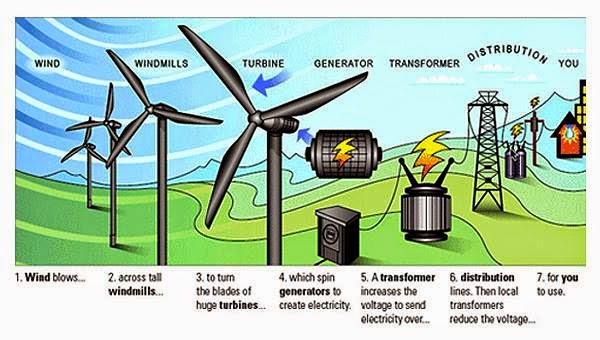
The basic idea is this: wind pushes the blades, the blades turn, and that turning motion creates electricity. It's like capturing the wind’s energy and putting it to work. Imagine trying to stop a spinning merry-go-round; that's the kind of power we're talking about! These turbines are deliberately placed in windy areas, from open fields to coastal areas, because, well, more wind means more power. It's a bit like setting up shop next to a popular food truck - location, location, location!
The blades themselves are specially designed. They're not just flat pieces of material; they’re aerodynamically shaped, like airplane wings. This shape allows them to efficiently “catch” the wind. As the wind flows around the blade, it creates lift, which is the force that makes the blades spin. Think of it like blowing across the top of a piece of paper – it rises, right? The same principle applies to a wind turbine blade, only on a much, much larger scale.
Must Read
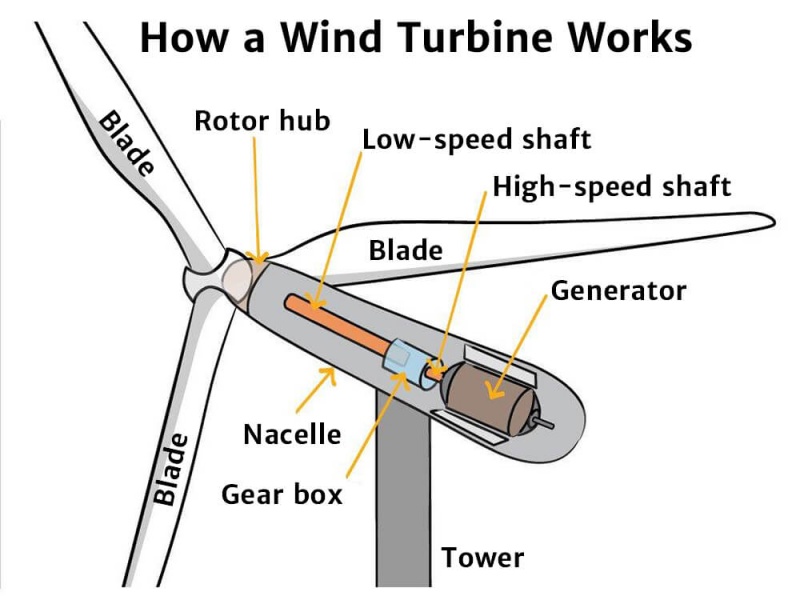
Now, here's where it gets a little more technical, but don't worry, we'll keep it breezy. The spinning blades are connected to a shaft, kind of like the axle of a car wheel. This shaft goes into a gearbox, which is housed inside the nacelle (that big box sitting atop the tower). The gearbox increases the speed of the spinning motion. Why? Because the generator, the next part of the puzzle, needs to spin at a higher speed to produce electricity efficiently.
The generator is the heart of the electricity-making process. It's a clever device that uses magnets and coils of wire. As the shaft spins the magnets inside the generator, it creates an electric current in the wires. This is based on a principle called electromagnetic induction, discovered by Michael Faraday back in the 1830s. He probably didn't imagine his discovery would one day power entire cities using the wind!

Think of it like pedaling a bicycle that powers a light. The faster you pedal (the faster the shaft spins), the brighter the light shines (the more electricity is generated). Wind turbines do essentially the same thing, but instead of your legs providing the power, it's the wind. And instead of a small light bulb, it's powering your phone, your fridge, maybe even your entire neighborhood!
From Turbine to Table
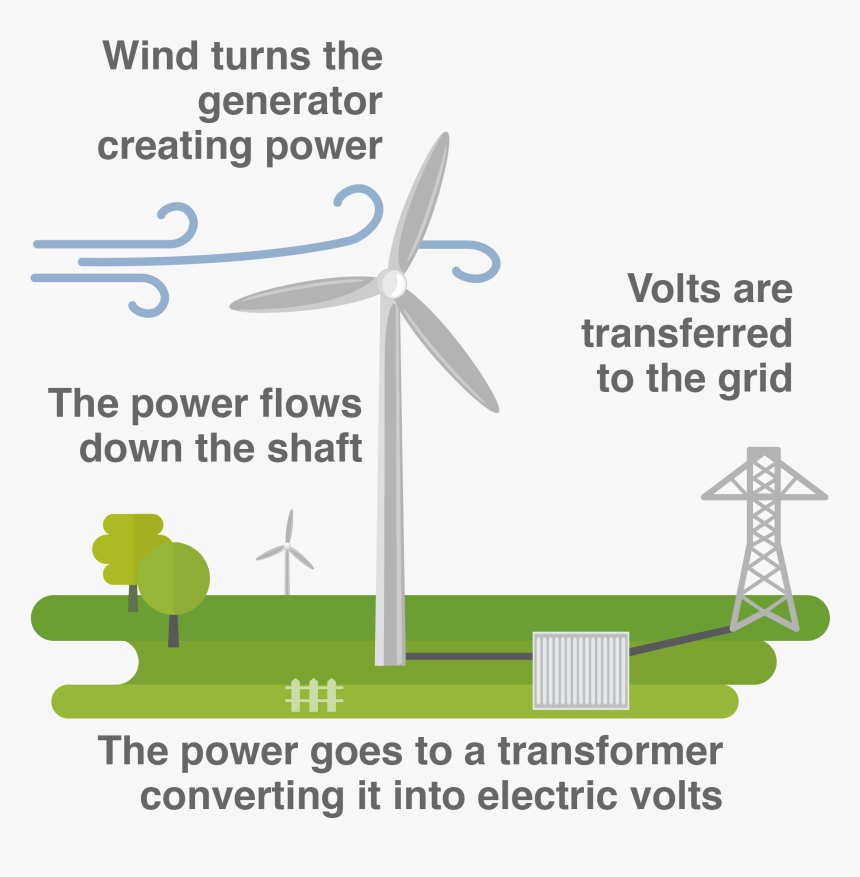
Once the electricity is generated, it travels down the tower through cables. From there, it connects to the electrical grid, the network of power lines that distributes electricity to homes, businesses, and everything in between. So, the next time you flip a light switch, remember there's a chance that the power came from the wind, harnessed by those majestic spinning blades. It’s a pretty cool thought, isn’t it?

What's fascinating is how these turbines are getting smarter. Modern wind turbines have sensors and computers that constantly monitor wind speed and direction. They can even adjust the angle of the blades to capture the wind more efficiently. They also have braking systems to stop the blades from spinning too fast in extreme winds, like during a hurricane. It’s a constant dance between technology and nature, a collaboration to squeeze every bit of energy from the breeze.
So, the next time you see a wind turbine, don't just see a giant machine. See a testament to human ingenuity, a symbol of sustainable energy, and maybe even a giant pinwheel playing in the wind. And remember, beneath that simple spinning motion lies a powerful, elegant system that's helping to power our world, one gust of wind at a time. Wind power is an important aspect of green energy and is only becoming more prevalent in the world. The future of renewable energy is bright.
"The wind does not discriminate. It is free to all, and its power can be harnessed for the benefit of all." - An Optimistic Engineer