How Does Through The Wall Air Conditioner Work
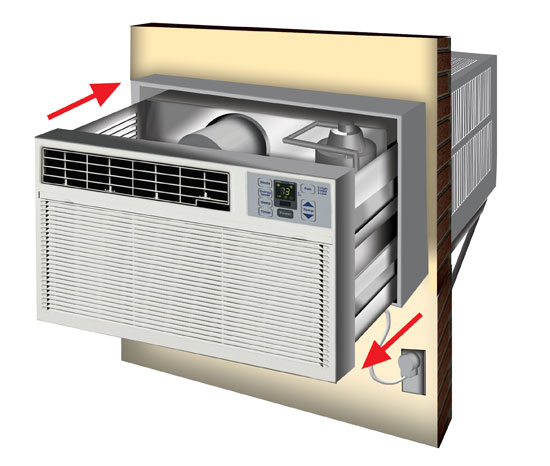
Ever walked past a window air conditioner blasting a wave of arctic air onto the sidewalk and wondered, "How does that frosty little box actually work?" Well, you're in for a treat! It's all a bit like a magical refrigerator that decided to live in your wall, and I’m here to break it down in a way that won’t make your brain melt faster than an ice cream cone in July.
The Basic Idea: Heat Thief!
Think of your through-the-wall AC unit as a tiny, dedicated heat thief. Its entire mission in life is to steal the heat from your room and dump it outside. Seriously, it’s like a tiny, four-finned burglar working tirelessly to keep you cool and comfortable. But how does it accomplish this grand larceny of thermal energy?
The Magical Refrigerant: Liquid to Gas and Back Again
At the heart of it all is a special substance called refrigerant. This stuff is basically a shape-shifting ninja of temperature control. It’s a liquid that loves to turn into a gas, and then back into a liquid again. And it does this with gusto! As it transforms, it either absorbs heat or releases it. Think of it like this: imagine you're sweating after a run. As the sweat evaporates, it cools you down. The refrigerant does the same thing, but inside your AC unit.
Must Read
The refrigerant zips around in a closed loop, encountering different components along the way:
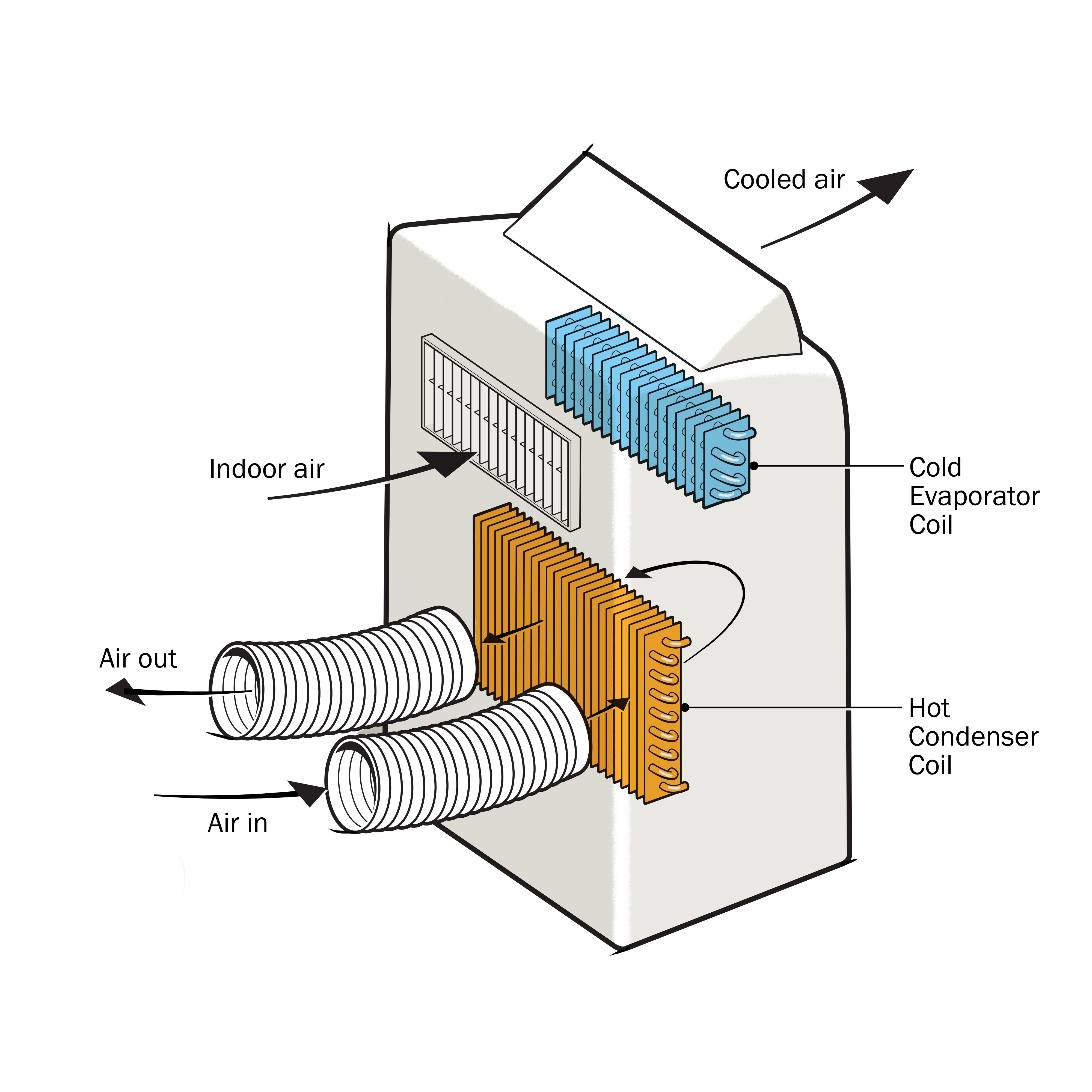
- The Evaporator: This is the part of the AC unit that’s inside your room. The liquid refrigerant flows through the evaporator coils, which are basically a bunch of squiggly pipes. As the warm air from your room blows across these coils, the liquid refrigerant starts to boil and turn into a gas. And guess what? As it transforms into a gas, it sucks up all that lovely heat from the air! This is where the "heat theft" begins. The now-cooler air is then blown back into your room, making you feel like you're living in a frosty paradise.
- The Compressor: Now we need to do something with that hot, gaseous refrigerant. Enter the compressor, the muscleman of the operation. It squeezes the gas, which increases its pressure and, even more importantly, its temperature. Think of it like pumping up a bicycle tire – it gets warm, right? The compressor does the same thing to the refrigerant, making it super-hot.
- The Condenser: This is the part of the AC unit that’s outside your wall. The super-hot, high-pressure refrigerant gas flows through the condenser coils. A fan blows air across these coils, which causes the refrigerant to cool down and condense back into a liquid. As it cools, it releases all that heat it stole from your room into the outside air. This is why the air blowing out of the back of your AC unit is so hot – it's all the heat from your room!
- The Expansion Valve: Finally, the high-pressure liquid refrigerant flows through the expansion valve, which is a tiny opening that drastically reduces the pressure. This allows the refrigerant to cool down even further and get ready to repeat the cycle, eagerly waiting to steal more heat from your room.
It's All About the Cycle, Baby!
And that's it! The refrigerant keeps cycling through these components, constantly stealing heat from your room and dumping it outside. It's like a tireless, miniature weather-manipulating machine, all contained within a metal box. All this thanks to the principles of thermodynamics, which is a fancy way of saying "heat likes to move from hot to cold."
And your AC unit is just a master of exploiting that principle.
So, the next time you're basking in the cool air from your through-the-wall AC unit on a sweltering summer day, take a moment to appreciate the ingenious engineering that’s making it all possible. You've got a tiny heat thief working tirelessly to keep you comfortable. And that, my friend, is pretty cool.