
How Does Hydroelectric Power Create Electricity
Ever wonder how that power that lights your phone, toasts your bread, or lets you binge-watch cat videos comes from a whooshing waterfall? Prepare to be amazed – it's all thanks to the magic of hydroelectric power!
The Watery Roller Coaster Ride
Imagine a giant water slide. A really, really, ridiculously long and powerful water slide. That’s kind of what a hydroelectric dam is, but instead of squealing kids, we’ve got a serious mission: making electricity.
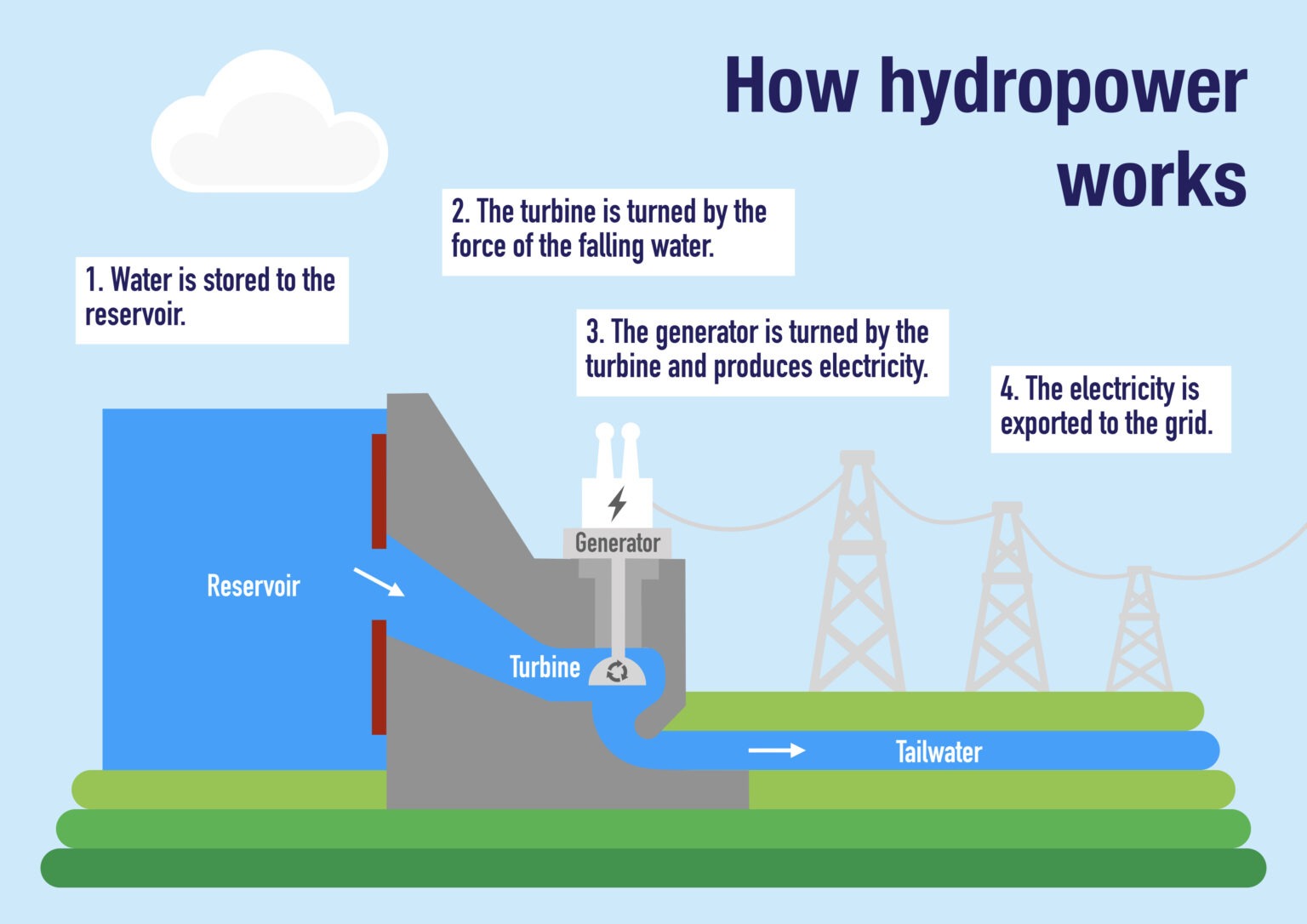
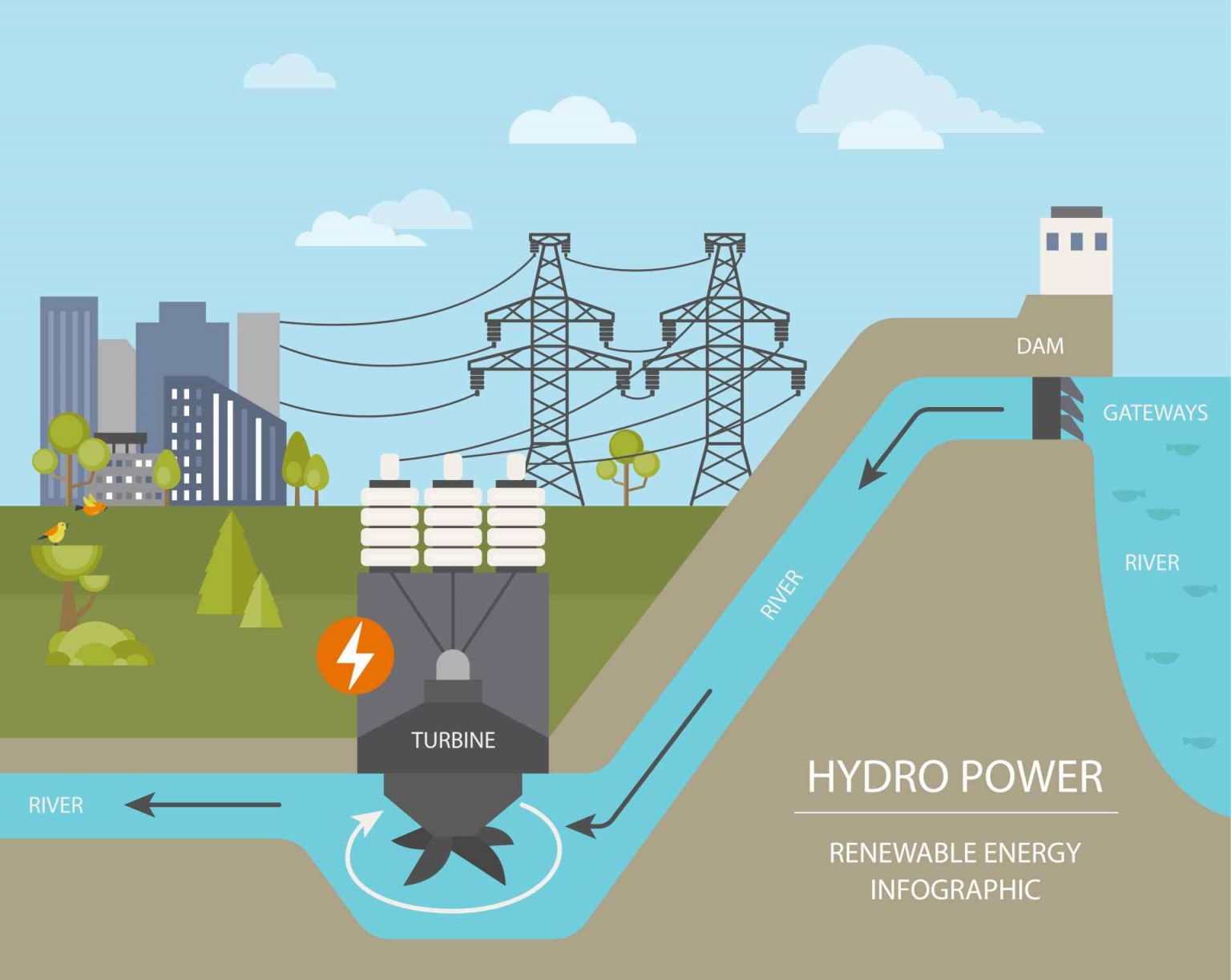
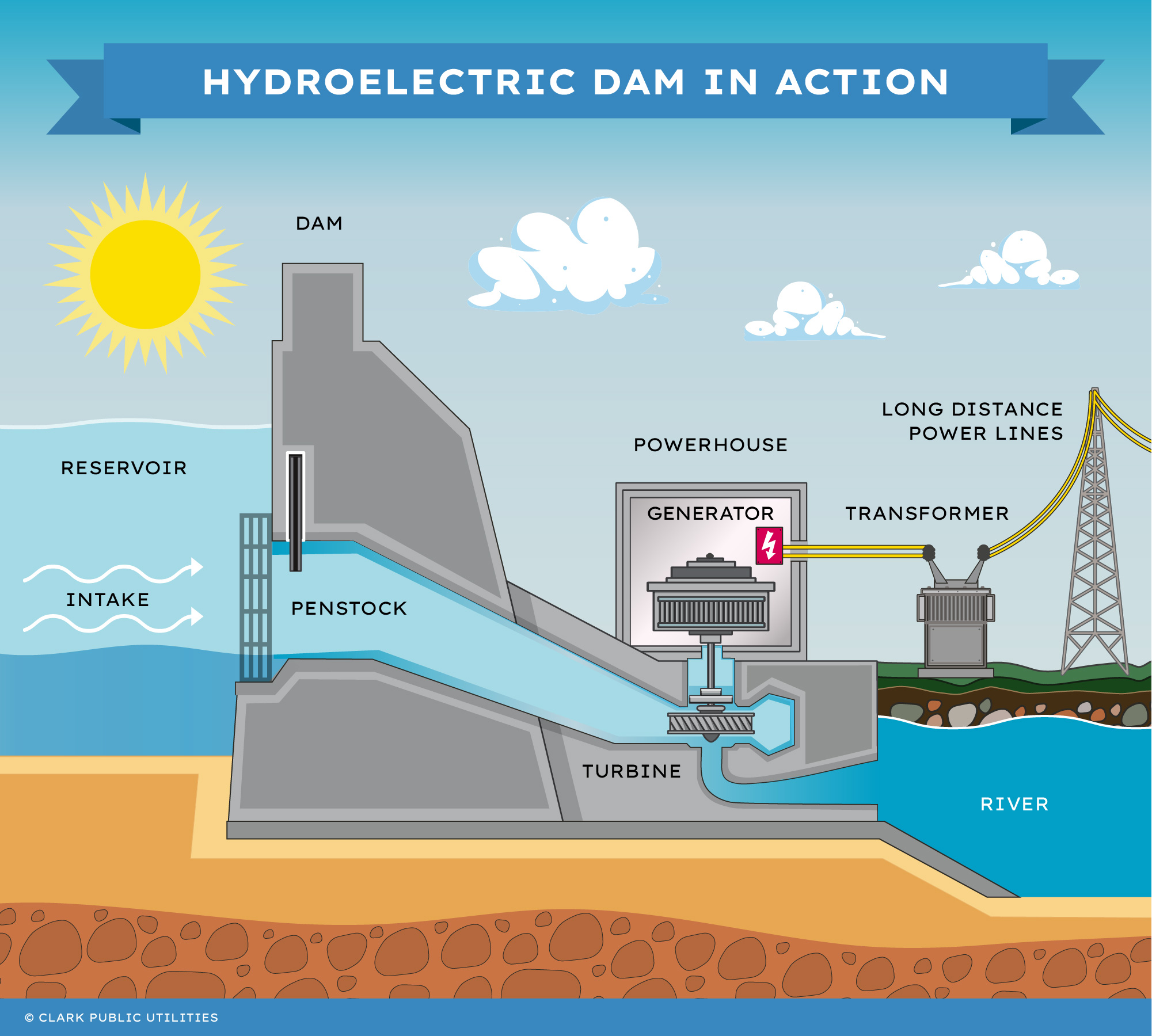
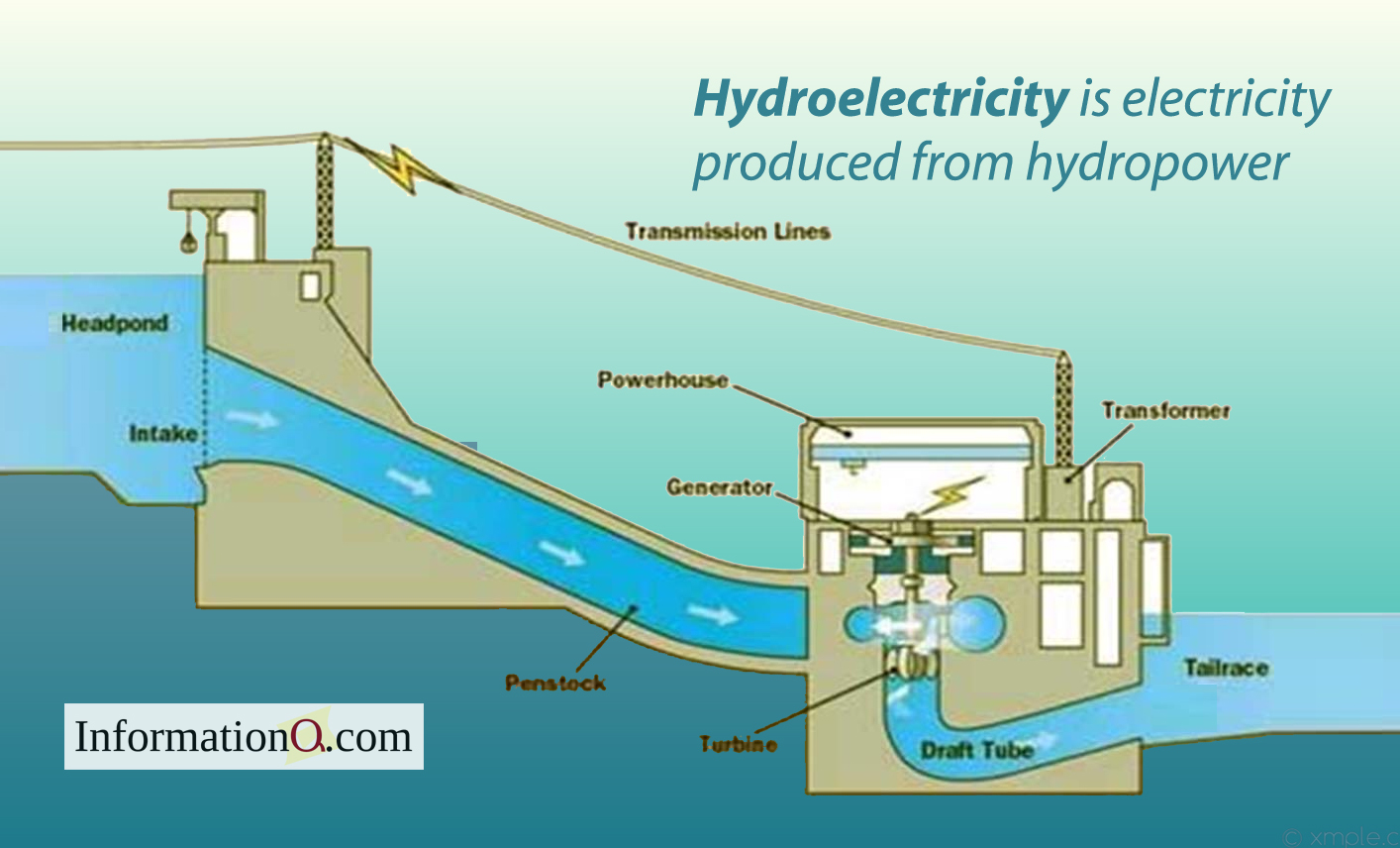
First, we need a big lake, or "reservoir," created by damming a river. Think of it as the waiting area for our water slide. This reservoir stores all that potential energy.
Must Read
Letting Loose the Liquid Fury
Now, the fun begins! Gates open, and the water rushes down a special tube called a penstock. It's like the start of a watery roller coaster ride!
This isn't just a gentle trickle. We're talking about a massive, controlled torrent of water, gaining speed and power as it plummets downwards. It’s like Niagara Falls, but on purpose and with a very important job to do.
The Turbine Tango
At the bottom of the penstock, the water slams into a turbine. Think of a turbine as a giant water wheel, but way more sophisticated.
The force of the water makes the turbine spin. It’s like a watery ballet of immense power. This spinning is key!
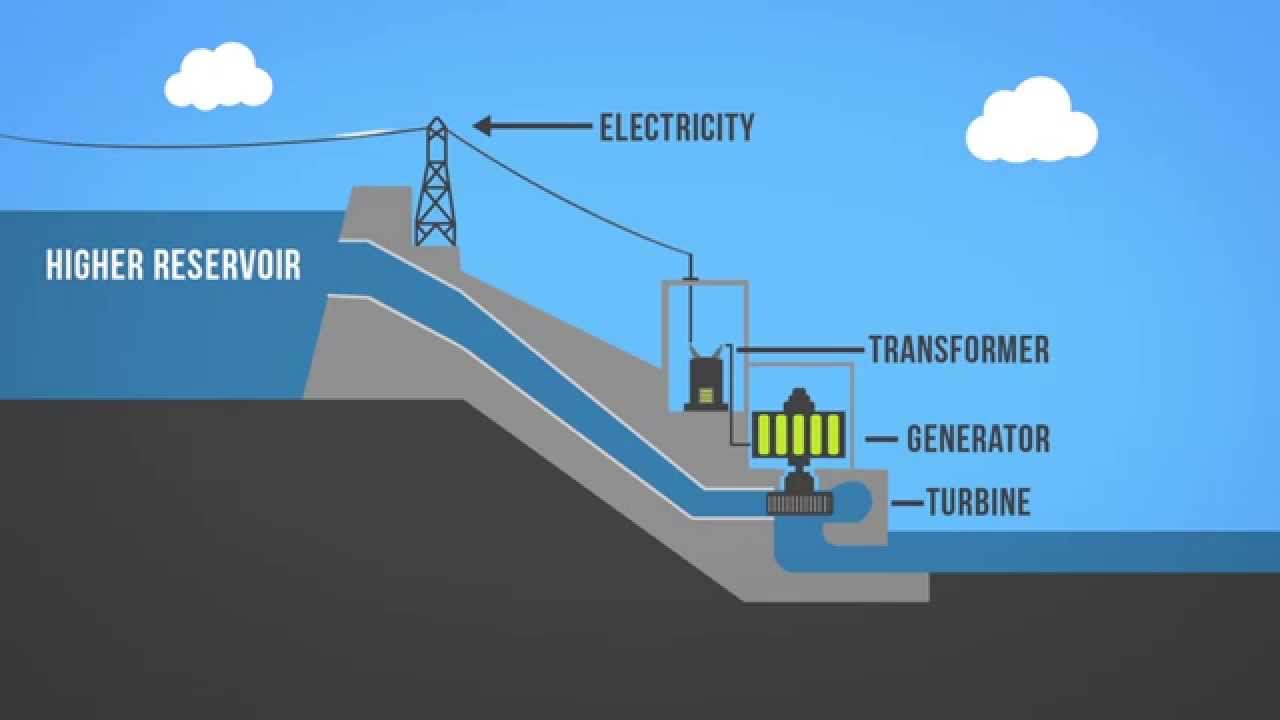
And that's where the true magic happens. The spinning turbine is connected to a generator, which converts the mechanical energy of the spinning into electrical energy.
Turning Spin into Spark
Inside the generator, coils of wire spin within a magnetic field. Without getting too technical, this spinning creates an electrical current.
It's like a tiny electric wizard weaving a spell, but instead of a wand, it uses the awesome power of flowing water. Abracadabra... electricity!
This electricity then flows through power lines to your homes, schools, and businesses. From the mountain to your microwave, the water has done its duty.
Clean, Green, and… Slightly Fishy?
Hydroelectric power is considered a renewable energy source because the water cycle constantly replenishes the reservoirs. It's like nature's endless energy refill!
It doesn't produce air pollution or greenhouse gases like fossil fuels. It’s a cleaner, greener way to power our lives. Good for the planet!
Of course, it's not without its challenges. Dams can impact fish populations and river ecosystems. Engineers and environmentalists work hard to minimize these impacts.
They create fish ladders, which are like watery staircases, allowing fish to swim upstream past the dam. It’s a heroic effort to help our finned friends!
More Than Just Power
Hydroelectric dams also provide other benefits. They can help control floods and provide reliable water supplies for irrigation and drinking.
Reservoirs can also be used for recreation, like boating, fishing, and swimming. It's a multi-purpose marvel of engineering!
Think of the Hoover Dam, a massive concrete structure that tamed the Colorado River and provides power and water to millions. It is a testament to human ingenuity and the power of water.
A History of Harnessing the Flow
People have been harnessing the power of water for centuries. Ancient civilizations used water wheels to grind grain and power mills.
The first hydroelectric power plant was built in 1882 in Appleton, Wisconsin. It was a small plant, but it marked the beginning of a new era of energy production.
Today, hydroelectric power is a major source of electricity around the world. From the towering dams of China to the smaller run-of-river plants in Europe, water is working hard to keep our lights on.
The Future is Fluid
Hydroelectric power will continue to play a vital role in our energy future. New technologies are being developed to make hydropower even more efficient and environmentally friendly.
Pumped storage hydropower, for example, is like a giant battery. It uses excess electricity to pump water uphill into a reservoir, and then releases the water to generate power when demand is high.
So, the next time you flip a light switch, remember the amazing journey of water from the reservoir to your home. Think of the spinning turbines and the electric wizards working their magic.
Surprising Facts to Impress Your Friends!
Did you know that the world's largest hydroelectric dam is the Three Gorges Dam in China? It's absolutely gigantic!
Some hydroelectric plants are built underground, inside mountains! It’s like a secret agent's lair, but instead of saving the world, it’s powering it.
Fish ladders aren't just straight ramps. Some are complex mazes designed to mimic natural river conditions. The fish are probably thinking, "What is this aquatic obstacle course?"
Water: The Unsung Hero
From providing clean energy to controlling floods and providing drinking water, water is an essential resource that we often take for granted.
Hydroelectric power is just one example of the many ways that we can harness the power of water to benefit society. It’s a relationship that we need to cherish and protect.
So raise a glass (of water, of course!) to hydroelectric power and the amazing force of nature that keeps our world spinning – literally! Next time you see a waterfall, remember it could be a power plant in disguise!
The Power Within the Flow
The whole process, from the reservoir to your outlet, is a testament to human ingenuity and the power of harnessing natural resources responsibly. It's quite impressive, really.
It's a reminder that even something as simple as flowing water can be transformed into something extraordinary. A real-life liquid lightning bolt!
So, let's appreciate the water, the dams, the turbines, and the generators that bring us this clean and renewable source of energy. Here's to a brighter, more sustainable future, powered by the humble, yet mighty, force of water.
Remember hydroelectric power is not just about electricity; it's about respecting and utilizing the resources nature provides.