
How Does A Plane Turbine Work
Hey there! Grab a coffee, pull up a chair. Ever looked out the window on a flight, seen that giant metal tube strapped to the wing, and thought, "How on earth does that thing actually work?" Yeah, me too! It looks like some kind of magic vacuum cleaner from the future, right?
Well, spoiler alert: it’s not magic, but it’s pretty darn close! We’re talking about a plane’s turbine engine, sometimes called a jet engine, and it’s basically a masterclass in controlled explosions and fancy air manipulation. Let’s break it down, super casually, like we’re dissecting a particularly intriguing sandwich.
First Up: The Big SUCK!
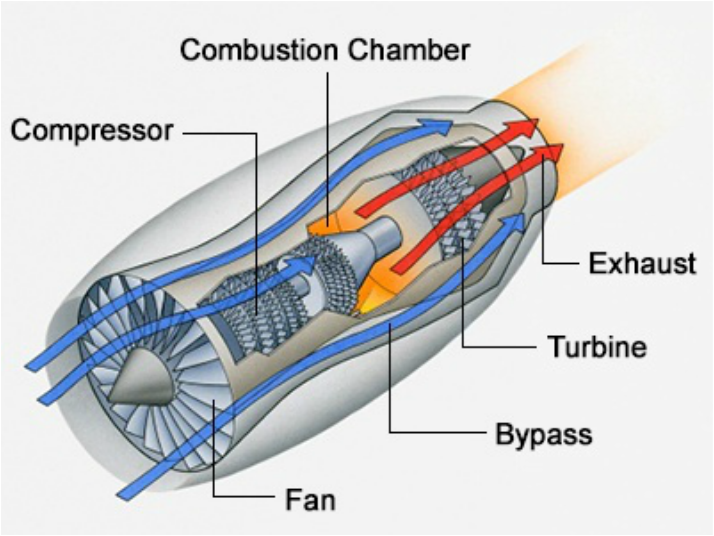
Imagine a giant, hungry mouth at the front of the engine. That’s the intake. It’s got these enormous fan blades, right? Their job is pretty simple but incredibly important: they suck in a ridiculous amount of air. Like, "hoovering up everything not nailed down" amounts of air. Think of it as the engine taking a massive, deep breath.
Must Read
Some of that air goes straight out the back, providing a bit of thrust on its own – that's called a turbofan engine, and it’s super efficient. But the real fun happens with the air that gets pulled into the core of the engine. That’s where things get spicy!
Next: The Big SQUEEZE!
So, we’ve got this huge volume of air now, right? What do we do with it? We compress it! This is where the compressor section comes in. It’s a series of fan-like blades, but they’re not just blowing air around. Oh no. They’re like tiny, super-fast bouncers at a very exclusive club, forcing all the air molecules closer and closer together.
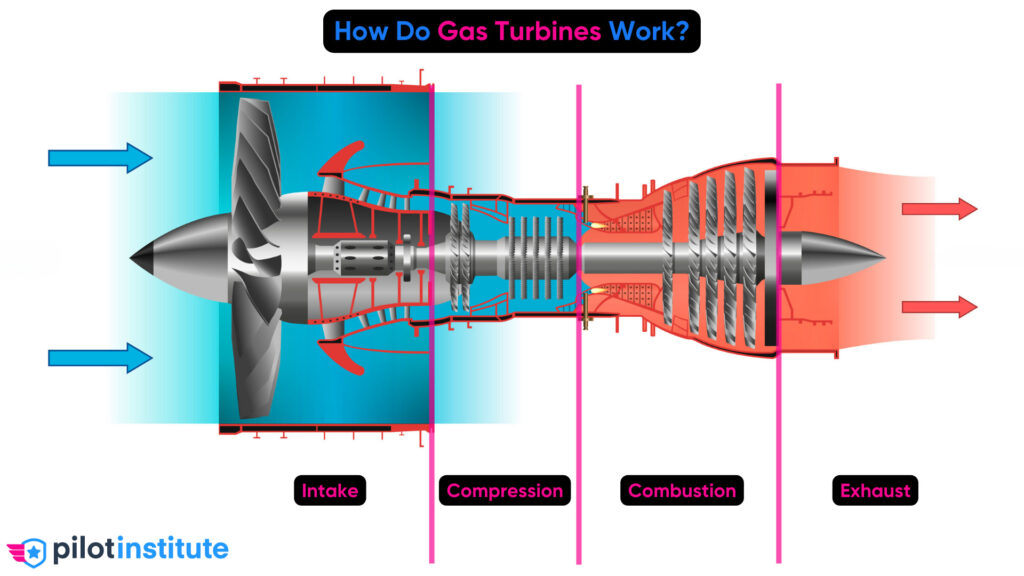
We’re talking about cramming a whole lot of air into a much smaller space. Why? Because when you squeeze air, it gets hot and dense. And dense, hot air is exactly what we need for the next step. It's like preparing a super concentrated energy shot for the engine. More bang for your buck, literally!
Then: The Big BANG! (My Favorite Part)
Alright, we’ve got super-squeezed, super-hot air. Now what? Time for the fireworks! This happens in the combustor (or combustion chamber). Here, fuel is sprayed into that hot, dense air, and then… BAM! A spark plug ignites the mixture. Yes, a spark plug, just like in your car, but on a much grander, more spectacular scale.
![How do Jet Engine Work? [Explained with Complete Details] - Engineering](https://engineeringlearn.com/wp-content/uploads/2023/03/How-do-Jet-Engine-Work.jpg)
This isn't just a little flame; it's a continuous explosion. Imagine hundreds of industrial blowtorches going off non-stop inside that engine. The temperature inside these chambers can be hotter than the melting point of the metal they’re made from – which is why they have some seriously clever cooling systems! This is where the magic really, truly happens, generating incredible amounts of hot, expanding gas.
After the Bang: The Big SPIN!
Now we have these ridiculously hot, high-pressure gases blasting out of the combustor. What do they hit next? The turbine section. This is another set of blades, but unlike the compressor blades, these are driven by the hot gases.
Think of it like a really, really powerful pinwheel, spun by a continuous jet of fire. As these gases rush past the turbine blades, they make them spin incredibly fast. And here's the genius part: the turbine is connected by a shaft (a long rod) to the compressor and the big intake fan at the front!

So, the energy generated by the combustion spins the turbine, which in turn spins the compressor and the main fan, which then sucks in more air, compresses it, and feeds the fire again. It's a beautiful, self-sustaining loop once it gets going! Talk about a perpetual motion machine, kinda.
Finally: The Big WHOOSH!
After the gases have done their job spinning the turbine, they're still super hot and moving incredibly fast. They have nowhere to go but out the back of the engine, through the exhaust nozzle. And when all that high-velocity, high-temperature gas blasts out, guess what happens?

Yup, you guessed it! It creates thrust. It's Newton's third law of motion in action: for every action, there's an equal and opposite reaction. The engine pushes a huge amount of air and gas backward, and that pushes the plane forward. Whoosh! You're flying!
So, What Have We Learned?
Basically, a plane turbine is a super-sophisticated air pump that sucks, squeezes, burns, and then blows. It's a continuous process of ingesting air, mixing it with fuel, lighting it on fire in a controlled manner, and then using the resulting explosion to turn a giant fan (which sucks in more air) and blast the plane forward.
Pretty wild, right? Next time you're sipping your lukewarm coffee at 35,000 feet, you can impress your seatmate by explaining that you're essentially riding on a series of controlled infernos. You're welcome! Now, about that in-flight movie...