How Does A Nuclear Power Plant Make Electricity
Ever flick a light switch and wonder where that almost magical electricity comes from? We're so used to having power at our fingertips, we rarely think about the amazing journeys it takes to get there. One of the most fascinating ways we generate electricity is through nuclear power, and while the term might conjure images of sci-fi movies, the science behind it is pretty cool (and understandable!). Let's dive in and explore how a nuclear power plant transforms atoms into the electricity that powers our lives.
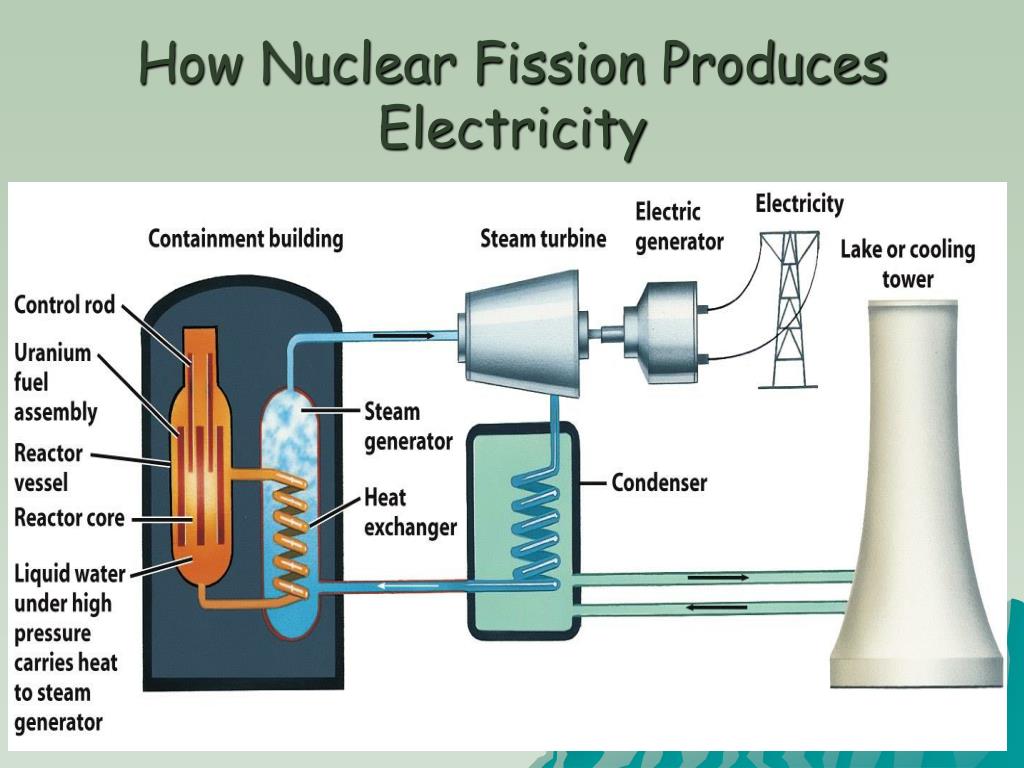
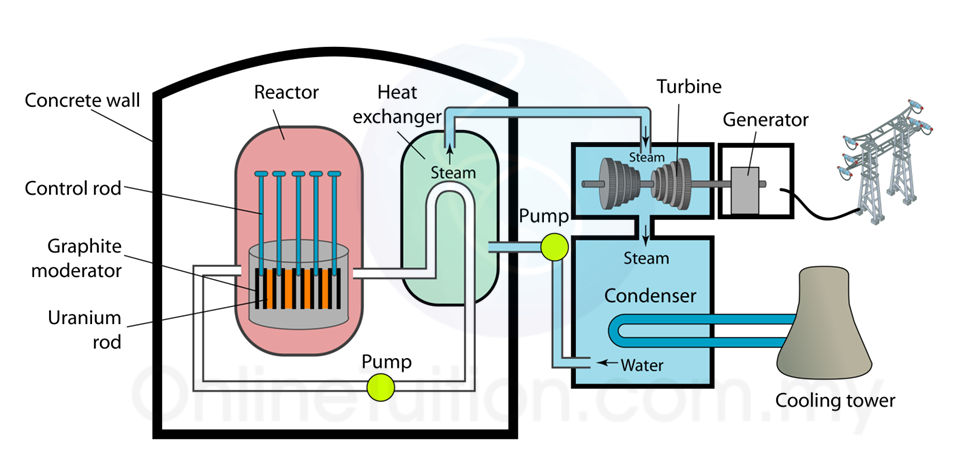
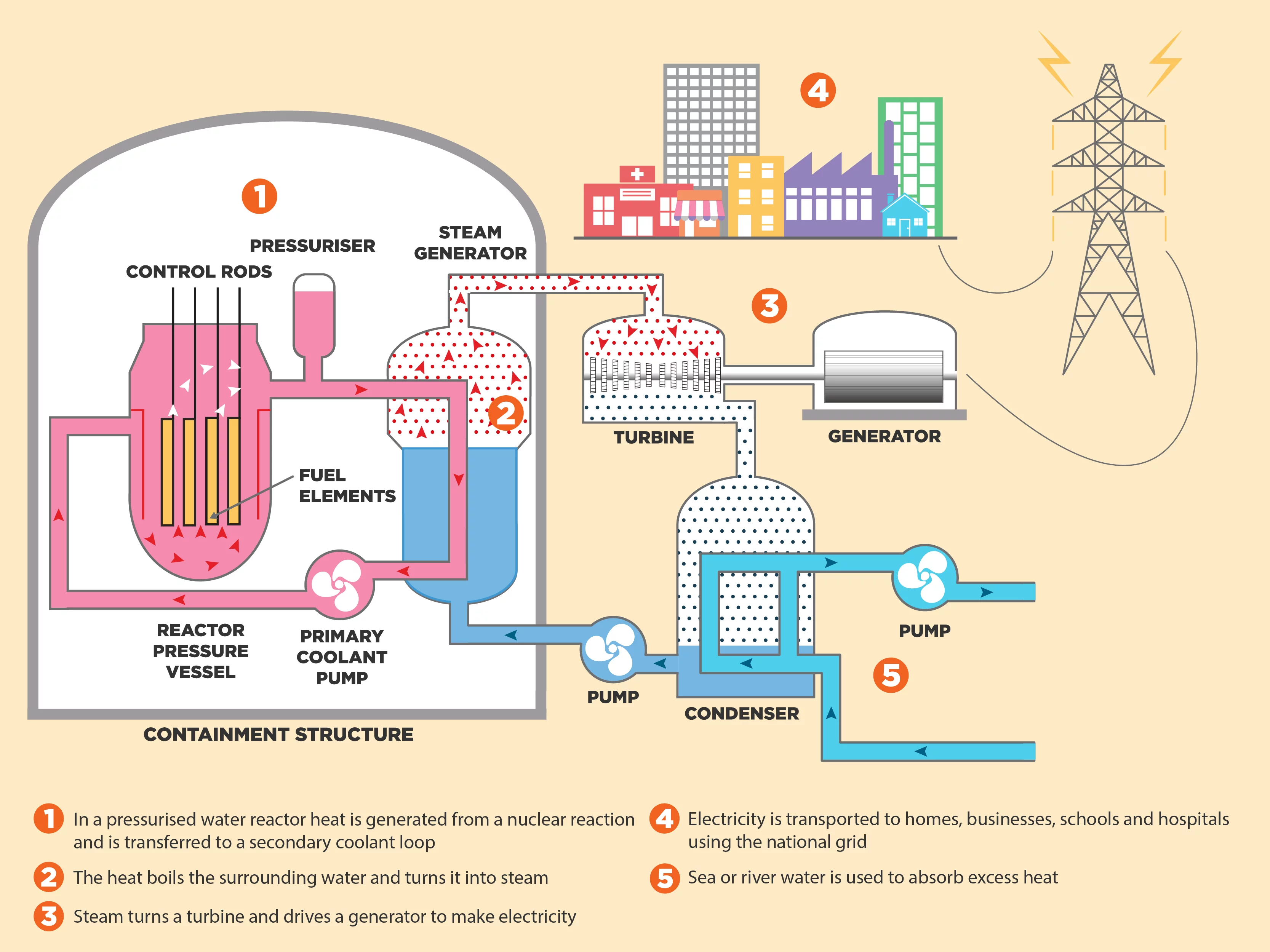
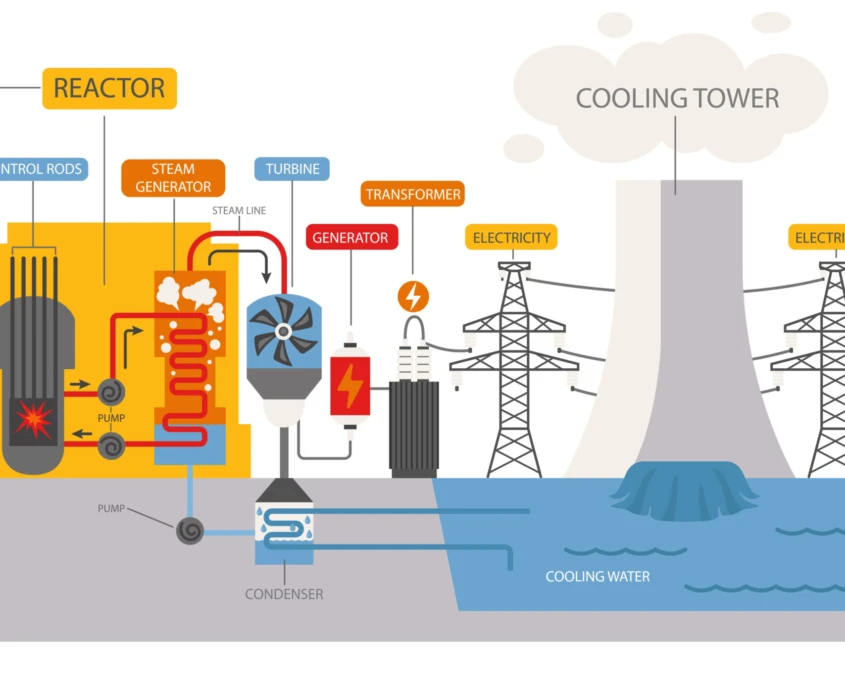
At its core, a nuclear power plant's purpose is the same as a coal or gas-fired plant: to boil water and create steam. That steam then turns a turbine, which spins a generator, and voila! Electricity. The difference lies in how we get the heat to boil the water. Instead of burning fossil fuels, nuclear plants use nuclear fission, which is the splitting of atoms – typically uranium. This splitting releases a tremendous amount of heat, far more efficiently than burning coal or gas. This efficiency is a major benefit, allowing nuclear plants to produce large amounts of electricity with a relatively small amount of fuel.
Think of it like this: imagine trying to heat a swimming pool with a campfire versus a giant propane heater. The campfire might eventually work, but the propane heater is far more powerful and efficient. That's essentially the difference between burning fossil fuels and using nuclear fission. This efficiency also translates to fewer greenhouse gas emissions during operation, making nuclear power a low-carbon energy source that can help combat climate change. Plus, nuclear power plants can operate 24/7, providing a reliable baseload power supply, unlike solar or wind, which are dependent on weather conditions.
Must Read
You might not realize it, but nuclear science touches your daily life in many ways beyond just electricity. In medicine, radioactive isotopes are used for diagnosis and treatment of diseases like cancer. In agriculture, they can help improve crop yields and preserve food. And in education, understanding nuclear physics is crucial for students pursuing careers in science, engineering, and technology. Concepts like radioactive decay and half-life are often taught in high school and college physics courses.

So, how can you explore this topic further? There are tons of resources available! Start by searching for documentaries on nuclear power plants – many offer virtual tours. Online simulations can also help you visualize the process of nuclear fission and understand how reactors work. Consider visiting a science museum with exhibits on nuclear energy. You could even research the history of nuclear power, learning about the scientists who made these groundbreaking discoveries. Look up information on the International Atomic Energy Agency (IAEA) to learn more about the safe and peaceful uses of nuclear technology. Understanding the science behind nuclear power helps us make informed decisions about our energy future.
Don't be intimidated by the science! Just like any complex topic, break it down into smaller, manageable pieces. Understanding the basics of how a nuclear power plant works empowers you to be a more informed and engaged citizen. So, go ahead, explore the fascinating world of nuclear energy – you might be surprised at what you discover!