
How Does A Nuclear Plant Work
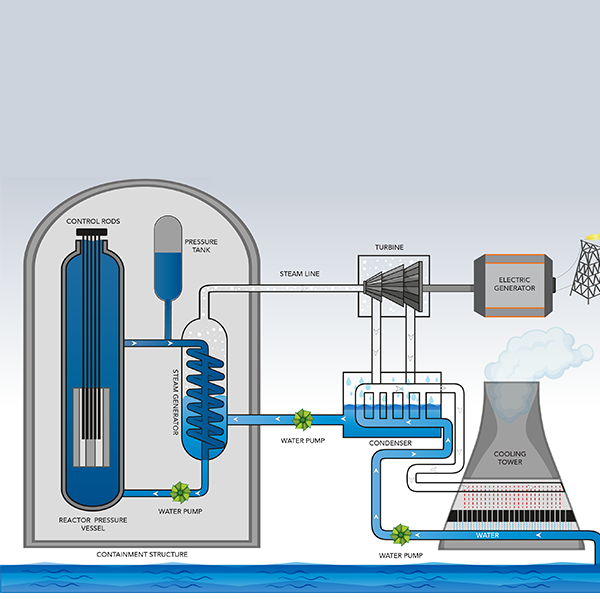
You ever boil a kettle for tea? Or perhaps you've seen a massive industrial pressure cooker in a movie, billowing steam and looking all sorts of powerful? Well, hold onto your metaphorical hats, because a nuclear power plant, at its heart, is basically just an incredibly, outrageously, unbelievably sophisticated way to... you guessed it... boil water. Seriously! All that high-tech wizardry, all that talk of atomic energy, and it mostly boils down to making a really, really hot cup of tea (or rather, enough steam to power an entire city).
I know, I know, it sounds a bit anticlimactic, doesn't it? But stick with me, because how they boil that water is where the mind-blowing science truly kicks in. It's not with a gas burner or an electric element, oh no. We're talking about something far more fundamental: splitting atoms.
The Atomic Heart: Where the Magic (and Heat) Happens
Imagine, if you will, tiny little Lego bricks. Now imagine those bricks are incredibly dense, super powerful, and have a tendency to get a bit grumpy if you poke them just right. That, my friend, is a uranium atom. Specifically, we're interested in Uranium-235, which is kind of the "superstar" of nuclear fuel.
Must Read
In the reactor core – the absolute heart of the plant – these uranium atoms are packed into fuel rods. Then, a tiny, subatomic particle called a neutron is launched at one of these uranium atoms. When it hits, the uranium atom gets unstable, splits into two smaller atoms, and in the process, releases a surprising amount of energy (mostly in the form of heat) and… more neutrons!
These new neutrons then go off and smack into other uranium atoms, causing them to split, release more heat, and more neutrons. This is what we call a chain reaction, and it’s the exact same principle behind an atomic bomb, but here's the crucial difference: in a power plant, it’s controlled. Like, super controlled. We’re not looking for an explosion; we're looking for a steady, reliable source of heat. Think of it like keeping a campfire going, but on an atomic scale.
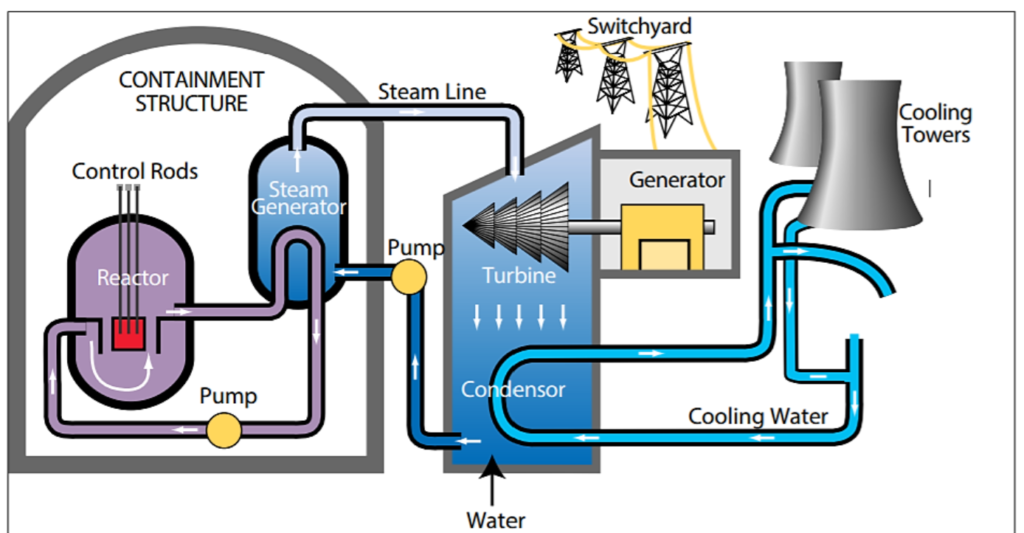
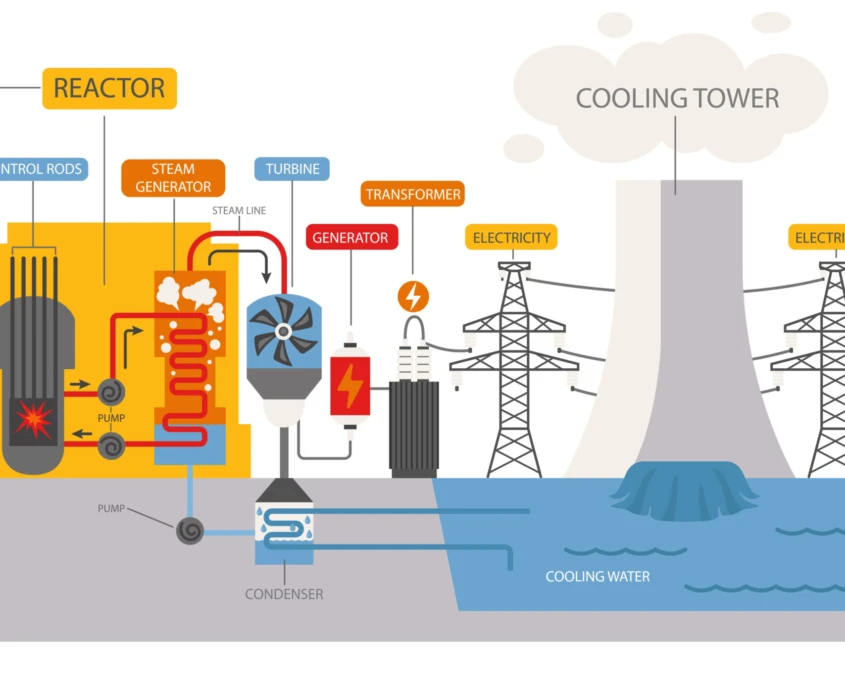
To keep things from getting out of hand, they use things called control rods, typically made of materials like cadmium or boron. These rods are excellent at absorbing excess neutrons. By raising or lowering them, operators can speed up or slow down the chain reaction, precisely regulating the amount of heat being generated. Pretty smart, right?
From Atom-Splitting to Steam-Making: The Two Loops
So, we've got this intensely hot reactor core. What next? That heat needs to go somewhere useful. This is where the first "loop" of water comes in. This water, called the primary coolant, flows through the reactor core, absorbing all that incredible heat. It gets super-duper hot, but crucially, it’s kept under immense pressure, so it doesn't actually boil. It's just extremely hot liquid water, sometimes upwards of 600 degrees Fahrenheit (315°C)!
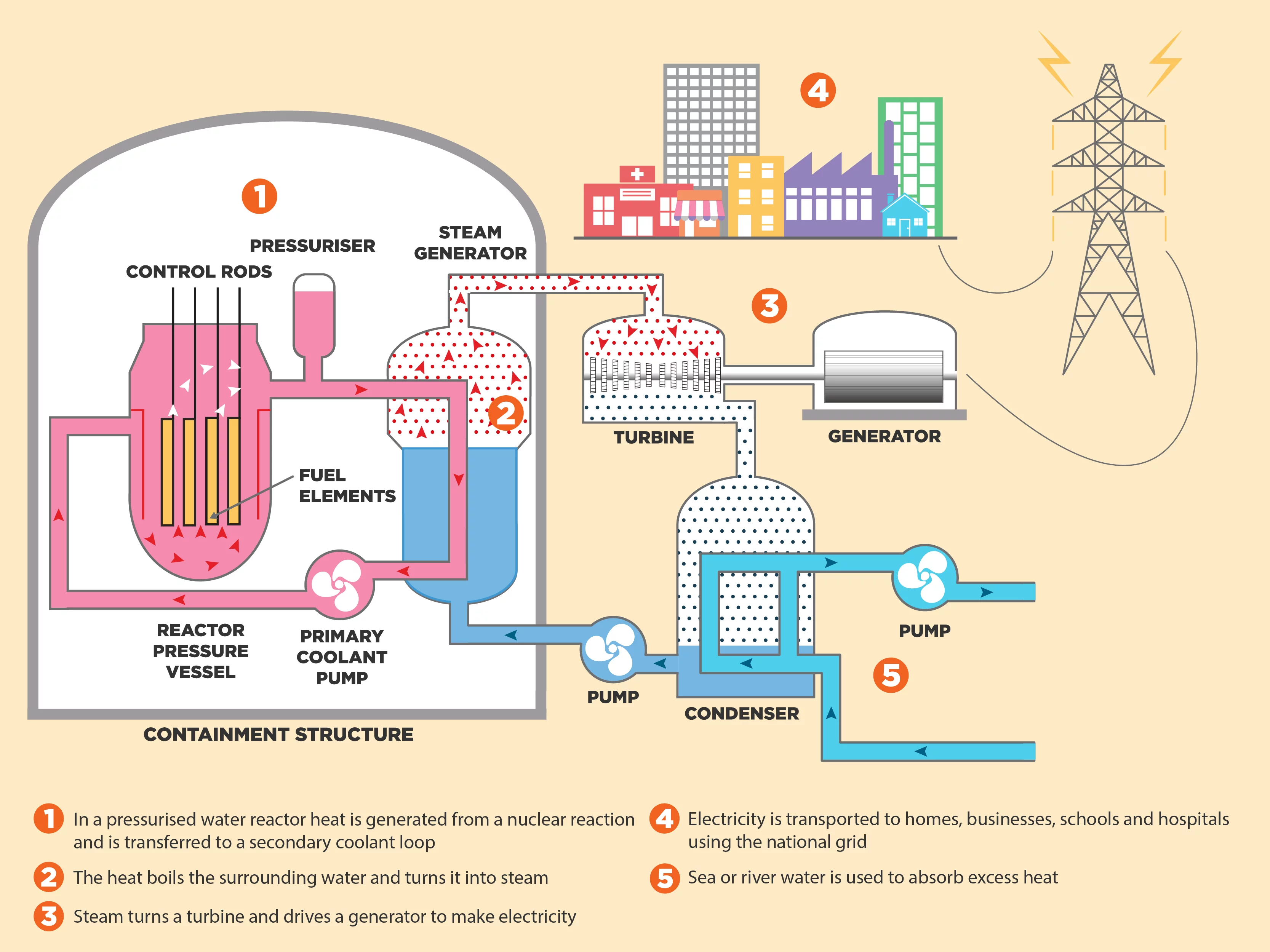
This superheated water then flows into a component called a steam generator. This is essentially a giant heat exchanger. Imagine a car radiator, but instead of cooling an engine, it's designed to transfer heat. The primary coolant's heat is transferred to a completely separate, second loop of water.
Why two loops? Safety, my friend! The water in the primary loop has been exposed to the reactor and might contain some radioactive particles. By keeping it separate, we ensure that the steam that actually drives the turbines (and eventually generates your electricity) is completely isolated and clean. Genius!
The Turbine Tango: Powering Your Life
In this second loop, the water isn't under the same extreme pressure as in the primary loop. So, when it absorbs all that heat from the primary coolant, it does what water does when it gets hot enough: it boils and turns into steam! And not just any steam – we're talking about high-pressure, superheated steam, absolutely bursting with energy.
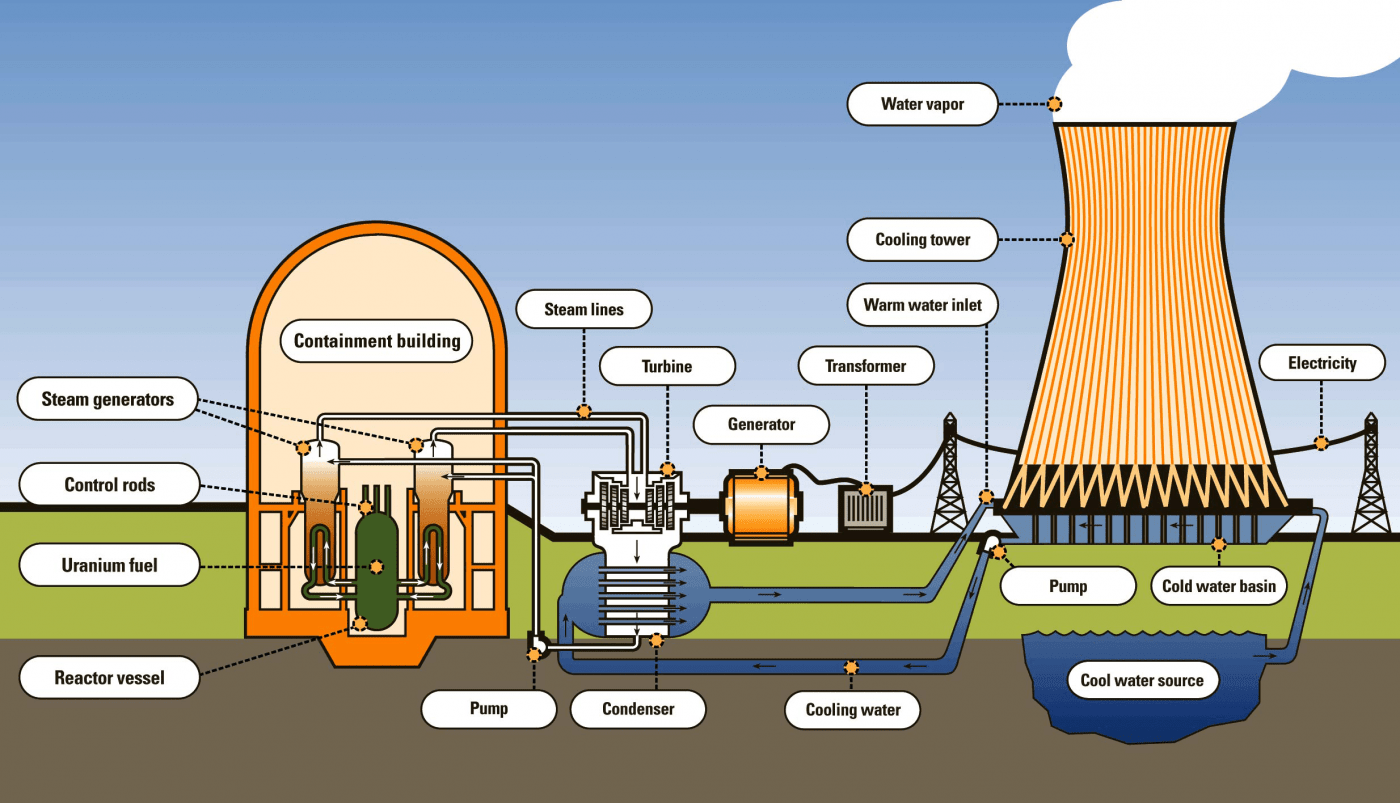
This powerful steam is then directed towards massive, multi-stage turbines. Imagine enormous fan blades, but instead of wind, it’s the sheer force of this high-pressure steam pushing them around. The steam makes the turbine blades spin at incredible speeds.
Connected to these spinning turbines is a generator. This is the part that actually converts all that mechanical energy from the spinning turbine into electrical energy. It's essentially a gigantic dynamo, using electromagnetic induction to create the electricity that flows through power lines to your home. Ta-da! Lights on, phone charging, Netflix streaming – all thanks to that spinning turbine.
The Cool-Down: Back to Water, Back to Work
After the steam has done its job of spinning the turbines, it's lost a lot of its energy and pressure. It then enters a condenser, which is another heat exchanger. Here, it's cooled down, usually by a third loop of even colder water (often sourced from a nearby river, lake, or ocean, or from those iconic cooling towers you see). This cooling causes the steam to turn back into liquid water. Why? So it can be pumped back to the steam generator and start the whole process over again. It’s an efficient, closed-loop system!
Those big, cylindrical cooling towers? They’re not spewing smoke, despite what some might think. They’re simply releasing the excess heat from that third cooling loop into the atmosphere, often as harmless water vapor. Just like steam from your kettle, but on a colossal scale.
And There You Have It!
So, the next time you flip a light switch, remember the journey: a tiny neutron splits a uranium atom, creating immense heat. That heat boils water into super-pressurized steam. That steam spins enormous turbines. Those turbines power generators. And those generators send electrons zipping through wires to power your devices. All, in essence, a gloriously complicated, incredibly powerful way to boil water. Pretty cool, right?