
How Do You Determine The Hardness Of A Mineral

Ever wonder why some rocks look shiny and tough while others crumble like cookies? It's all about hardness! But how do scientists (and even cool rock collectors) figure out just how hard a mineral is? Don't worry, it's not rocket science! We're going to break it down in a way that's easier than explaining why cats love boxes.
Imagine you're trying to open a super stubborn jar of pickles. You might try a rubber band, a spoon, maybe even your teeth (don't!). Each thing you try has a different "hardness." The rubber band is too soft, the spoon might work, and your teeth… well, let's just say the pickles win. That’s kind of like testing mineral hardness.
Mohs Scale: The Mineral Hardness Ruler
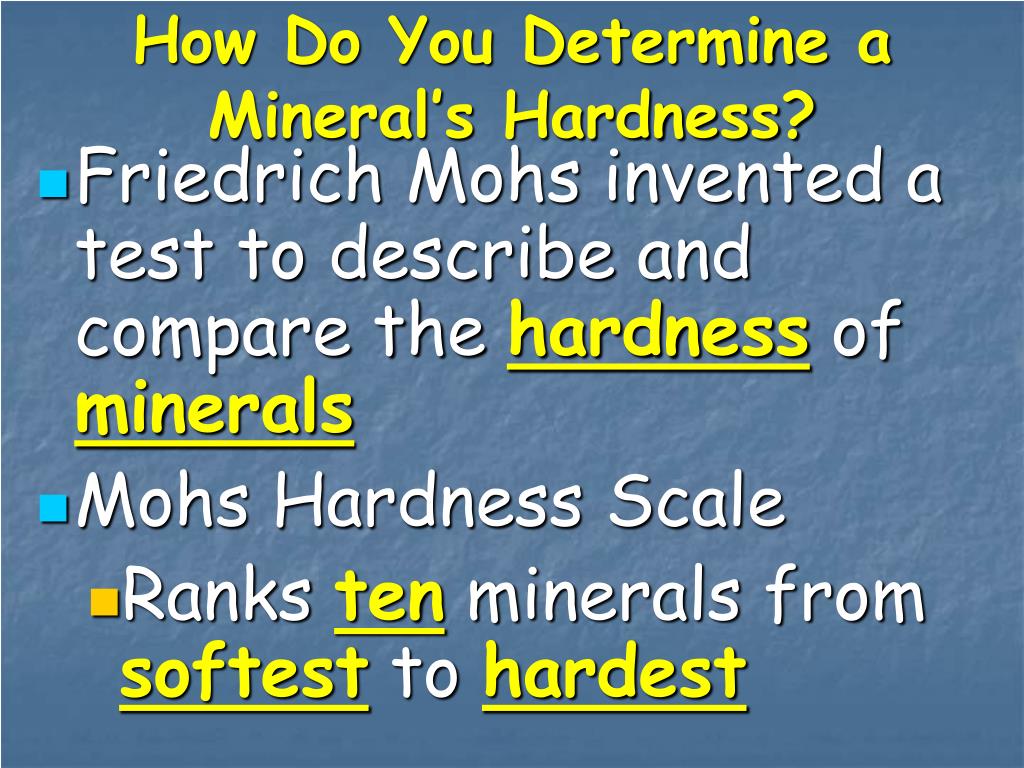
The main tool we use is called the Mohs Hardness Scale. It’s not some fancy scientific instrument that costs a million dollars. In fact, it was invented way back in 1812 by a German mineralogist named Friedrich Mohs. He was a clever cookie! It's a simple scale that ranks minerals from 1 (softest) to 10 (hardest). Think of it like a ladder; each rung is a mineral.
Must Read
At the bottom of the ladder, at number 1, we have Talc. Talc is super soft. It's what baby powder is made of! You can scratch it with your fingernail. Up at the very top, at number 10, sits Diamond. That’s right, the same diamonds that sparkle in engagement rings. Diamonds are the ultimate scratch masters!
Here's a quick peek at some of the minerals on the Mohs scale and some everyday comparisons:
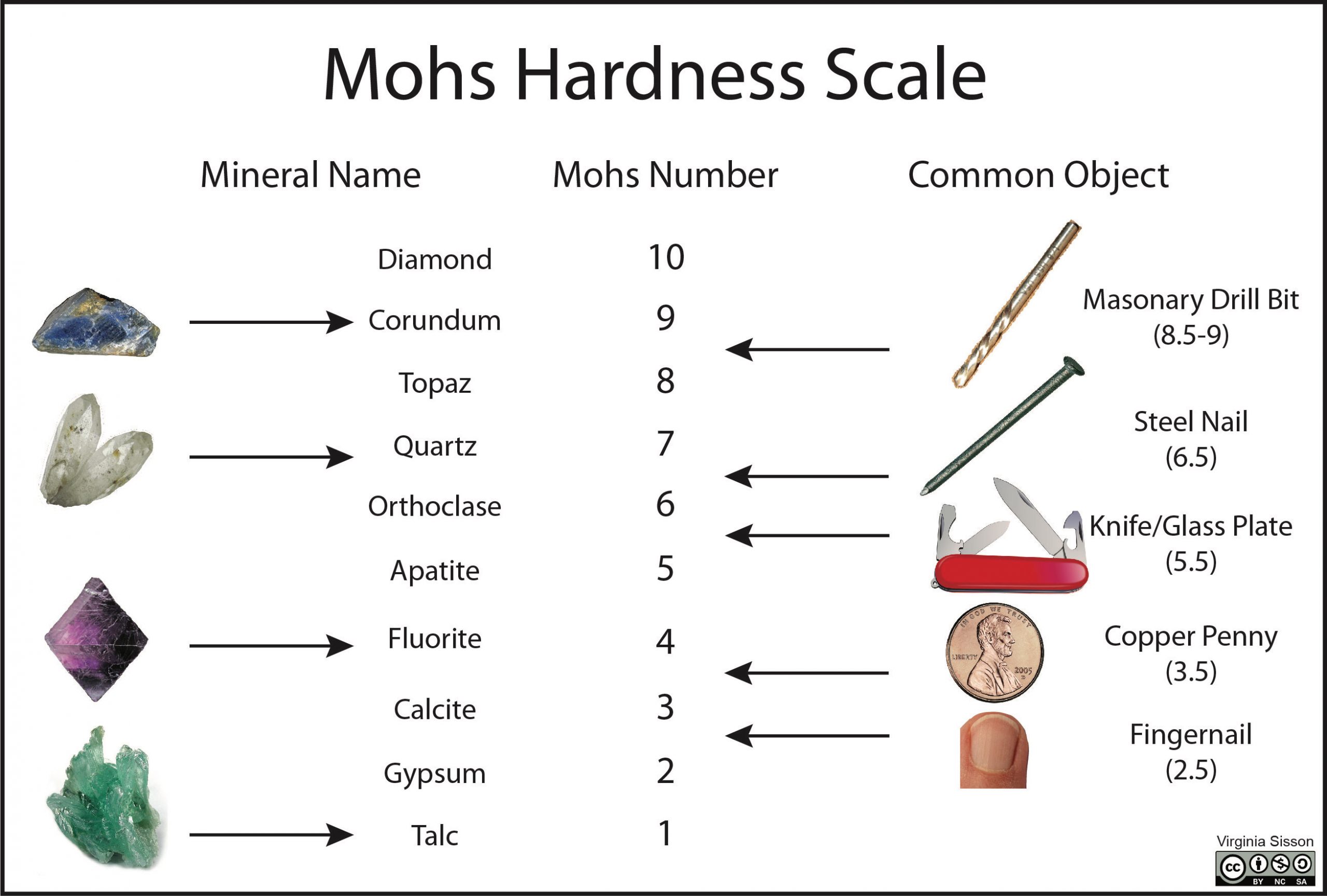
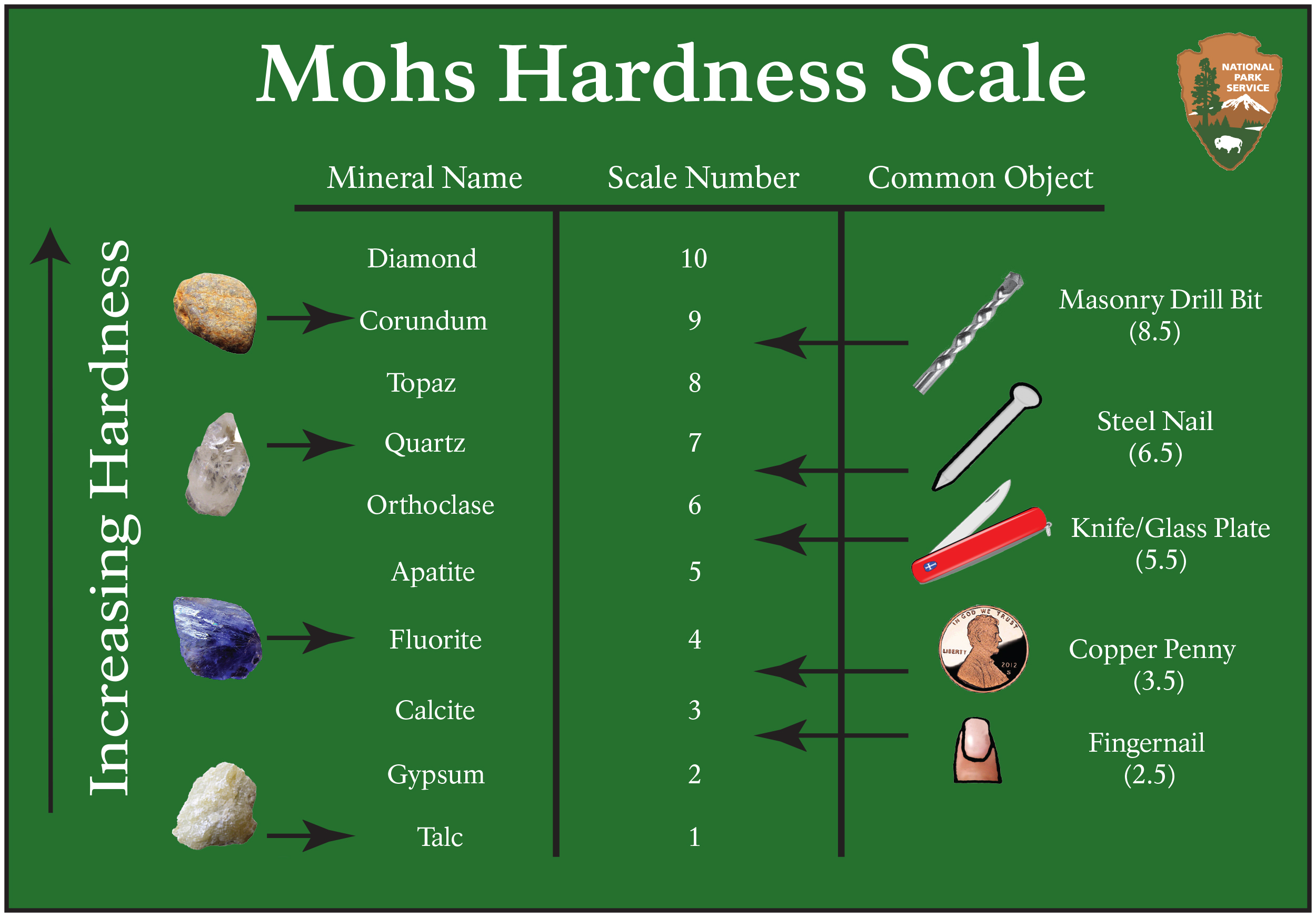
- 1: Talc – Scratched easily by your fingernail. Think baby powder.
- 2: Gypsum – Also scratched by a fingernail, but a bit tougher than talc. Found in drywall.
- 3: Calcite – Can be scratched by a copper penny.
- 4: Fluorite – Scratched easily by a steel knife.
- 5: Apatite – Can be scratched by a steel knife with some effort.
- 6: Orthoclase – Can scratch glass, but a steel file will scratch it.
- 7: Quartz – Scratches glass easily. This is a very common mineral!
- 8: Topaz – Scratches quartz.
- 9: Corundum – Scratches topaz. This is what rubies and sapphires are made of!
- 10: Diamond – Scratches everything! The ultimate hard rock.
Scratch Test: The Detective Work
So, how do you use this scale? Well, you try to scratch your unknown mineral with different objects of known hardness. Let's say you have a cool-looking rock you found on a hike. You want to figure out its hardness.
First, you try scratching it with your fingernail. If it scratches, you know it's softer than 2.5 (that's about the hardness of your fingernail). Then you try a copper penny (hardness of 3). If the penny scratches it, your rock is softer than 3. Keep going with harder and harder objects – a steel nail (hardness of around 5.5), a piece of glass (hardness of around 5.5), etc. – until you find something that just barely scratches the mineral. Then, you look up the hardness of that object, and you've got a pretty good idea of your mineral's hardness!
Important Note: Make sure you are scratching the mineral, not the other way around! Sometimes a softer material can leave a streak on a harder one that looks like a scratch. Always wipe the mineral clean after each test to avoid confusion.
Why Should You Care? Beyond Sparkly Rocks
Okay, so you might be thinking, "Why should I care about mineral hardness? I'm not a geologist!" But understanding hardness is more useful than you think! Ever wonder why your kitchen countertop doesn't scratch easily? It's probably made of granite, which contains quartz, a relatively hard mineral. Or why some jewelry scratches easily while others don't? The hardness of the gemstones plays a big role!
Think about building materials. You want materials that can withstand wear and tear. Hardness is a key factor in choosing the right stone for your patio, the right abrasive for polishing, or even the right kind of aggregate for making concrete.
So, the next time you pick up a cool rock, remember the Mohs scale and the humble scratch test. You might just surprise yourself with your newfound mineral detective skills. And who knows? Maybe you'll discover the next diamond mine... or at least impress your friends with your rock knowledge at the next picnic. It's all about having fun and appreciating the amazing world beneath our feet!
