
How Do You Convert Kva To Kw
Ever found yourself staring at a generator label or a spec sheet, scratching your head at terms like KVA and KW? It’s okay, you’re not alone! In a world buzzing with electricity, understanding how our power systems work can feel like deciphering an ancient scroll. But fear not, dear reader, because today we’re going to demystify one of the most common electrical puzzles: how to convert KVA to KW. Think of it as your passport to becoming an energy-savvy individual, ready to make smarter choices for your home, your projects, or even just impressing your friends at the next barbecue.
Let's kick things off with a simple truth: KVA and KW aren't interchangeable twins. They're more like cousins with distinct personalities. Understanding the difference is key to a happier, more efficient energy life.
Unpacking KVA: The Total Potential
First up, KVA stands for Kilovolt-Ampere. This is often referred to as "apparent power." Imagine KVA as the total capacity an electrical system or generator can deliver. It's the whole beer mug – the liquid, the foam, everything. It tells you the total amount of electrical energy flowing, regardless of how much of it is actually usable for doing work.
Must Read
Why do we even have KVA? Well, transformers and generators are rated in KVA because their limits are determined by the current and voltage they handle, not just the power they can "do" work with. It's a measure of the total burden they can safely manage.
Meet KW: The Real Working Power
Now, let's talk about KW, which means Kilowatt. This is the good stuff! KW is your "real power" or "active power." It's the actual electrical power that gets converted into useful work – like making your coffee maker brew, your lights glow, or your electric car charge. Going back to our beer analogy, KW is the actual beer you get to drink, free from foam.
This is the power that makes things happen, the energy you truly pay for on your electricity bill (usually!).
The Secret Ingredient: The Power Factor
So, how do we get from the "total potential" of KVA to the "real work" of KW? Enter the Power Factor. This little hero is the efficiency rating of your electrical system or load. It's a number, usually between 0 and 1, that tells you how effectively the electrical power is being converted into useful work. A power factor of 1 (or 100%) means perfect efficiency – all KVA is usable KW. A lower power factor means some power is being used less efficiently (think of it as the foam in your beer mug).

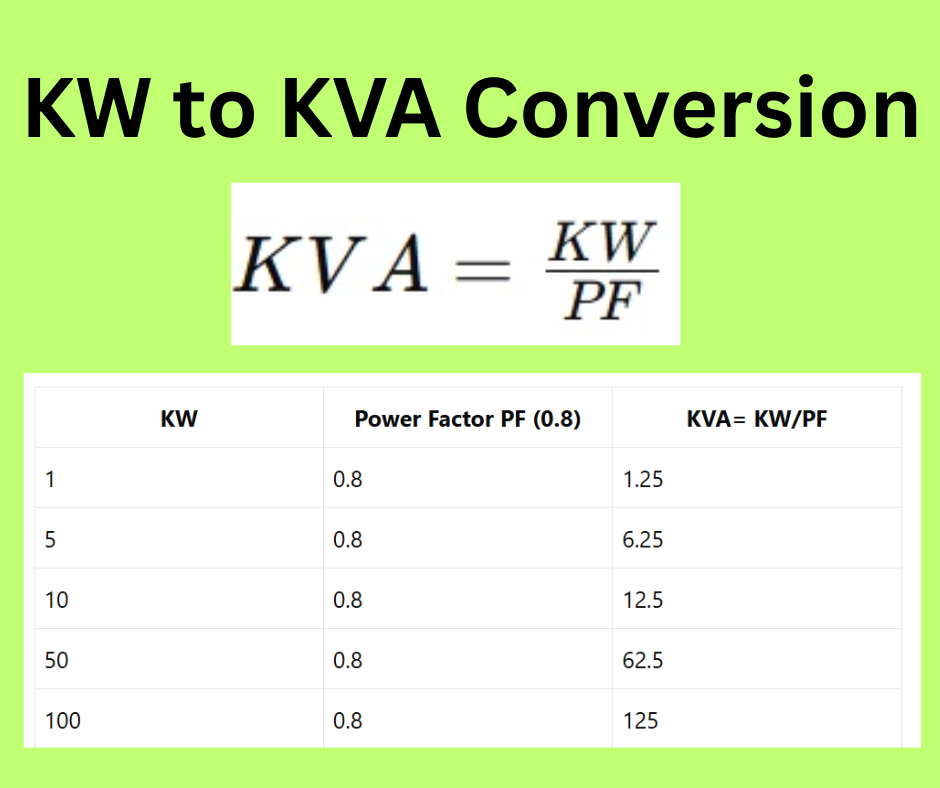
Most industrial equipment, especially motors, operates with a power factor around 0.8. Resistive loads like incandescent lights or simple heaters often have a power factor close to 1. Your home appliances? They typically vary, but many operate below 1.
The Magic Formula (It's Not Scary, Promise!)
Ready for the big reveal? Here’s how you convert KVA to KW:
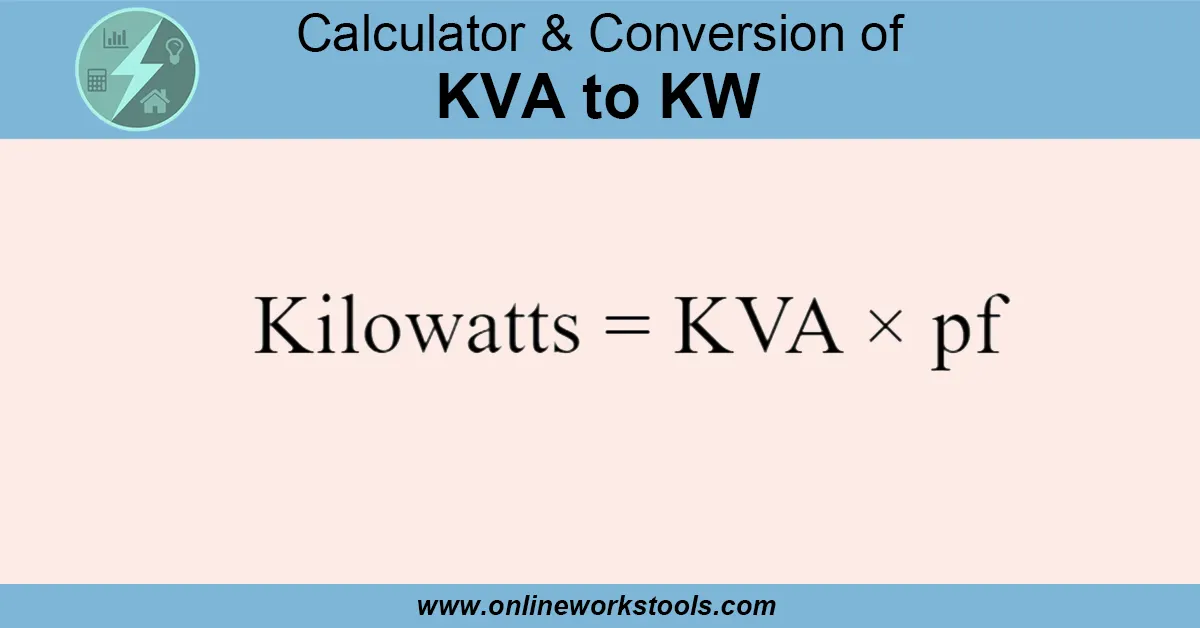
KW = KVA × Power Factor
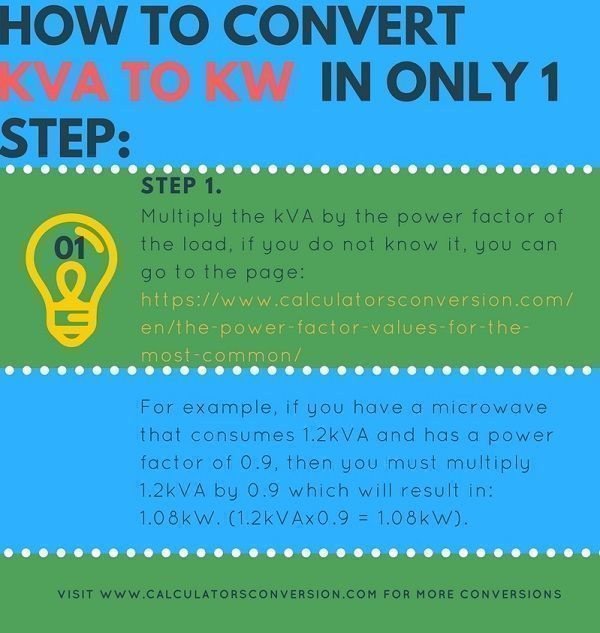
Yes, it's that straightforward! For example, if you have a generator rated at 10 KVA and you know your typical load has a power factor of 0.8, then your usable power is:
10 KVA × 0.8 = 8 KW
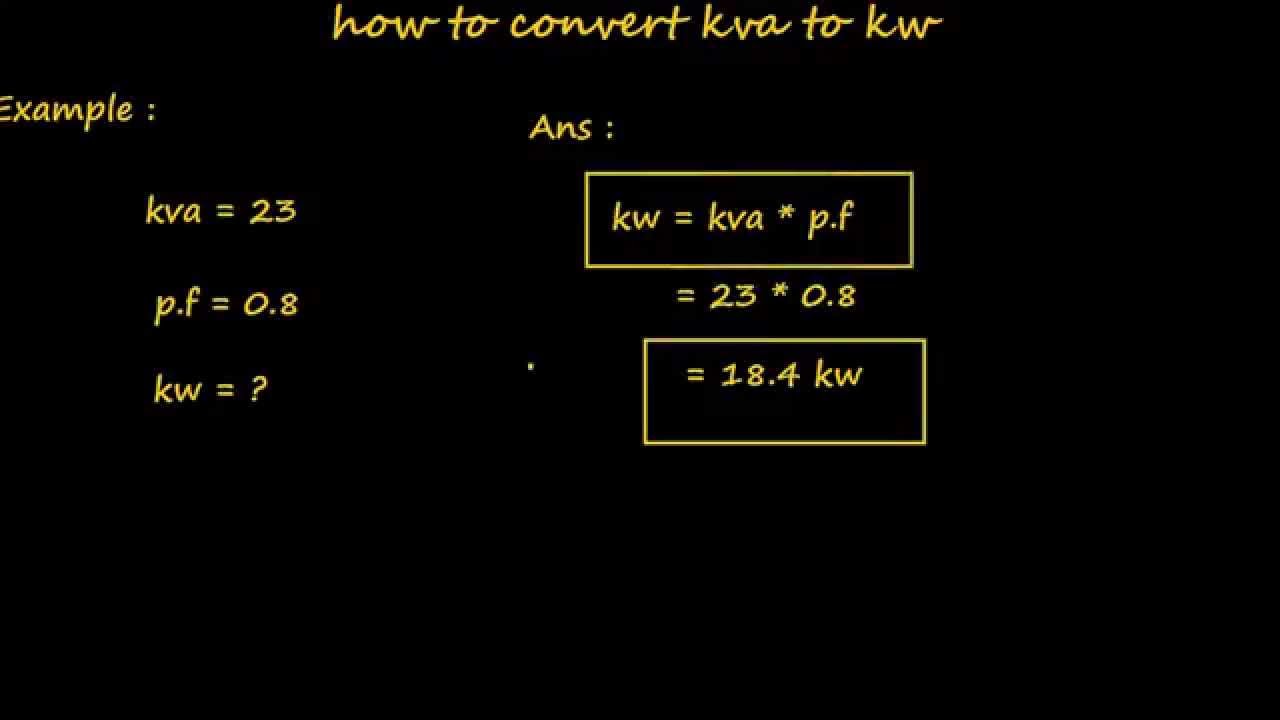
Suddenly, that 10 KVA generator isn't quite a 10 KW powerhouse. This is why knowing your power factor is so incredibly important, especially when sizing equipment like generators for your specific needs.
Practical Tips for the Savvy Civilian
- Check the Label: Always look at the nameplate data on your appliances or equipment. Sometimes, manufacturers will list both KVA and KW, or they'll give you the power factor directly.
- Assume 0.8: If you're completely in the dark and need a rough estimate for inductive loads (like motors, air conditioners, refrigerators), a power factor of 0.8 is a common industry assumption for general calculations. It's a good conservative number to start with.
- Why it Matters: Knowing your KW helps you avoid overloading generators, prevents unnecessary tripping of circuit breakers, and ensures you're buying the right size equipment for the job. No one wants to buy a generator only to find it can't run the critical appliances during an outage!
- Improve Efficiency: In larger commercial or industrial settings, improving the power factor (often through "power factor correction" capacitors) can lead to significant energy savings and lower electricity bills. For the average homeowner, focusing on energy-efficient appliances is usually the best approach.
Fun Facts & Cultural Nods
Did you know that the "reactive power" (the difference between KVA and KW, or the foam in our beer analogy) is essential for creating magnetic fields in motors and transformers? It doesn't do "work" in the traditional sense, but it’s critical for certain types of equipment to function. It’s like the unsung hero of the electrical world! Also, in some regions, utility companies might charge extra for a poor power factor, encouraging businesses to be more efficient. It’s a global push for smarter energy use!
Bringing it Home: Your Daily Energy Wisdom
So, what does all this KVA to KW talk mean for your everyday life? It means peace of mind. When you understand these terms, you're empowered to make smarter decisions. Whether you're planning for a home backup generator, buying a new appliance, or just appreciating the invisible currents that power your world, you've now got a little more wisdom in your toolkit. It’s about more than just numbers; it’s about efficiency, reliability, and ultimately, a smoother, more informed journey through our modern, electrified lives. Cheers to becoming an energy guru!