
How Do Welding Helmets Work
Ever had someone take a flash photo of you in a dark room? You know that split second of blindness, the sudden white explosion that temporarily erases the world? Or maybe you’ve accidentally glanced at the sun for just a tad too long and seen spots for a while. Annoying, right? Now, imagine that intense light, multiplied by, oh, a few thousand times, and staring at it for minutes on end. That, my friends, is essentially what a welding arc is – a tiny, super-bright star being created right in front of your face. Not exactly eye-friendly, is it?
That's why welders don't just squint really hard and hope for the best. They wear these cool, often futuristic-looking helmets. But they're not just any old face shield. We're talking about a piece of tech that can go from clear to dark faster than you can blink. So, how exactly do these clever contraptions work their magic to save a welder's sight? Let's dive in!
The "Dark Arts" of Auto-Darkening Helmets
For decades, welders used helmets with fixed-shade lenses – basically, a piece of really dark glass. You had to flip it down right before striking an arc, then flip it up to see your work. A bit clunky, you'll agree. But then came the game-changer: the auto-darkening welding helmet. This is the star of our show, the superhero that instantaneously adjusts its tint.
Must Read
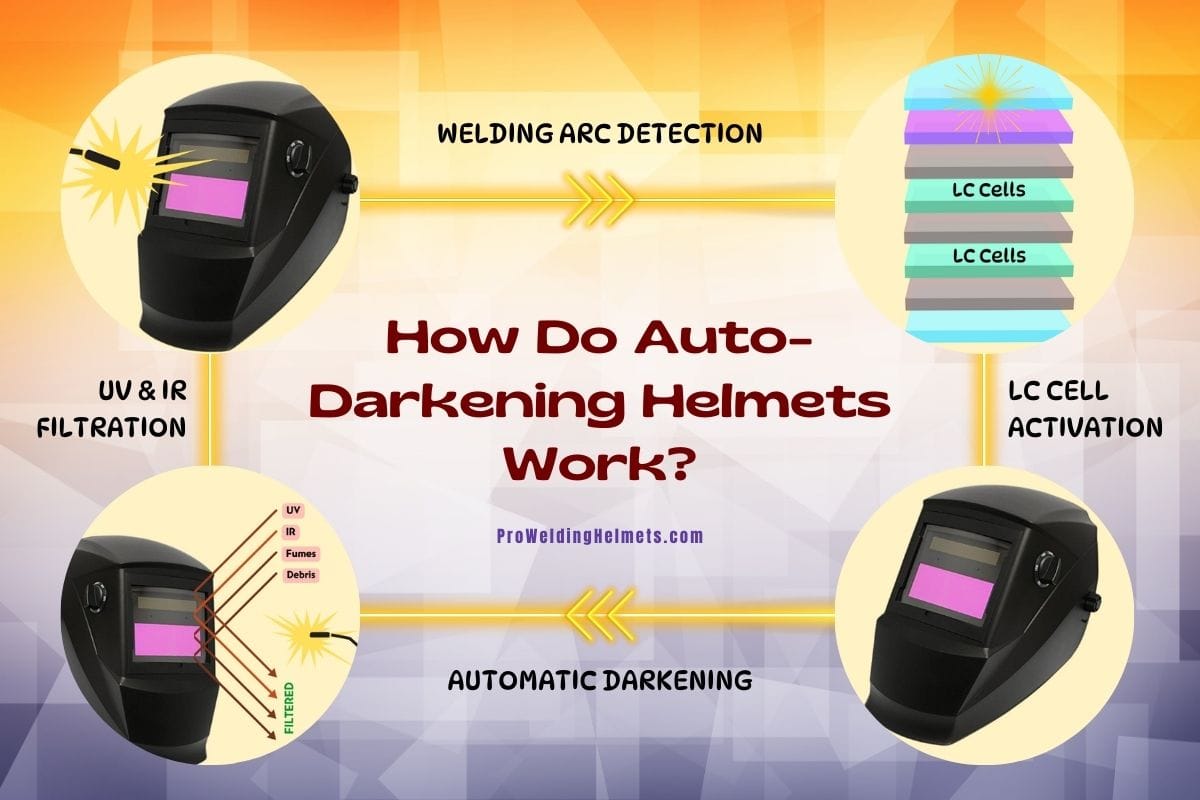
Think of it like this: your helmet is constantly watching. The moment it detects the fierce light of a welding arc, it throws on its sunglasses, super-fast. No manual flipping, no more head-jerking. Just seamless, hands-free protection. But how does it know when to darken?
Sensors: The Helmet's Little Eyes
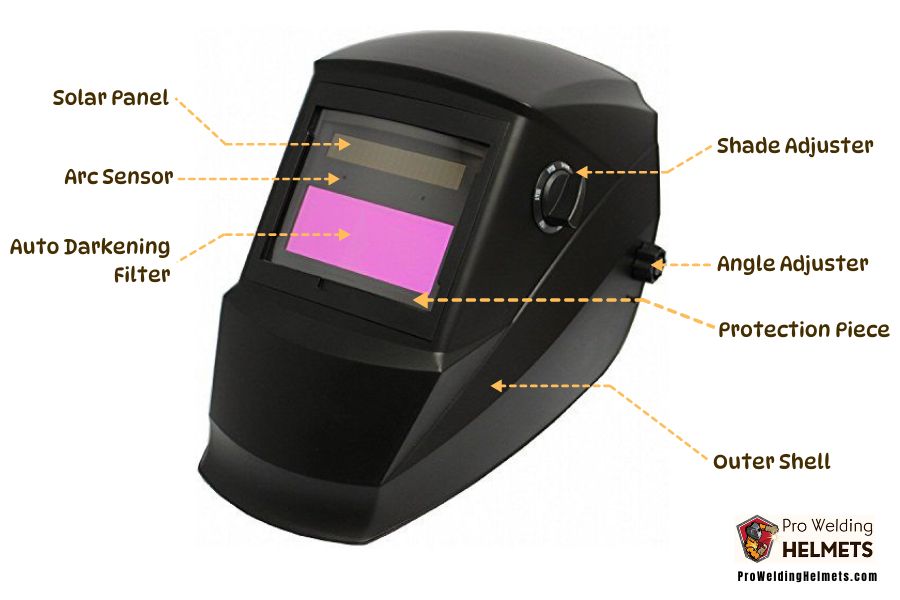
The secret sauce begins with tiny, yet mighty, sensors located on the front of the helmet, usually near the lens. These aren't just any light sensors; they're specifically tuned to detect the unique spectral signature of a welding arc. They're constantly vigilant, scanning the environment. The moment an arc strikes, they pick up on that intense flash of light and immediately send a signal.
![How Do Welding Helmets Work? [Passive v Auto Darkening] - WeldingWatch](https://weldingwatch.com/wp-content/uploads/2021/12/How-do-welding-helmets-work-1024x512.jpg)
It’s like having a little guard dog trained to bark only when a specific type of super-bright light appears. Pretty neat, huh?
The LCD Screen: Where the Magic Happens
Once the sensors give the signal, the real wizardry unfolds within the helmet's main component: the liquid crystal display (LCD) lens. Yes, the same tech that makes your phone screen or TV work, but repurposed for protection. This LCD lens is sandwiched between special polarizing filters.
When the sensors detect the arc, they send an electrical current to the LCD. This current causes the liquid crystals to rapidly realign, effectively blocking the light. It's like turning a venetian blind instantly from open to closed, but on a microscopic level and with incredible speed. The more current, the darker the shade!

Powering the Protection
All this rapid-fire darkening needs power, of course. Most auto-darkening helmets are powered by small batteries, often with the added benefit of solar assist panels. These solar cells help recharge the internal battery, extending its life and ensuring your helmet is always ready for action. It’s a clever bit of self-sufficiency, meaning less fumbling for new batteries in the middle of a job.
The Need for Speed (and Constant Safety)
Here's where it gets truly impressive: the speed. We're not talking seconds here, folks. These helmets can go from transparent to fully dark in a matter of milliseconds – sometimes as fast as 1/25,000th of a second! That's faster than your eye can possibly react, ensuring your precious peepers are protected from even the initial flash of the arc.
But wait, there's more! Even when the helmet is in its clear (un-darkened) state, the lens still provides continuous protection against harmful ultraviolet (UV) and infrared (IR) radiation. These are the invisible dangers that can cause long-term eye damage, even without the bright flash. So, your eyes are always safe from these silent threats, whether the helmet is dark or not. That, my friends, is a major win for eye health!
More Than Just Darkening
Modern auto-darkening helmets are also incredibly versatile. Many allow welders to adjust the shade level (how dark it gets), the sensitivity (how bright the light needs to be to trigger darkening), and the delay (how long it stays dark after the arc stops). Some even have a "grind mode" which deactivates the auto-darkening function, allowing the welder to use the helmet as a clear face shield for grinding without wasting battery life or accidentally darkening. Pretty thoughtful, right?
So, the next time you see a welder striking an arc, remember that little piece of high-tech wonder on their head. It's not just a fancy visor; it's a meticulously engineered device, packed with sensors, LCDs, and lightning-fast reflexes, all working in harmony to keep their eyes safe from the brilliant, dangerous dance of welding. It's a testament to how far safety technology has come, turning a potentially blinding task into a manageable and, dare I say, almost comfortable one. Pretty cool, huh?
