
How Do We Get Nuclear Energy
Unmasking Nuclear Energy: It's Just a Fancy Kettle, Folks!
Alright, let’s talk about nuclear energy. Sounds super science-fictiony, right? Like something out of a blockbuster movie with giant robots and glowing futuristic cities. You probably imagine labs humming with complex machinery, scientists in hazmat suits, and a whole lot of very serious business. And sure, there’s some of that. But if we peel back the layers, you might just find yourself nodding along with my slightly unpopular opinion: at its heart, getting nuclear energy is surprisingly… domestic. Seriously. It’s essentially a very, very elaborate way to boil water.
Yes, you read that correctly. Boiling water. I know, I know. It sounds like I’ve had one too many cups of coffee. But stick with me. We're going to dive into the atomic world without needing a PhD or even a really strong grasp of physics. Just a healthy dose of curiosity and perhaps a willingness to giggle at the grandeur of it all.
Meet Our Tiny Powerhouse: Uranium
First things first, every good story needs a hero, or at least a main character. In our nuclear narrative, that role goes to a rather special element called Uranium. Specifically, a type called Uranium-235. Think of it as the rock star of the atomic world – a bit unstable, prone to drama, and ready to release a whole lot of energy if you just give it a little nudge.
Must Read
Now, Uranium atoms are big, clunky things. They’re like those old-fashioned alarm clocks with giant bells – a lot going on inside. And because they’re so big, their insides are a bit… crowded. This makes them inherently a little nervous, a little twitchy. They just want to break free.
The Big Tickle: Making Atoms Split
So, how do we get these twitchy Uranium atoms to do our bidding? We give them a gentle (or not so gentle) tickle. We fire tiny particles, called neutrons, at them. Imagine a tiny billiard ball hitting another one. When a neutron hits a Uranium-235 atom, it gets overloaded. It’s like eating too much cake at a birthday party – suddenly, it’s just too much.
The Uranium atom can’t handle the extra guest. It becomes unstable and, with a dramatic flair, decides to split! This dramatic splitting is called fission. When it splits, it doesn’t just break into smaller pieces; it also kicks out a few more neutrons. It’s like a tiny atomic explosion, but instead of blowing things up, it releases a burst of pure, unadulterated heat.
The Atomic Domino Effect
Here's where it gets really interesting, and why it's not just a one-off atom party. Those newly ejected neutrons? They go zooming off and hit other Uranium atoms, making them split. And those atoms release more neutrons, which hit more atoms… you see where this is going? It’s a beautifully orchestrated, microscopic domino effect, also known as a chain reaction. All happening inside a super-strong container called a reactor core, of course, where clever engineers make sure it’s all kept under very tight control. We don't want a runaway party, after all!
Each split, each tiny act of fission, generates more and more heat. And what do we do with heat? Well, if you're anything like me, you probably think of making a cup of tea. And believe it or not, that's almost exactly what happens.
From Atomic Fire to Your Toaster
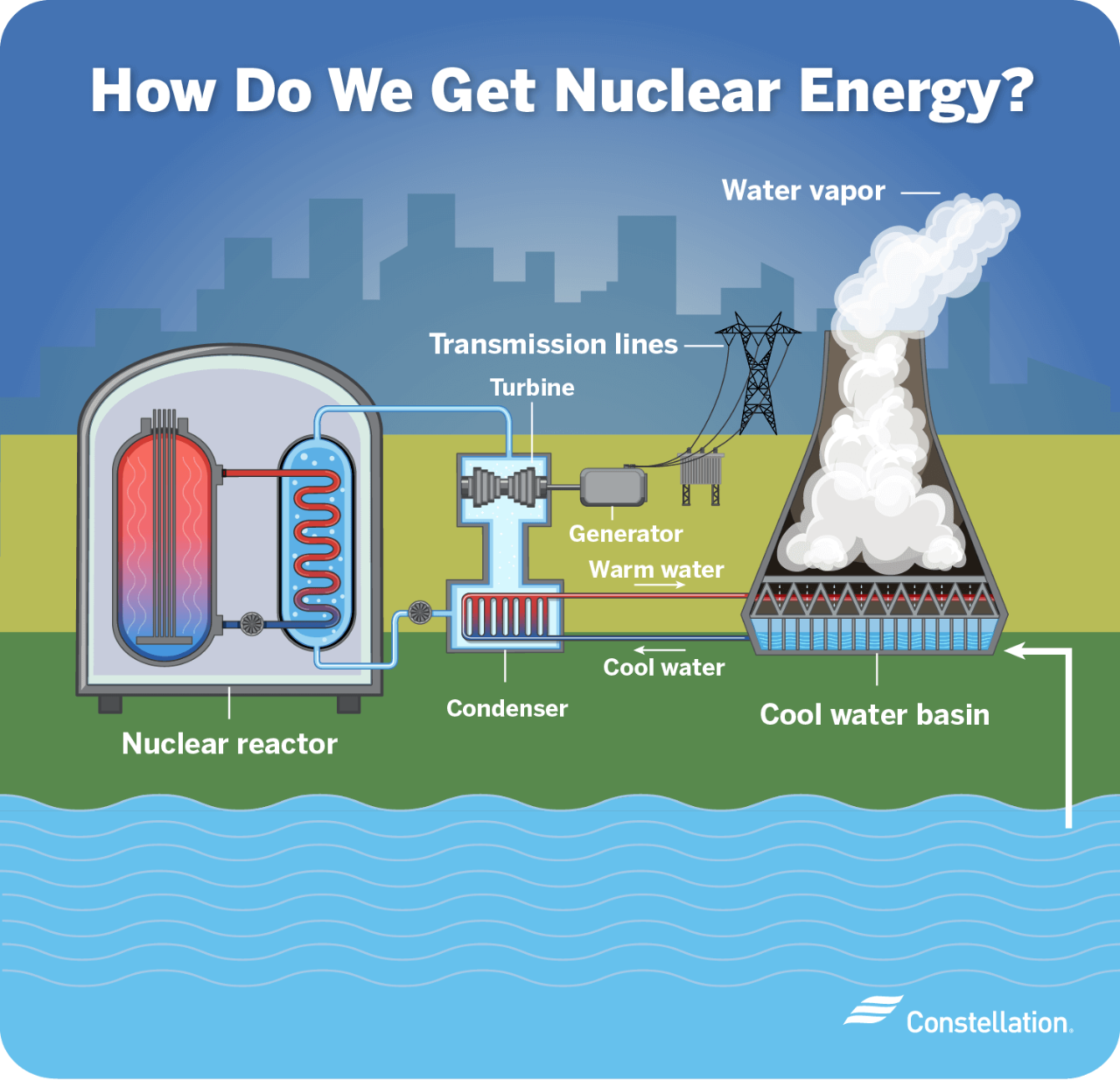
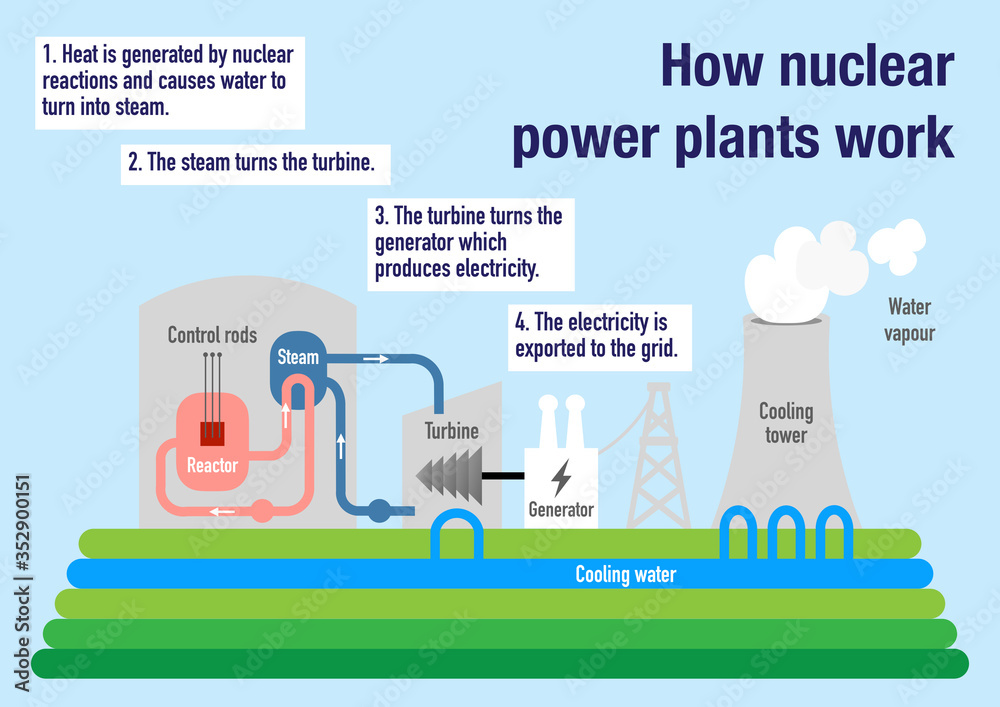
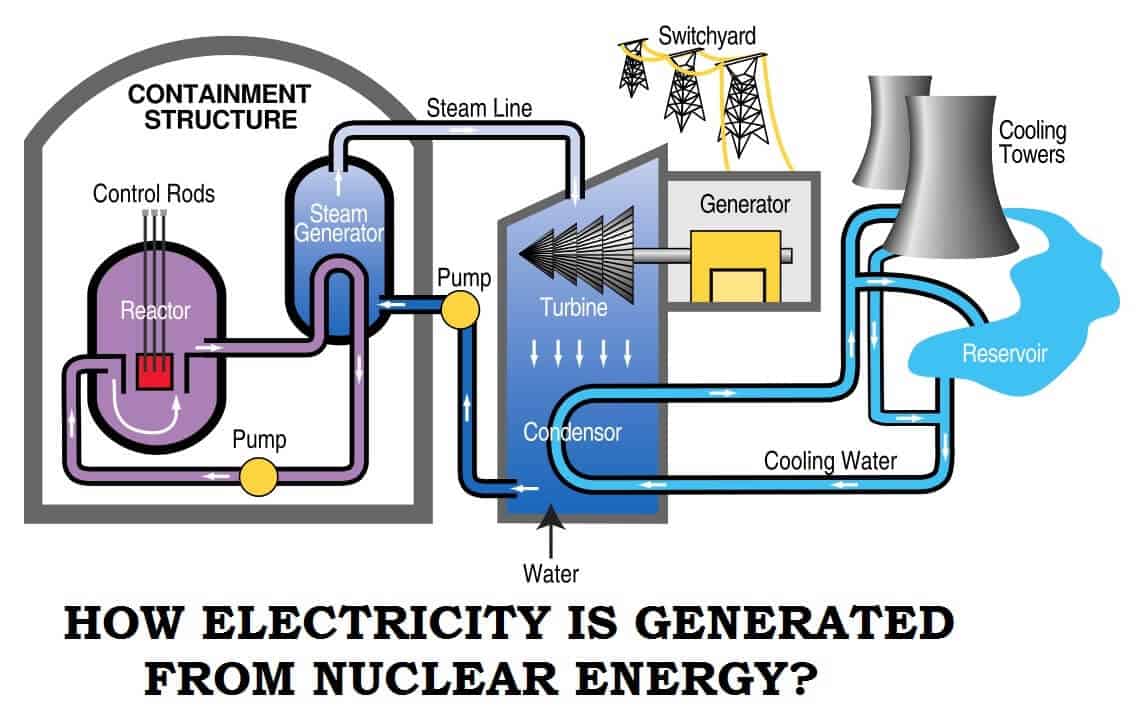
All that incredible heat generated by the splitting atoms is used to warm up a big old pot of water. Inside the nuclear power plant, there's a closed system, often filled with water, that circulates around the reactor core. This water gets super-duper hot, but usually stays liquid under immense pressure. It then transfers its heat to another separate loop of water, which then turns into high-pressure steam.
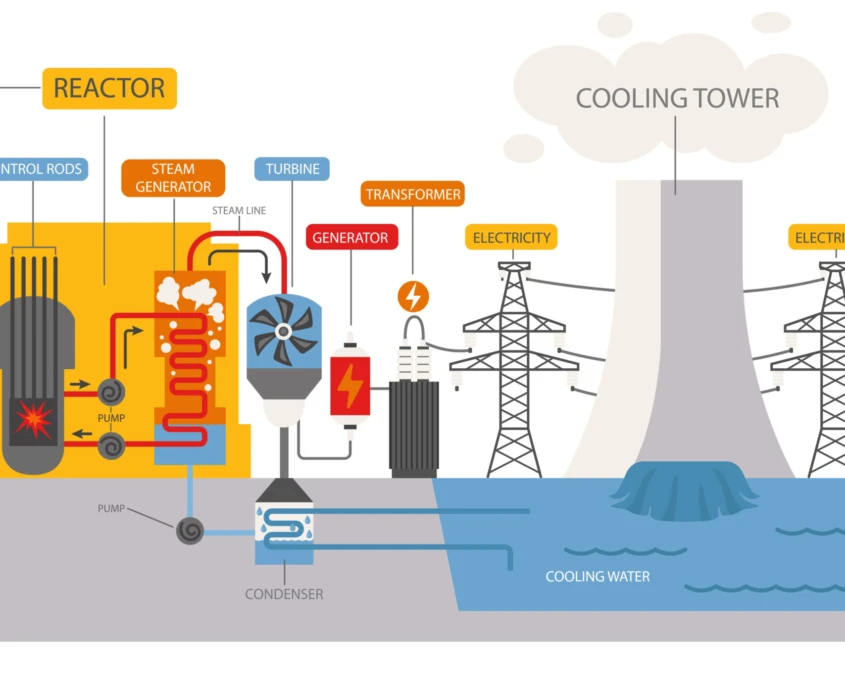
And what do we do with really powerful steam? We use it to spin something! Think of a pinwheel you blow on, but on a gargantuan scale. This super-hot, high-pressure steam blasts against massive fan-like blades called a turbine, making it spin at incredible speeds. The turbine, in turn, is connected to a big old machine called a generator. And what does a generator do when it spins? Bingo! It makes electricity.
So, there you have it. The secret life of nuclear energy: we tickle some unstable atoms, they get grumpy and split, releasing tons of heat. That heat boils water into steam, the steam spins a turbine, and the turbine makes electricity. Basically, it’s a very fancy, incredibly powerful kettle. And if that's not an unpopular opinion worth smiling about, I don't know what is.
Next time you flip a light switch, just remember the tiny, grumpy Uranium atoms, the steaming water, and the spinning turbines, all working together to power your life. It’s less sci-fi epic, more really, really efficient kitchen appliance. You're welcome.
