
How Do Light Motion Sensors Work

Ever walk into a room and poof! The lights just know you're there? Or maybe you’ve witnessed those magical grocery store doors slide open, seemingly by themselves? It’s not ghosts, I promise! Well, not usually. It's the delightful wizardry of light motion sensors at play, and trust me, they're way more fun than a poltergeist.
These little gadgets are everywhere, from your security system to that handy automatic faucet. They’re like tiny, invisible bodyguards, always on the lookout. But how do they actually see you?
Most of the time, when we talk about light motion sensors, we're really talking about PIR sensors. That's short for Passive Infrared. Sounds fancy, right? But it's actually pretty cool and surprisingly simple.
Must Read
The Heat-Seeking Ninjas (PIR Sensors)
Imagine your body. It's a warm, wonderful machine, right? And like everything that's not absolutely, ridiculously cold (we're talking colder than outer space here), you're emitting infrared radiation. Basically, you're a walking, talking heat signature!
PIR sensors don't send out any signals themselves. They're passive. Instead, they just listen. They have a special lens, often faceted like a tiny bug's eye, that directs this invisible infrared energy onto two sensitive strips inside the sensor. Think of it like two tiny thermal eyeballs.
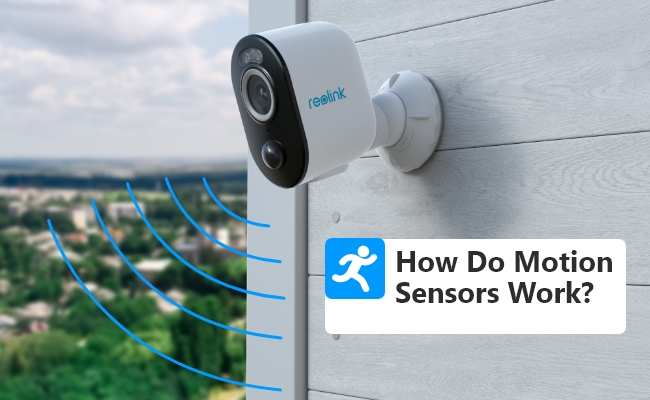
When nothing's happening, both strips see the same amount of ambient infrared energy from the room. It’s a peaceful, steady flow.
But then you walk by! Your warm, radiant self moves across the sensor's field of view. One of those tiny thermal eyeballs suddenly gets a burst of your lovely warmth, while the other is still seeing the background.
This creates a sudden change in the infrared energy detected by each strip. The sensor's tiny brain (a microcontroller) goes, "Whoa! Something just moved!" And boom, the lights come on, or the alarm chirps, or the doors magically part. It's all about detecting a change in heat patterns, not just heat itself.

This is why your sleepy pet sometimes triggers the alarm. Their little warm bodies are also emitting infrared! Or why a sudden gust of warm air from a vent might occasionally confuse it. It's all about that change.
Beyond Heat: Other Clever Detectives
While PIR sensors are the rockstars, there are other types too, each with their own quirky superpower.

Some sensors use microwave technology. These are like tiny radars. They send out invisible microwave signals and then listen for the echo. If the echo comes back changed (due to something moving and messing with the waves), they know something's up! They can even see through thin walls, which is pretty spy-movie cool, but can also lead to hilarious false alarms from things happening outside a room.
Then there are ultrasonic sensors, which work similarly but use sound waves so high-pitched we can't hear them. Think of a bat using sonar to navigate, but instead, it's detecting your enthusiastic entrance into the bathroom.
And for simplicity, you have photoelectric sensors. These are the straightforward "tripwire" kind. One part sends out a beam of light (sometimes visible, sometimes infrared), and the other part tries to catch it. If something breaks that beam, the connection is lost, and the sensor shouts, "Intruder!" or, more politely, "Open sesame!"

Why Is This So Fun?
It's fun because it’s a brilliant example of technology using the invisible world around us. We can’t see infrared, microwaves, or ultrasonic waves, but these devices are constantly "seeing" them, interpreting them, and making our lives easier, safer, and sometimes just a little bit more magical.
It’s also fun to think about how they get confused. The sheer ingenuity in programming a sensor to differentiate between a human's heat signature and, say, a car driving by outside (for certain types) is just mind-boggling.
So next time you walk into a room and the lights snap on, give a little mental nod to the tiny, invisible detective making it happen. You’re not just turning on a light; you’re engaging with a clever piece of engineering that turns your very presence into an electrical signal. And that, my friend, is a pretty neat trick!