
How Do I Find Out Where My Septic Tank Is

So, you've found yourself staring out at your perfectly innocent-looking lawn, pondering life's great mysteries... specifically, "Where in the heck is my septic tank?" You're not alone! It's like a secret club for homeowners, trying to locate that elusive, subterranean hero of waste management. And let's be honest, it's not exactly the kind of treasure hunt you dreamed of as a kid, but it's an important one!
Why bother, you ask? Well, knowing its location is crucial for maintenance (pumping!), repairs, avoiding accidental damage, or just plain old peace of mind. You don't want to find it by accident when you're planting a new tree or building a deck, trust me! So, let's put on our detective hats – metaphorical ones, please, no actual digging yet – and solve this mystery together.
Start with the Paper Trail: Be a Homeowner Detective!
Your first and often easiest step is to consult the sacred texts of homeownership. This is less "Indiana Jones" and more "librarian," but equally rewarding!
Must Read
-
Building Plans or Surveys: If you have any original blueprints, property surveys, or "as-built" drawings from when your house was constructed, they are your best friend! The septic tank's location should be clearly marked.
-
Permits: Check with your local health department or building department. They often keep records of septic system installations and maintenance, including delightful little diagrams showing where everything is buried.
-
Previous Owners: If you bought your home relatively recently, the previous owners might have left behind documents or even a hand-drawn map. Or, if you're lucky enough to still be in touch, a quick phone call could save you a lot of head-scratching!
This method is boring but effective. If you strike gold here, you can skip straight to marking the spot!
Observe Your Yard: Nature's Little Clues
No luck with paperwork? Time to put on your explorer hat and brave the great outdoors (your backyard). Your lawn might be trying to tell you something!
-
The "Greenest Grass" Trick: Sometimes, the grass directly over the septic tank or leach field is noticeably greener and lusher. Why? Free, err... "natural" fertilizer! (Let's not dwell on that too much.) However, this isn't always a foolproof sign, as soil quality and sun exposure can play tricks.
-
Subtle Depressions or Mounds: Look for areas where the ground seems to be slightly sunken or raised. Over time, the soil above the tank or its access lids can settle or shift. It might be a very subtle clue, but worth investigating.
-
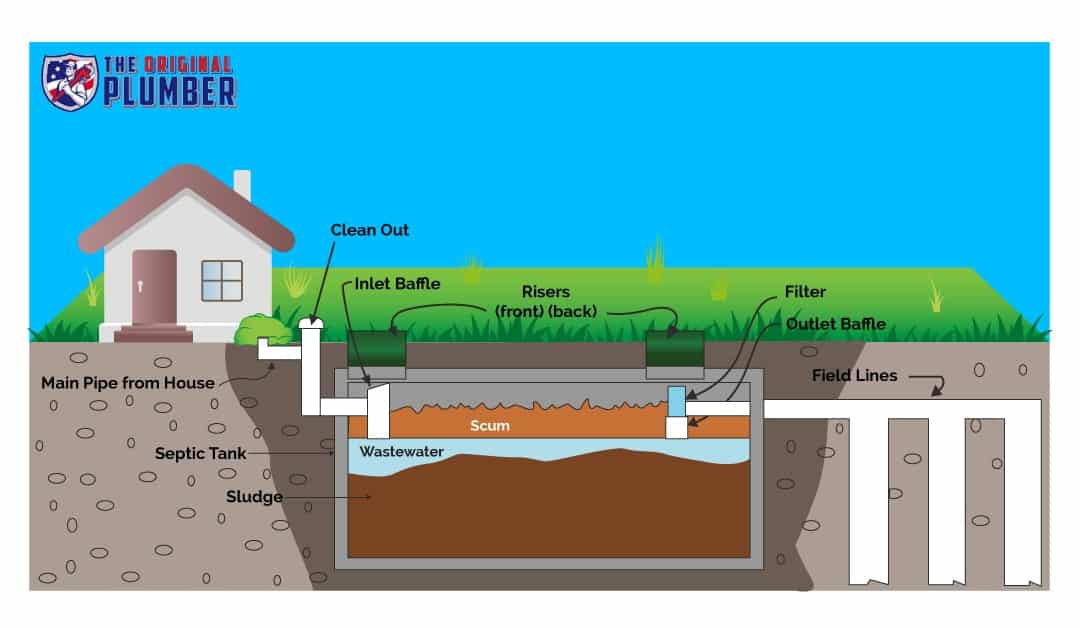
Pipes Leaving the House: Find where your main sewer line exits the foundation of your home. This is usually a 4-inch pipe. The septic tank will almost certainly be in a relatively straight line from that exit point, typically 10 to 25 feet away. It's highly unlikely it took a sharp U-turn just to mess with you!
-
Lack of Obstacles: People generally don't build patios, decks, sheds, or plant large trees directly on top of their septic tanks. So, look for open areas of lawn where nothing significant has been built or planted.

How to Read a Septic Tank Diagram | The Original Plumber & Septic
The Gentle Probe: A Cautious "Feeling Around"
If visual clues aren't cutting it, you can try a gentle probing method. This requires patience and a light touch, please!
-
Get Your Tool: You'll need a thin, sturdy metal rod – something like a piece of rebar, a heavy-duty garden stake, or even a long screwdriver for smaller areas. It should be at least 3-5 feet long.
-
How to Probe: Starting about 5-10 feet from where the sewer line leaves your house, begin gently pushing the rod into the ground. Work in a grid pattern, moving away from the house in the likely direction of the tank. Push down until you hit something solid. You're looking for a large, flat, hard surface, typically 1 to 3 feet below the ground.
-
What to Expect: When you hit the top of the septic tank, you'll feel a definite "thunk" against a hard, flat surface, unlike the resistance of a rock or tree root. Once you find it, you can carefully probe around the edges to get a sense of its dimensions.

DIY - How to locate your septic tank - YouTube
A big, flashing caution sign: Be gentle! We're not trying to puncture anything, just locate it. And never, ever, ever use heavy digging equipment until you are absolutely certain of the tank's location.
The Flush Test: A Little Science!
Feeling a bit adventurous? You can try a "flush test" to help confirm your suspicions about the outgoing sewer line.
-
Tracer Dye: Purchase some non-toxic septic tracer dye (available at hardware stores or online). Flush it down your toilet.
-
Listen and Watch: Go outside to your suspected area. With some quiet and a keen ear, you might be able to hear the water flowing through the buried pipes, giving you a better idea of the line's direction. The dye is more useful for finding the leach field or if you can access inspection ports, but knowing the pipe's path is a huge step.
Call in the Cavalry: When to Bring in the Pros
If you've tried all of the above and are still scratching your head, or if you simply prefer to let the experts handle the dirty work, it's time to call a professional septic company or a plumber experienced with septic systems.

-
Professional Locators: They have specialized equipment, like electronic locators that can detect the main line (especially if it has a metal tracer wire) or even small cameras they can send down your sewer pipes to pinpoint the tank's exact location.
-
Peace of Mind: Sometimes, the cost of a professional service is well worth the peace of mind and the accuracy it provides. They'll find it, mark it, and often give you valuable advice on its condition.
Victory! (And What to Do Next)
Once you've finally unearthed the mystery of your septic tank's location, give yourself a big pat on the back! You've successfully navigated a tricky homeowner task. Now, for the crucial next step: mark it!
Whether you use a small, decorative garden gnome, a cleverly placed landscaping rock, or just a detailed diagram saved on your phone, make sure you know exactly where it is for future reference. This will save you (or future homeowners) a lot of hassle and repeat detective work.
Finding your septic tank might not be on anyone's "top ten fun things to do this weekend" list, but it's a huge step towards being a responsible, well-informed, and ultimately, smarter homeowner. You're now a septic sleuth, a backyard explorer, and a master of your domain! Knowing what lies beneath brings a surprising amount of satisfaction. Your home (and your future plumbing budget) will absolutely thank you. Now go wash those hands, you septic-savvy superstar!