
How Do I Determine How Many Solar Panels I Need
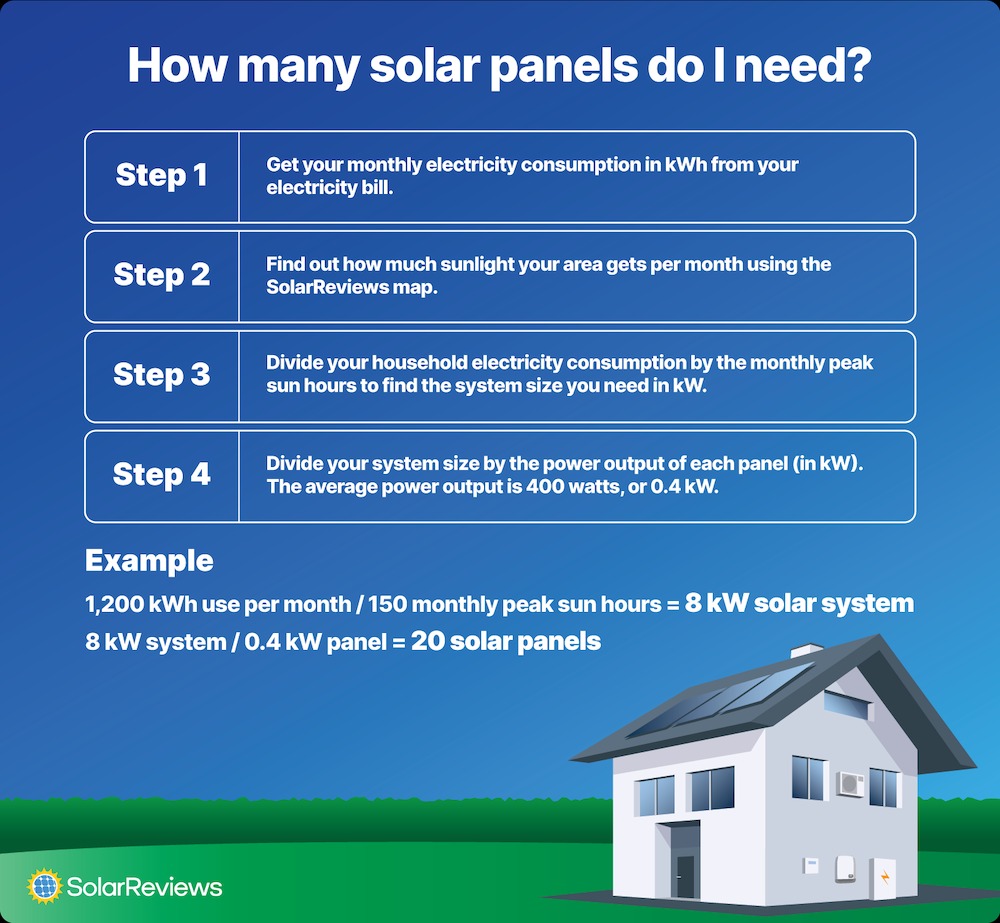
Okay, friend, let's talk about sunshine and savings! Ever dreamt of sticking it to the man (the electric company, that is!) and harnessing the power of the sun? Going solar is becoming seriously popular, and for good reason. But before you start picturing yourself lounging in a hammock paid for by solar savings, there's a little math involved. Don't worry, it's not scary math. We're figuring out: How many solar panels do you actually need?
Why Bother Calculating?
Think of it like this: would you buy 100 burgers for yourself? Probably not. You need just enough to satisfy your hunger. Same goes for solar panels. Too few, and you're still stuck with a hefty electric bill. Too many, and you've overspent and aren't maximizing your return on investment. (Plus, your roof might start to look like a disco ball... less than ideal!)
Finding that sweet spot is key. It's about getting the right amount of power for your needs. And trust me, understanding your needs is kind of... empowering. Pun intended. Seriously, understanding your energy usage is a first step to taking control of your entire carbon footprint!
Must Read
Step 1: Know Your Energy Appetite
First things first: let's get a handle on how much electricity you're actually using. Dig out your electric bills from the last year. (Yes, all of them. Consider it a treasure hunt, a quest for knowledge!) Look for the "kWh" (kilowatt-hours) used each month. Add those up for the whole year. That's your annual energy consumption.
Pro tip: If you're feeling techy, some utility companies let you download your usage data directly from their website. Score!
If you're building a new home, you'll need to estimate. Think about the size of the house, the appliances you'll be using (especially energy hogs like air conditioners and electric heaters), and your lifestyle. Are you a tech-gadget-loving gamer or a minimalist who uses barely any electricity? Be honest with yourself!
Step 2: Consider Sunlight (and Shade!)
Here's where location, location, location comes into play. The amount of sunlight your roof receives is crucial. Places like Arizona and California get a ton of sunshine, while Seattle... well, Seattle has clouds. (Sorry, Seattle!)
You can find out the average sunlight hours in your area by searching online for "[your location] solar insolation." This will give you a number representing the average peak sunlight hours per day.
Also, think about shade. Are there trees blocking the sun? Buildings? A giant inflatable T-Rex? (Hey, it could happen.) Shade significantly reduces solar panel output. Trim those trees, move the T-Rex (please!), and make sure your panels have access to glorious sunshine.
Step 3: Panel Power & System Size
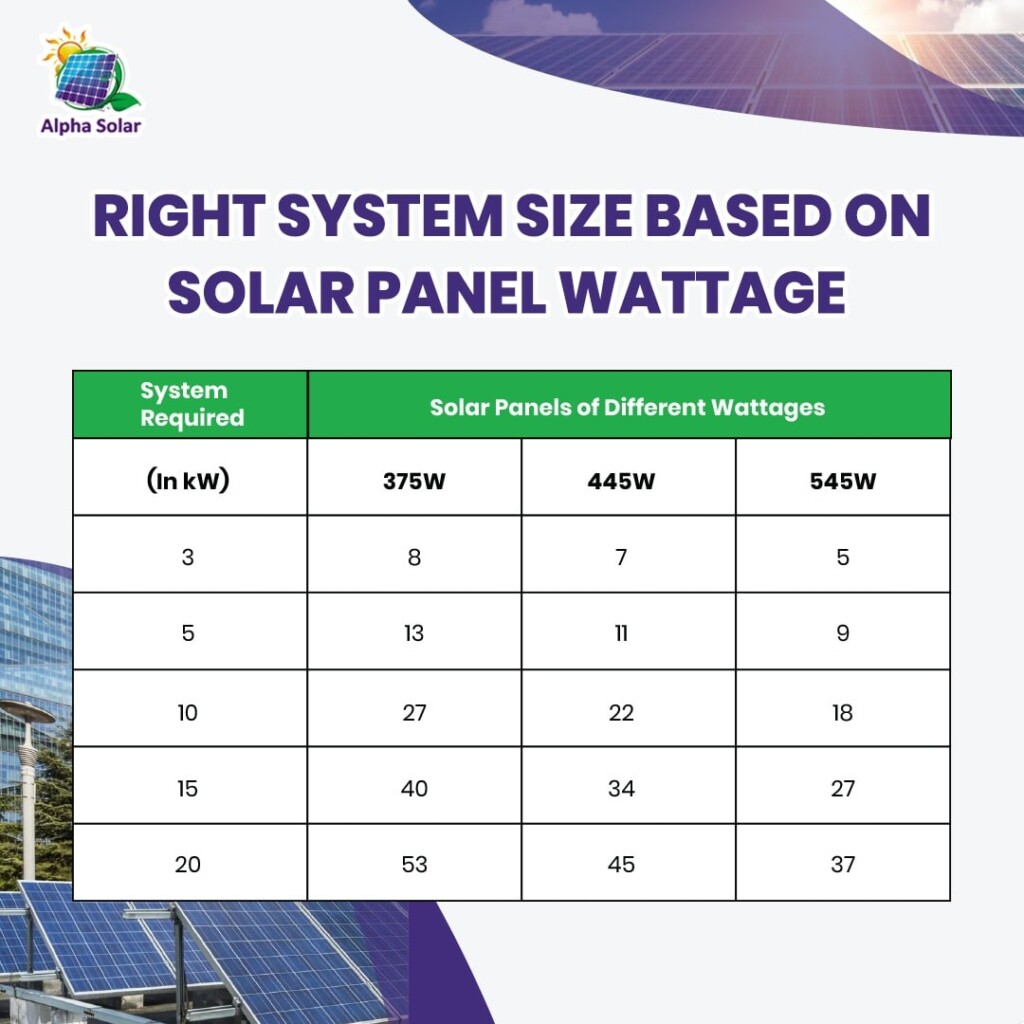
Solar panels are rated in watts (W). A typical solar panel produces around 300-400 watts. (Watts are the units of power, kWh is the amount of energy used over time.)
Now, here's where some simple math comes in. (I promise, it's not that bad!)
First, determine your desired solar system size. This is measured in kilowatts (kW). To do this, take your annual energy consumption (in kWh) and divide it by your area's peak sunlight hours (found in Step 2). Then, divide that number by 365 days (number of days in a year). For example: If you use 10,000 kWh per year and have 5 peak sunlight hours, your calculation would look like this: 10,000 / 5 / 365 = 5.48 kW system.

You can't buy a solar panel system of exactly any size you want, so you would likely want a 5.5 kW system!
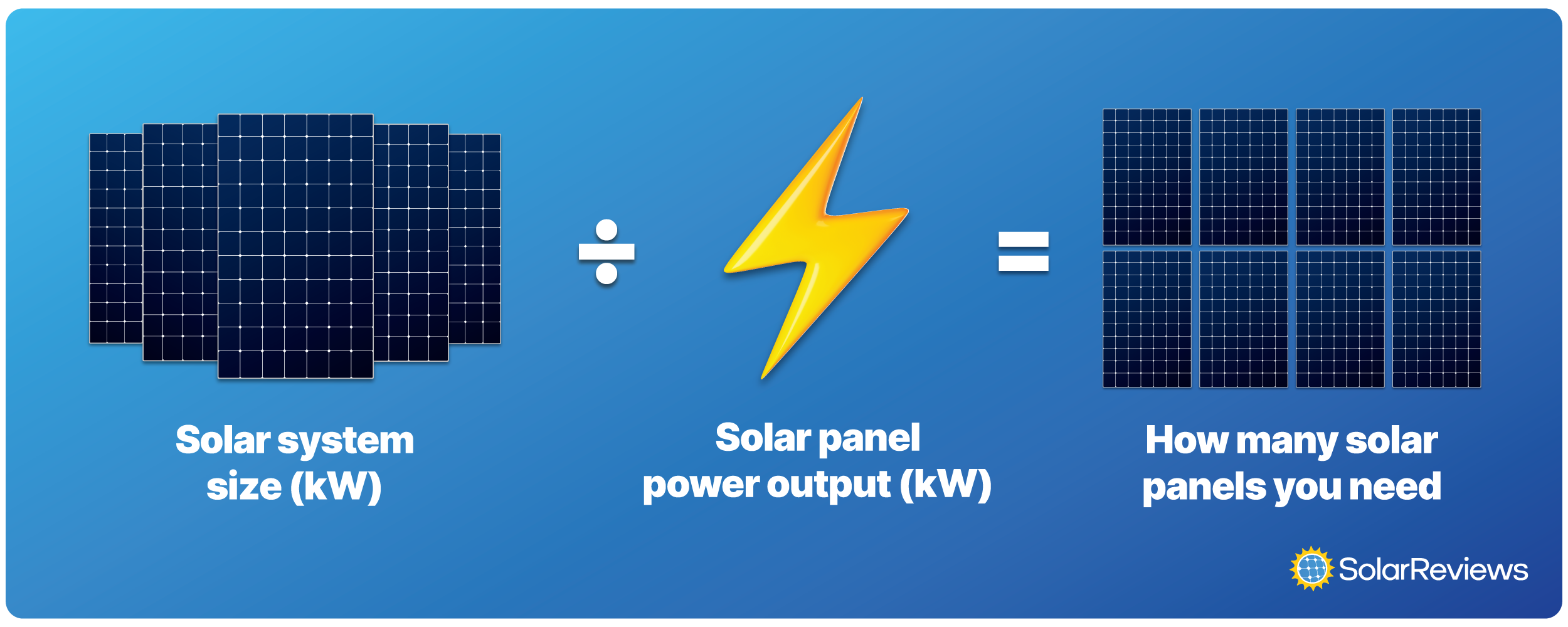
Next, estimate number of panels. Take the size of the solar system you want, 5.5 kW, and divide by the wattage of individual panels. For example, if panels are 350 watts. First, convert the system to watts: 5.5kW = 5500W. Then: 5500W / 350W/panel = 15.7 panels. So you'd round this up to 16 panels!
Remember, this is a simplified calculation. A solar installer can provide a more accurate assessment based on your specific situation.

Step 4: Talk to the Pros
Honestly, after doing some research on your own, the best thing to do is to get quotes from several reputable solar installers. They'll come to your home, assess your roof, and give you a customized proposal. They'll factor in things like roof angle, panel orientation, and local incentives and rebates. (Who doesn't love rebates?!)
Don't be afraid to ask questions! This is a big decision, and you want to make sure you're comfortable with your choice.
Get Inspired!
Figuring out how many solar panels you need might seem like a chore, but it's actually a gateway to a world of energy independence and environmental responsibility. Imagine powering your home with clean, renewable energy, reducing your carbon footprint, and saving money along the way. It's a win-win-win!
So, go forth, gather your energy bills, soak up some sunshine, and start planning your solar journey. The future is bright (and powered by the sun!). The more you learn, the more you realize that you can take control of the future! Be bold, be creative, and get inspired to learn more!