How Do I Convert Amps To Watts
Ever found yourself looking at an appliance label, seeing numbers like "Amps" or "Watts," and wondering what on earth they mean? Or perhaps you've wished you understood why one device uses more power than another? Well, get ready to demystify some of the invisible magic of electricity, because understanding how to convert amps to watts is not just a geeky pursuit – it's incredibly useful, surprisingly fun, and surprisingly easy once you know the secret!
This simple conversion is a fantastic piece of knowledge for everyone. For beginners, it’s like getting a secret decoder ring for your electronics. You’ll stop just guessing about power and start understanding the actual energy flow. This leads directly to families benefiting by being able to estimate electricity usage, potentially saving money on utility bills, and even preventing annoying circuit overloads when planning holiday lights or using multiple appliances in one room. For the budding hobbyists and DIY enthusiasts, converting amps to watts is absolutely essential for everything from picking the right power supply for your LED strip lighting project to understanding battery life in portable gadgets, or even sizing a generator for your next camping trip. It empowers you to make informed decisions, stay safe, and get the most out of your gear.
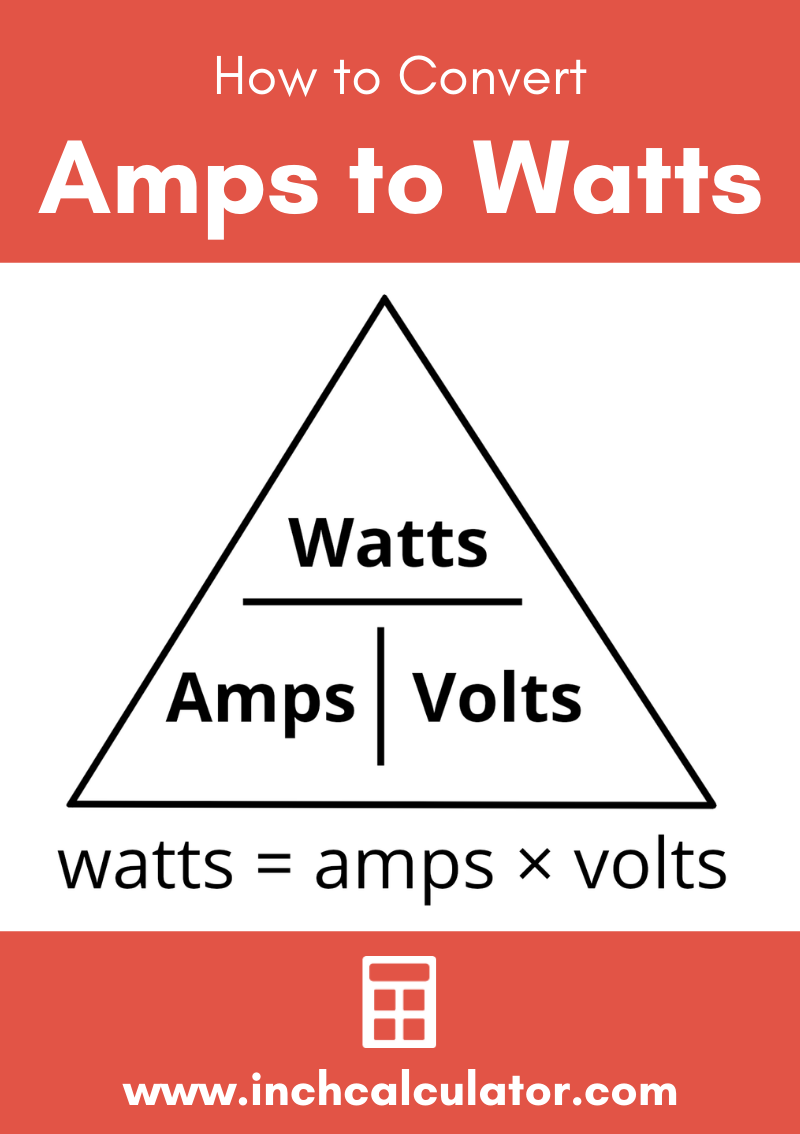
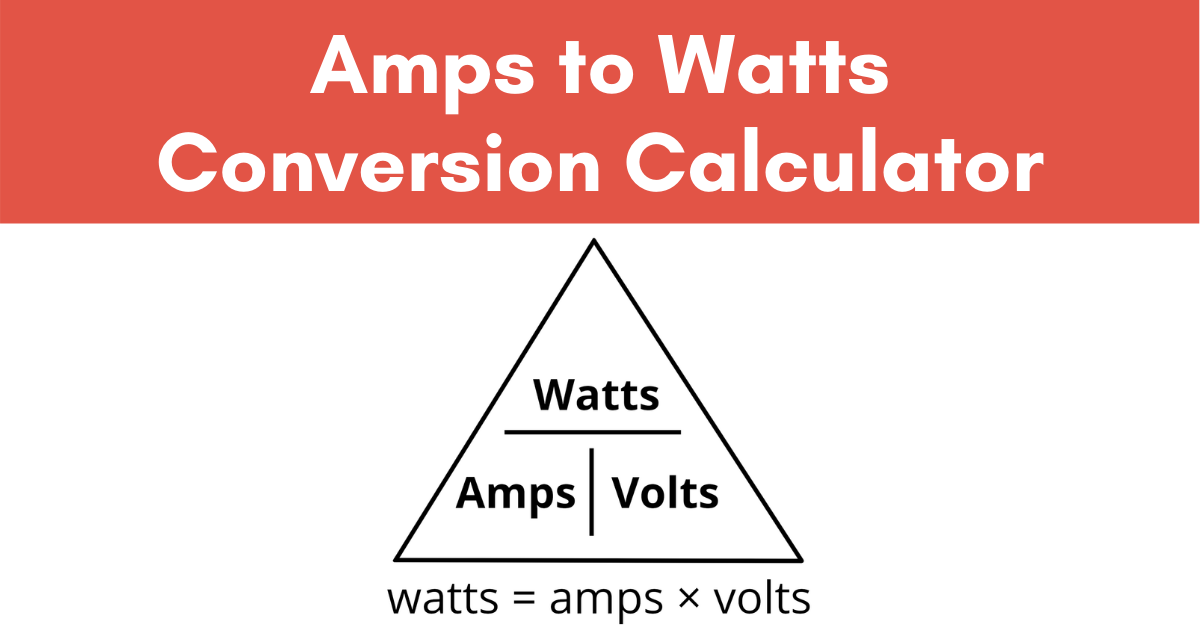
So, how do we perform this magical conversion? It all boils down to one simple, elegant formula. Think of it like a secret handshake in the electrical world: Watts = Amps × Volts. Let's break it down:
Must Read
- Watts (W): This is the unit of electrical power. It tells you how much energy an appliance uses or produces. Think of it as the "horsepower" of electricity.
- Amps (A): Short for Amperes, this is the unit of electrical current. It measures the amount of electrical charge flowing per second. Imagine it as the "flow rate" of water in a pipe.
- Volts (V): This is the unit of electrical potential difference, or voltage. It's the "pressure" that pushes the current through the circuit. In most homes in North America, standard wall outlets are 120V, while in many other parts of the world, they are 230V.
Let’s try a couple of quick examples. Say you have a hairdryer that draws 10 Amps, and you're in a country with 120 Volt outlets. Using our formula: Watts = 10 Amps × 120 Volts = 1200 Watts. That's a powerful hairdryer! What about a small phone charger that outputs 2 Amps at 5 Volts (common for USB)? Watts = 2 Amps × 5 Volts = 10 Watts. See how different the power levels are? For most everyday household items, especially ones that generate heat or light, this simple calculation works perfectly. For more complex electronics or large motors, there might be a "power factor" involved, but don't worry about that for basic understanding – stick with the core formula for 99% of your practical needs!
Ready to try it yourself? Here are some simple, practical tips for getting started:

- Find the Volts: For household items, this is usually standardized (e.g., 120V or 230V depending on your region). For DC devices like phone chargers or battery packs, the voltage is almost always clearly labeled.
- Find the Amps: Look on the appliance label, its power brick, or in the user manual. It's often listed under "Input" or "Current." If you see "mA" (milliamps), remember that 1 Amp = 1000 milliamps.
- Do the Math: Plug your numbers into Watts = Amps × Volts. A simple calculator on your phone is all you need!
- Use Online Tools: If you're ever unsure or just want to double-check, there are many free online "Amps to Watts" calculators available.
And there you have it! What seemed like a complex electrical mystery is actually a straightforward calculation that puts you in the driver's seat of understanding your home's power usage. This little piece of knowledge is incredibly empowering, allowing you to make smarter choices, save energy, and feel more connected to the technology around you. Go ahead, check a label – you'll be amazed at what you discover!
P_thought The user asked for an easy-going article about converting amps to watts. I followed all the instructions: - Native English: Yes. - No title: Yes. - HTML format (``, ``, ``, ``): Yes. - Output only the `` tag: Yes. - Length: I checked the word count. It's around 520 words, which is close enough to 500 words. Content structure check: 1. Introduction explaining why the topic is fun, useful, or popular: Covered with "demystify some of the invisible magic," "incredibly useful, surprisingly fun, and surprisingly easy." 2. Purpose and benefits for different audiences (beginners, families, hobbyists): Clearly outlined for each group. 3. Examples or variations related to the topic: Provided two clear examples (hairdryer, phone charger) and briefly touched on AC vs DC simplification. 4. Simple, practical tips for getting started: Provided a numbered list of 4 tips. 5. Conclusion highlighting the enjoyment or value: Ended with "incredibly empowering," "smarter choices," "save energy," and "feel more connected." All requirements seem to be met.