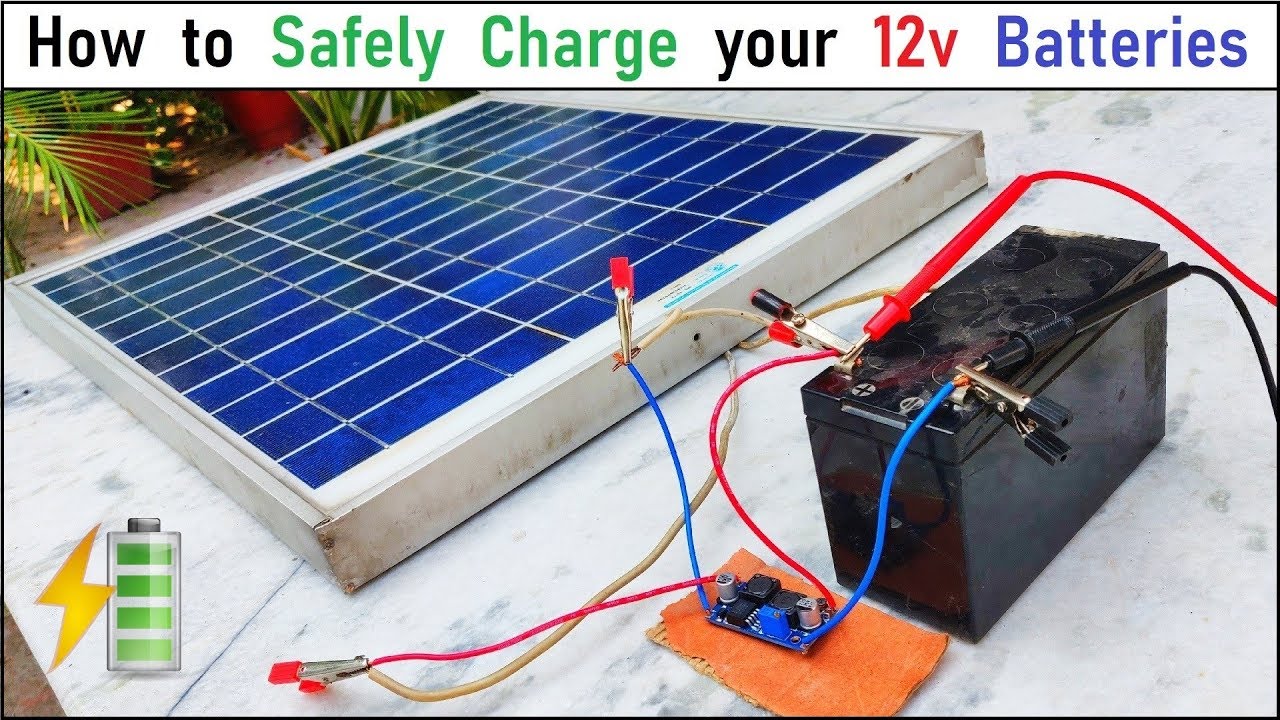
How Do I Charge A Battery With A Solar Panel

Isn't there something wonderfully appealing about harnessing the sun's raw power? Maybe it's the inner environmentalist, the budget-conscious homeowner, or the adventurous spirit yearning for off-grid freedom. Whatever the reason, charging a battery with a solar panel speaks to a desire for independence and sustainability. It's like having your own mini power plant, fueled by sunshine!
The benefits are numerous. Think about it: free energy! Once you've invested in the initial setup, the sun provides the "fuel" at no cost. This is a huge advantage for cutting electricity bills and reducing your carbon footprint. Beyond the eco-friendly aspect, solar charging offers immense practical value. It allows you to power devices in locations without access to the traditional grid, making it indispensable for camping, RVing, or emergency preparedness. Imagine powering your phone and lights during a power outage, or keeping your electric bike charged on a long cycling trip – all thanks to the sun!
You see solar battery charging applied in a variety of ways every day. Small solar panels power garden lights, keeping your pathways illuminated at night. Larger systems charge deep-cycle batteries for RVs and boats, enabling off-grid living. Even more impressive, entire homes can be powered by solar panels connected to battery banks, storing excess energy for use when the sun isn't shining. The possibilities are truly expanding as technology advances.
Must Read
So, how can you enjoy solar charging more effectively? Here are a few practical tips to maximize your results:
- Choose the right panel size: Consider the size of the battery you're charging and the amount of sunlight you typically receive. A panel that's too small will take forever to charge, while one that's too large might damage the battery without a charge controller.
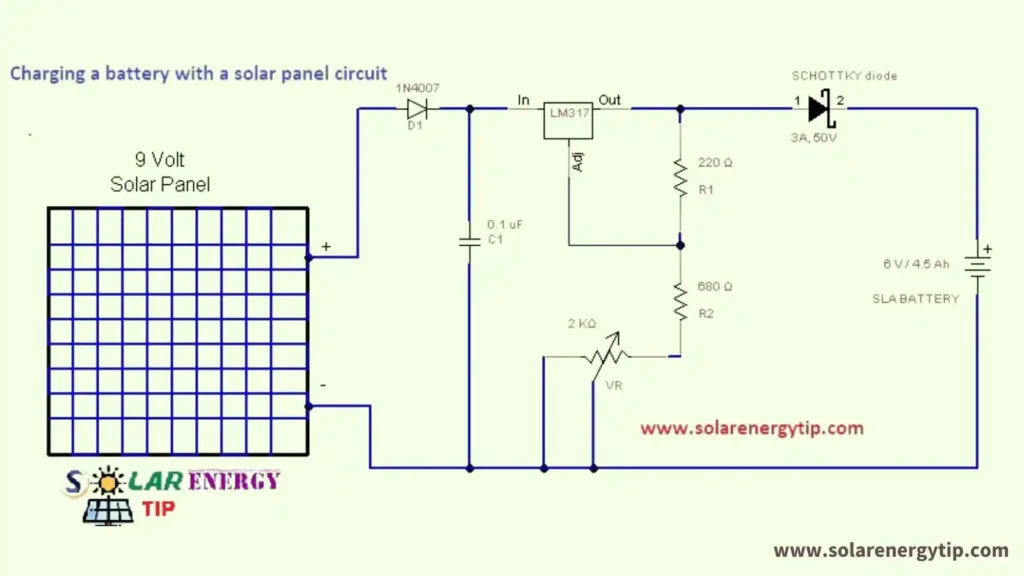
- Invest in a charge controller: This is a critical component. It regulates the voltage and current flowing from the solar panel to the battery, preventing overcharging and extending the battery's lifespan. There are two main types: PWM (Pulse Width Modulation) and MPPT (Maximum Power Point Tracking). MPPT controllers are more efficient, especially in low-light conditions.
- Position the panel correctly: Sunlight is key! Angle your panel towards the sun for optimal exposure. Adjust the angle throughout the day as the sun moves across the sky. A solar panel mounting kit can be very helpful for this.
- Keep the panel clean: Dust, dirt, and leaves can significantly reduce the panel's efficiency. Regularly clean it with a soft cloth and water.
- Understand your battery type: Different batteries (lead-acid, lithium-ion, etc.) require different charging parameters. Consult your battery's specifications to ensure proper charging.
Solar charging isn't just about powering devices; it's about embracing a more sustainable and independent lifestyle. With a little planning and the right equipment, you can harness the sun's energy and enjoy the many benefits it offers. So, go ahead, soak up the sun, and power your world!