
How Do Generators Work In A House
Okay, so picture this: You’re snuggled up on the couch, watching your favorite show, maybe even midway through a killer snack. Suddenly—BAM!—darkness. Silence. Just the frantic blinking of the microwave clock as it resets. Ugh, right?
That’s where the mighty home generator swoops in, cape flapping dramatically (in our imaginations, anyway). But have you ever actually stopped to think, "How on earth does that big box outside actually get my fridge humming again?"
So, What's the Big Deal with Generators Anyway?
First off, let’s be super clear: your generator isn't some magical power factory conjuring electricity out of thin air. Nope! Think of it more like a super-efficient energy converter. It takes one type of energy and gives you another, more useful kind. Kinda like turning raw coffee beans into that glorious morning latte. See? Very relatable.
Must Read
The main goal? To give you power when the grid decides to take an unannounced nap. We're talking lights, fridge, maybe even the Wi-Fi (because priorities, people!).
The "Secret Sauce": Energy Conversion!
At its heart, a generator performs an amazing trick: it converts mechanical energy into electrical energy. It’s like a tiny, very powerful gym buddy that just keeps spinning and spinning to make electrons dance. The core principle? It’s all about a little something called electromagnetic induction. Sounds fancy, right? Don't worry, we'll break it down.

Meet the Engine: Your Generator's Muscle Car
Every generator needs a power source, right? For most home generators, this is an internal combustion engine. Yep, just like the one in your car, but probably a little less flashy. This engine runs on fuel – usually natural gas, propane, or diesel. So, when the power goes out, this engine kicks into gear. It revs up, burning fuel, and generating a whole lot of rotational motion.
Imagine that engine spinning a shaft really, really fast. That's the mechanical energy part. This is the muscle, the grunt work, the "I’m gonna power your whole house" attitude.
The Alternator: Where the Real Magic Happens (No Wands Needed)
Now, this spinning motion needs to become electricity. Enter the alternator. This is the star of the show, the true wizard in the box. The alternator is basically made of two main parts: a rotor (which spins) and a stator (which stays still).
The rotor is usually packed with magnets. As the engine spins the rotor, these magnets start whizzing around inside the stator. The stator, in turn, is full of coils of copper wire. Here's the cool part: when magnets move past copper wire, they
Think of it like this: the spinning magnets are pushing tiny, invisible electrons along the copper wires. And those electrons, my friend, are electricity. Pretty neat, huh?

The Brains of the Operation: The Transfer Switch
Okay, so you’ve got an engine making things spin, and an alternator turning that spin into juice. But how does that juice actually get into your house, safely and without blowing up your toaster?
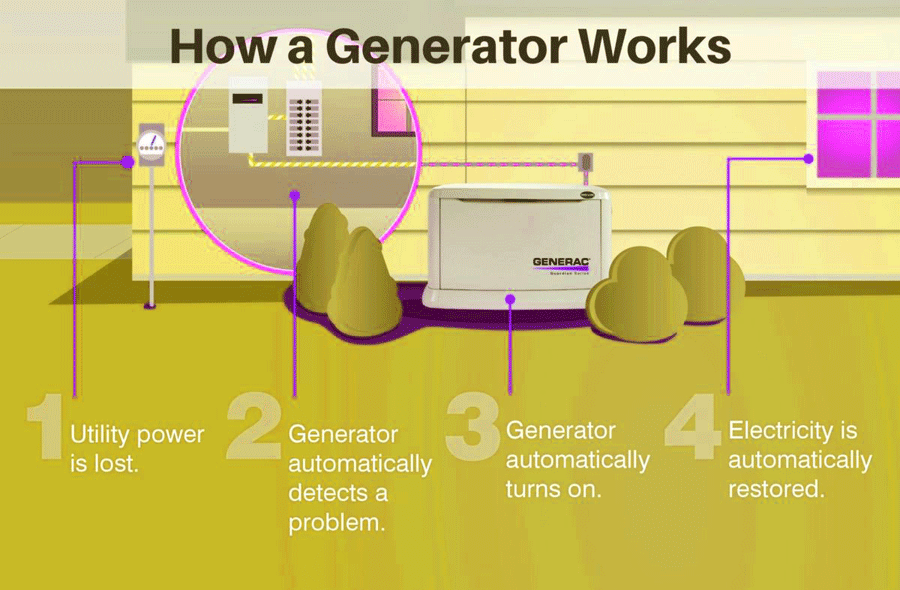
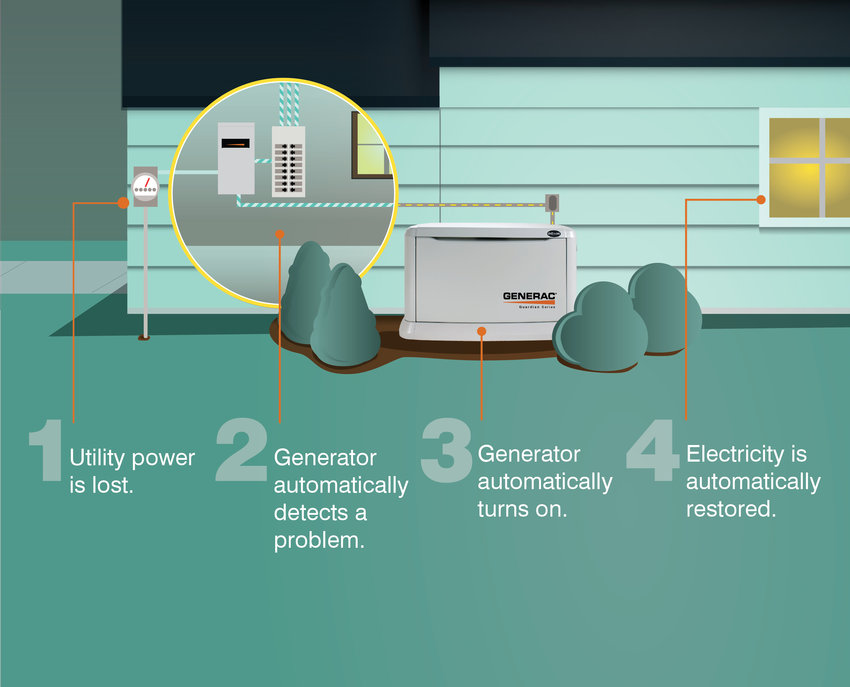
That's where the unsung hero, the transfer switch, comes in. This is a super important safety device. When your main power from the utility company goes out, the transfer switch senses that loss. It then automatically (if it's a standby generator) or manually (if it's a portable one you plug in) disconnects your house from the utility grid.
Why disconnect? Because trying to feed power back into the grid could seriously injure utility workers! Once safely disconnected, the transfer switch then connects your home's electrical system to the generator. It's like a smart traffic cop for your home's electricity, ensuring power flows from the right place at the right time.

Standby vs. Portable: A Quick Look
You’ll mostly hear about two types for homes:
- Standby Generators: These are the big, permanent fixtures outside your house. They're connected to your natural gas line or a big propane tank. They have that fancy automatic transfer switch we just talked about, so they kick on
all by themselves when the power fails. Super convenient, right? - Portable Generators: These are the ones you wheel out of the garage. You fill them with gas, pull a cord (or push a button), and then run extension cords to the specific things you want to power. Less automatic, more hands-on, but still a lifesaver.
A Quick Nudge About Safety (Because We Like You)
Generators are fantastic, but they need respect! Always, always operate them safely. That means never indoors or in an attached garage, due to the very real danger of carbon monoxide poisoning. And if you have a portable one, make sure you know how to connect it properly with a transfer switch or approved interlock kit to avoid "backfeeding" power. Safety first, friends!
So, the next time the lights flicker, you won't just be cursing the power company. You'll be nodding knowingly, thinking about those spinning magnets and the diligent transfer switch. You're basically an expert now! Go forth and conquer the darkness!