
How Did You Find The Area Of Each Shaded Region
Hey there, friend! Ever stare at a geometric shape with a weird shaded part and just think, "Ugh, math"? Yeah, me too. But figuring out the area of those shaded regions doesn't have to be a nightmare. It's more like a puzzle, and who doesn't love a good puzzle?
So, grab your metaphorical coffee (or, you know, the real deal if you're actually drinking coffee), and let's break down how I usually tackle these things. Trust me, it's less intimidating than it looks. Prepare for some area-finding adventures!
The "Big Shape Minus Little Shape" Tango
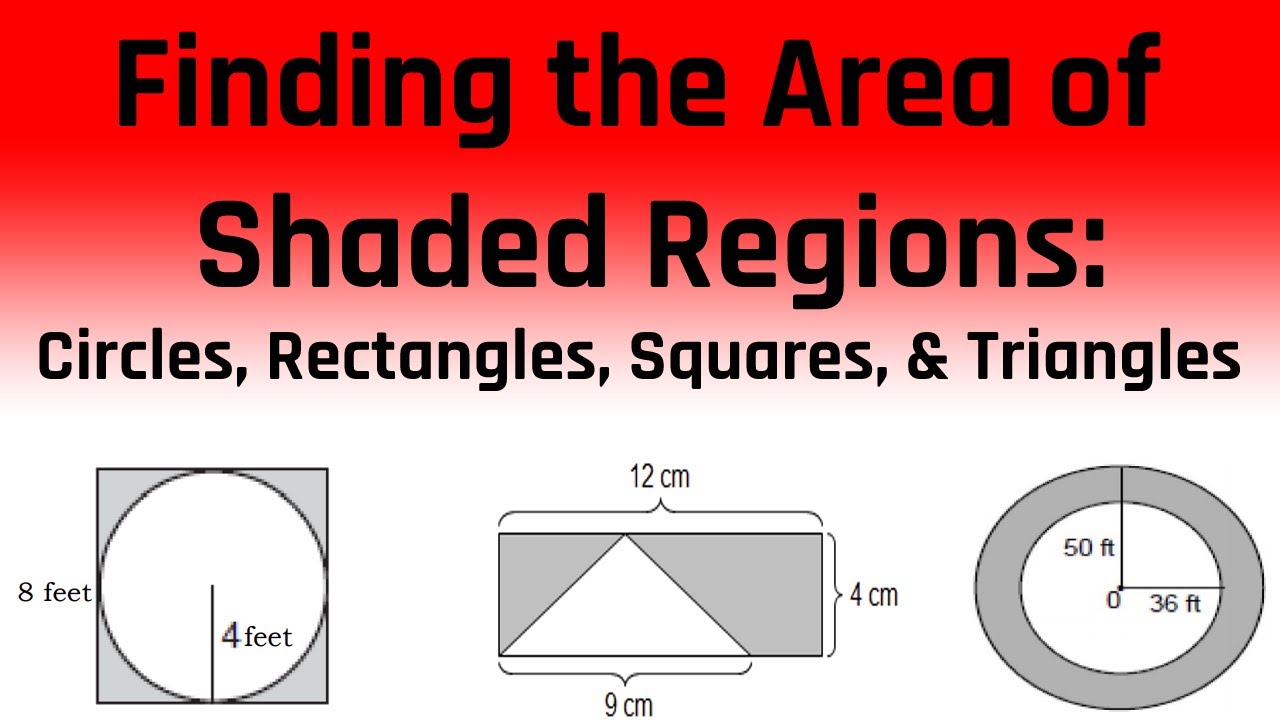
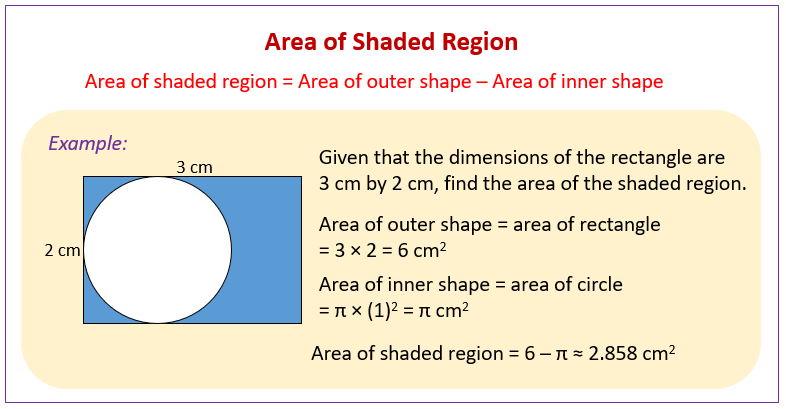
This is probably the most common scenario. Picture this: a square with a circle cut out of the middle, and only the area around the circle is shaded. How annoying, right? But also… totally solvable!
Must Read
The trick? Find the area of the big shape (the square, in this case), then find the area of the little shape (the circle). Finally, subtract the little area from the big area. BAM! Shaded region victory!
Think of it like this: you have a whole pizza (the big shape). Then you eat a slice (the little shape). What's left? The remaining pizza! (Which, by the way, is arguably the best part of the pizza, right?). Math can be delicious!
Formula-wise, this looks something like: Area of Shaded Region = Area of Big Shape – Area of Little Shape. Groundbreaking, I know.
Breaking It Down: Conquer and Divide!
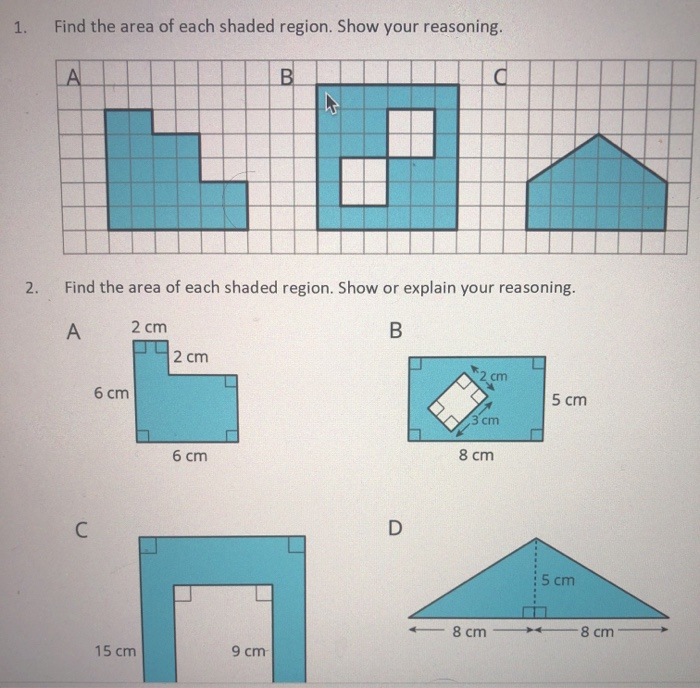
Sometimes, the shaded area is super irregular. Like, what is that thing?! Don't panic! The "divide and conquer" approach is your new best friend.
The idea is to break the shaded area into smaller, more manageable shapes – squares, rectangles, triangles, maybe even semi-circles. Calculate the area of each of these smaller shapes individually, and then simply add them all up. Presto! You've pieced together the whole shaded area!
This might involve drawing a few extra lines on the diagram. Don't be afraid to mark it up! Seriously, go wild! It’s like giving the shape a makeover, but with math.
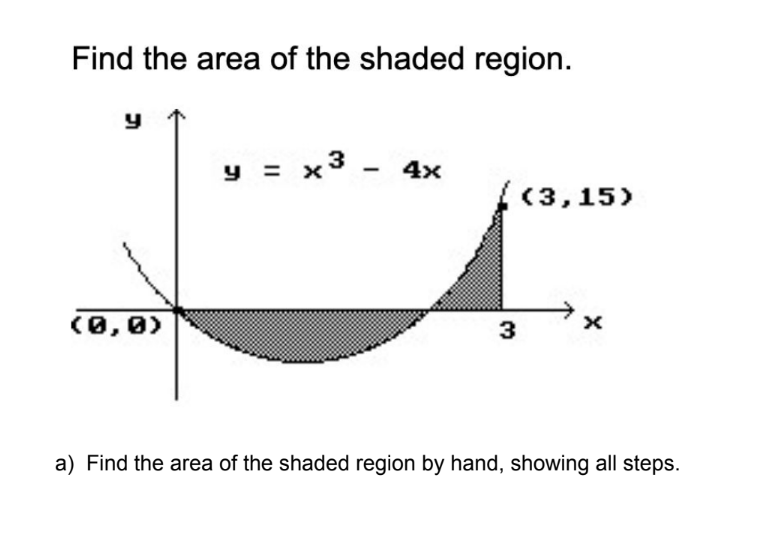
For example, imagine a weird, lopsided "L" shape. You could divide it into two rectangles, calculate their areas, and then add them together. Easy peasy, right?
Spotting the Hidden Shapes
Okay, sometimes the problem-makers (aka textbooks, teachers, sadistic shape-designers) try to be sneaky. They hide shapes within shapes, making it look way more complicated than it is. The key is to train your eye to see the underlying geometry.
Is there a smaller square hiding inside a bigger square? Is a triangle cleverly tucked away within a parallelogram? Look closely! Like, really closely! It's like a geometric Where's Waldo!
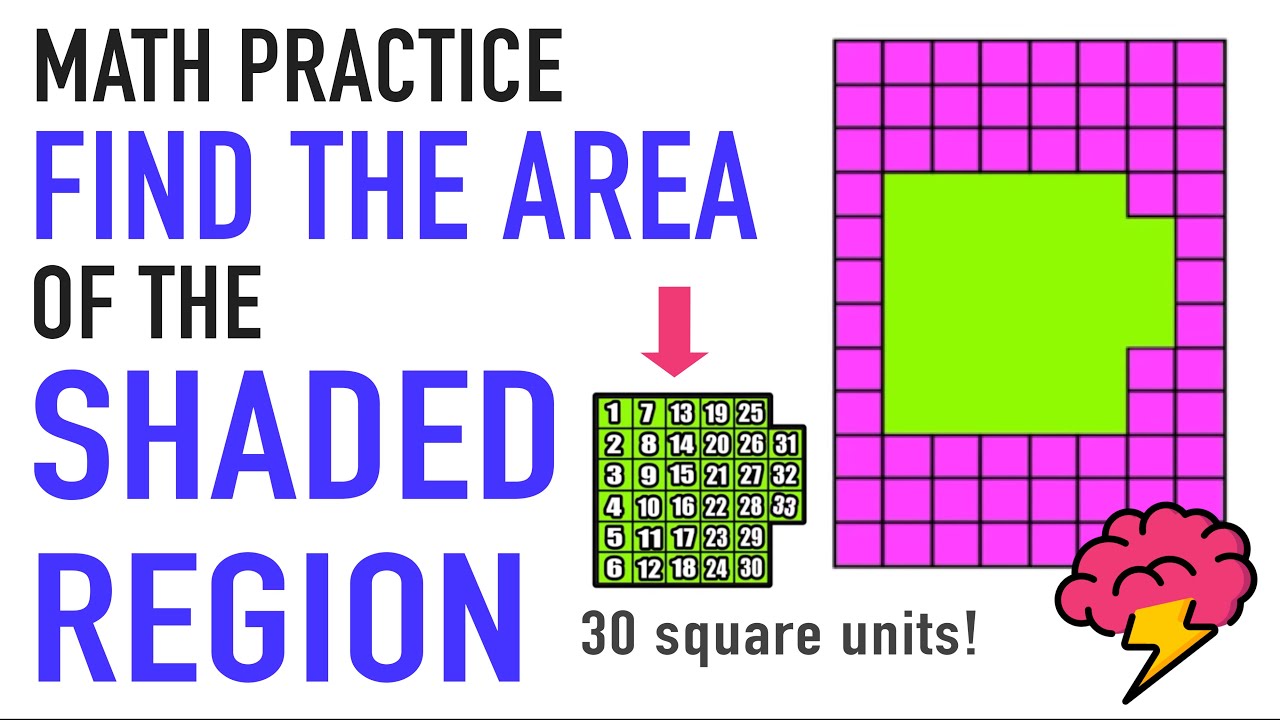
Once you identify those hidden shapes, you can use the "big shape minus little shape" strategy (or the "divide and conquer" strategy, if needed) to find the shaded area. The power is yours!
Don't Forget the Formulas! (Ugh, I know)
Alright, let's be real. You can't escape the formulas entirely. Knowing your basic area formulas is essential. Square (side * side), rectangle (length * width), triangle (1/2 * base * height), circle (π * radius squared) – you know the drill.
I won’t bore you with a lengthy list of formulas, but make sure you’re comfy with the basics. Think of them as your mathematical toolbox. You wouldn't try to build a house without a hammer, would you?
And hey, if you forget a formula, don't be afraid to look it up! Google is your friend! Just don't rely on it during a test, unless open-note exams are your thing (lucky you!).
Practice Makes…Well, Better!
Okay, confession time: I didn't become a shaded-area ninja overnight. It takes practice! The more problems you solve, the better you'll become at recognizing patterns and applying the right strategies.
So, don't be discouraged if you struggle at first. Just keep at it, and eventually, you'll be staring at those shaded regions with a confident smirk, ready to conquer them all! You got this! Now, go forth and find some areas!