
How Big Of Pool Pump Do I Need

Alright, friend! Let's talk pool pumps. If you've ever stared at a brochure full of numbers like GPM, HP, and "feet of head" and felt your brain start to short-circuit, you're not alone. Choosing the right pool pump can feel like trying to solve a Rubik's Cube while blindfolded. But fear not! I’m here to de-mystify it all, so you can stop scratching your head and start enjoying that sparkling-clean water.
Think of your pool pump as the heart of your pool's circulation system. It pulls water in, pushes it through the filter (the kidneys!), and sends it back out, clean and refreshed. Get this right, and you're golden. Get it wrong, and well, you might just end up with a green swamp instead of a blue oasis. And nobody wants that!
Why Does Pump Size Even Matter? (The Goldilocks Principle)
This isn't just about showing off the biggest pump on the block. Oh no. Pump size is all about balance, like finding the perfect pair of socks.
Must Read
-
Too Small: Your pump will struggle to move enough water through the filter. This means your pool won't get properly cleaned, leading to algae, murkiness, and you feeling like you live in a pond. Plus, it’ll run forever trying to catch up, wearing itself out and still not doing the job.
-
Too Big: "Bigger is better," right? Not always in the pool world! An oversized pump can create too much pressure for your filter, potentially damaging it. It also uses a lot more energy than necessary (hello, higher electricity bill!), makes more noise, and can even prematurely wear out other equipment. It’s like trying to drink a glass of water with a fire hose – overkill!
-
Just Right: This is our sweet spot! An appropriately sized pump will efficiently circulate and filter your pool water, keeping it pristine without wasting energy or putting undue stress on your equipment. It's the Zen master of pool pumps.
Let's Get a Little Techy (But Keep It Fun!)
To find our "just right" pump, we need to consider a few key things. Don't worry, there's no advanced calculus required, just some basic measuring and a sprinkle of common sense.

1. How Big is Your Pool, Really? (Volume Matters!)
This is probably the most important piece of information. You need to know your pool's volume in gallons. If you've forgotten your high school geometry, don't sweat it:
-
Rectangular Pools: Length (ft) x Width (ft) x Average Depth (ft) x 7.5 (gallons per cubic foot) = Total Gallons
-
Round Pools: Pi (3.14) x Radius (ft) x Radius (ft) x Average Depth (ft) x 7.5 = Total Gallons
-
Oval Pools: Length (ft) x Width (ft) x Average Depth (ft) x 5.9 = Total Gallons (this is an approximation, but a good starting point!)
Got your number? Excellent! That's your first puzzle piece.

2. The "Turnover Rate" (How Often Your Water Gets Cleaned)
This sounds fancy, but it just means how long it takes for all the water in your pool to pass through the filter. For most residential pools, you want a 10-12 hour turnover rate. This ensures your water is filtered at least twice a day, keeping it super clean. For heavily used pools or those in very sunny/dusty areas, you might aim for 8 hours. For very lightly used pools, 24 hours might be fine, but 10-12 is generally the safe bet.
3. Let's Do Some Simple Math (I Promise!)
Now, we'll calculate your needed Flow Rate, measured in GPM (Gallons Per Minute).
Formula:
Pool Volume (gallons) / Turnover Rate (hours) / 60 (minutes per hour) = Minimum GPM Needed
Let's say you have a 20,000-gallon pool and want a 10-hour turnover:
20,000 / 10 / 60 = 33.3 GPM. So, you need a pump that can handle at least 34 GPM.
But wait, there's a tiny wrinkle! Pumps are often rated by GPH (Gallons Per Hour). To convert: 33.3 GPM x 60 minutes = 1998 GPH. Easy peasy!
4. Don't Forget "Total Dynamic Head" (The Unseen Resistance)
Okay, this one's a bit abstract, but important. "Head" refers to the resistance your pump has to overcome. Think of it as drag. Every pipe bend, valve, heater, filter, and even the length of your plumbing adds resistance. The higher the head, the harder your pump has to work, and the less water it can push. You won't typically calculate this yourself (unless you're an engineer with way too much free time), but it’s why pumps have a "flow rate at X feet of head" specification. A good pool professional will factor this in.
Modern Pump Options: Choose Your Fighter!
-
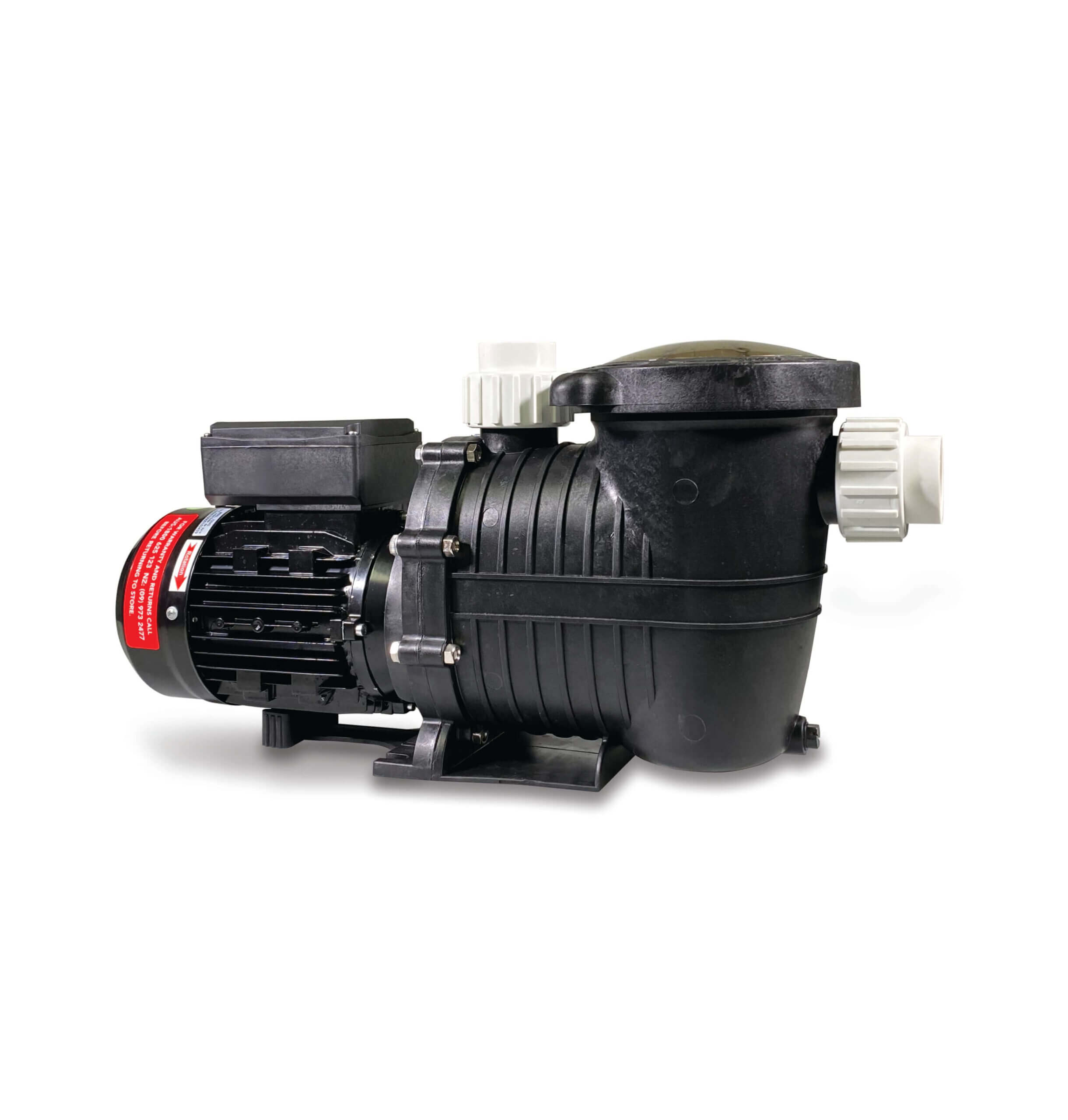
Single-Speed Pumps: These are your basic "on/off" pumps. They run at one speed (usually high) all the time they're on. They're often cheaper upfront but can be energy hogs and quite noisy. Think of them as a car stuck in first gear – powerful, but not very efficient for a long drive.
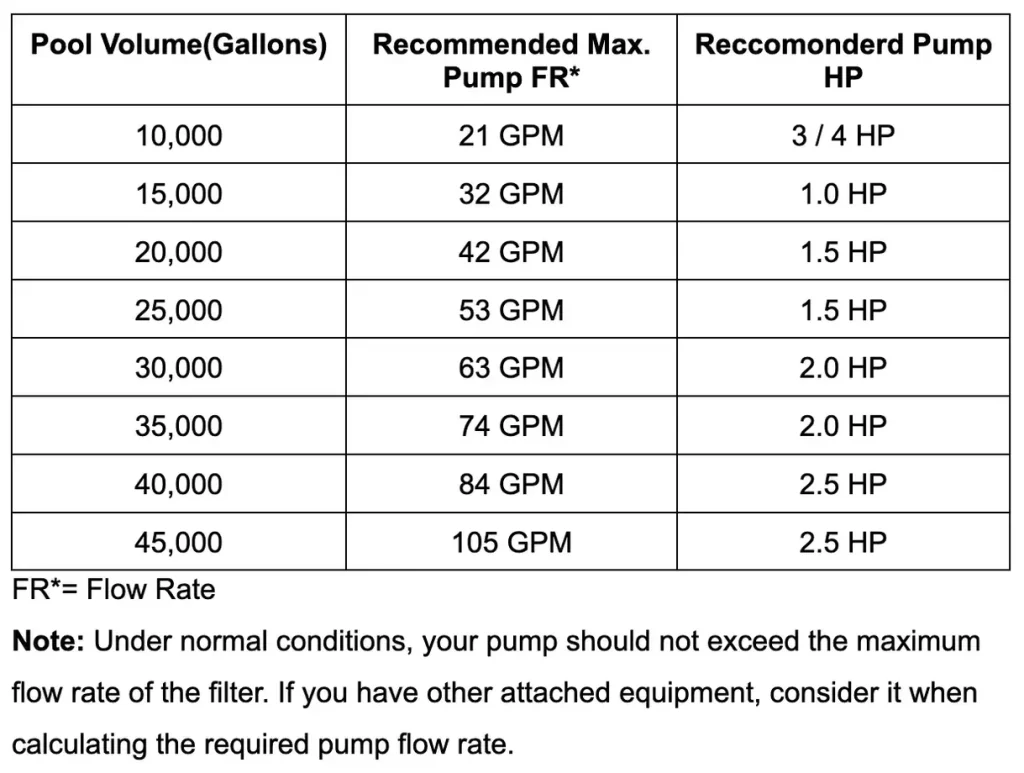
(Sizes & Chart) What Size Pool Pump Do I Need For My Pool? -
Two-Speed Pumps: A step up! These have a high and a low setting. You can run them on low for most of the day for energy savings, then kick them into high for backwashing or vacuuming. Better, but still a bit old-school.
-
Variable-Speed (VS) Pumps: These are the superheroes of the pump world. They allow you to fine-tune the motor speed to precisely match your pool's needs. This means huge energy savings (often paying for themselves in a couple of years!), super quiet operation, and less wear and tear on your equipment. If your budget allows, a variable-speed pump is almost always the best choice for efficiency and long-term savings. They're like having a whole orchestra conductor for your pool's circulation!
The Takeaway: Don't Overthink It, But Don't Underpower It!
While we've walked through the calculations, the main goal is to understand the principles. You want a pump that can comfortably meet your minimum GPM requirement, considering your filter type and plumbing, without being excessively powerful.
When in doubt, it's always a good idea to chat with a trusted local pool professional. They can assess your specific setup, consider factors like your plumbing layout and even future upgrades you might want, and recommend the perfect pump. Think of them as your pool pump matchmakers!
So, take a deep breath! You're now armed with the knowledge to make an informed decision. Get that pump sorted, and pretty soon, you'll be lounging by your perfectly circulated, sparkling pool, knowing you made the smart choice. Cheers to crystal clear water and endless summer fun!