
How Big Of Generator Do I Need For My House
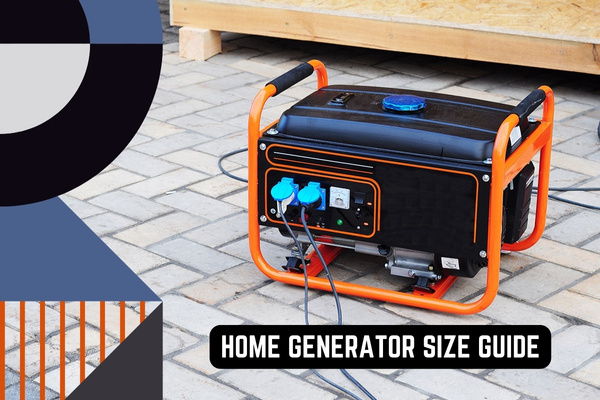
Okay, so the power went out again. You're sitting in the dark, the fridge is starting to sound a little too quiet, and you're suddenly craving that ice cream you know is melting. Time to consider a generator, right? But how do you even begin to figure out what size you need?
Don’t worry, it's not rocket science, although sometimes it feels like you need a PhD in electrical engineering to decipher those generator specs. Let's ditch the complicated stuff and talk real-world needs, like keeping the coffee maker alive!
The Great Appliance Census
Think of it like this: your house is a small village and each appliance is a resident demanding power. Time for a headcount! Grab a notepad and tour your home, jotting down everything you absolutely, positively need to keep running when the grid goes down.
Must Read
We're not talking about the decorative fountain in the foyer or the electric toothbrush (unless you’re really committed to oral hygiene). Focus on the essentials: the refrigerator, a few lights, the furnace (especially in winter!), and maybe, just maybe, the TV for emergency weather updates (and, let’s be honest, Netflix).
Now, find the little stickers or plates on each appliance. They usually list the watts (W) or amps (A) required. Watts are what we're after. Amps? Multiply them by 120 (the standard voltage in most US homes) to get the watts. Voila! Math complete (for now).
Starting Watts vs. Running Watts: The Sneaky Culprits
Here's a fun fact: some appliances need a burst of extra power when they first start up. This is called the "starting wattage," and it’s often much higher than the "running wattage" – the power they need to keep humming along.
Think of it like a car: it needs more gas to accelerate from a stop than it does to cruise on the highway. Appliances with motors, like refrigerators, air conditioners, and well pumps, are the biggest offenders when it comes to starting watts.

Finding the starting wattage can be tricky. Sometimes it’s listed on the appliance label, but often you have to do some detective work online. A good rule of thumb is to assume that motor-driven appliances need 2-3 times their running wattage to start. Don't worry, there are charts and calculators online to help.
The Big Sum: Adding It All Up
Okay, you've got your list of essential appliances and their wattages, both running and starting. Now comes the slightly tedious but ultimately rewarding part: adding it all up.
First, add up the running watts of everything you want to power simultaneously. This gives you your baseline power requirement.
Next, identify the appliance with the highest starting wattage. Add that starting wattage to your baseline running wattage. This is the peak wattage your generator needs to handle.
Let's say your refrigerator needs 150 running watts and 600 starting watts. Your lights need 100 running watts, and your furnace needs 400 running watts. Your baseline is 150 + 100 + 400 = 650 watts. The refrigerator has the highest starting wattage (600). So, your peak wattage requirement is 650 + 600 = 1250 watts.
Generator Sizing: Padding is Your Friend
Now that you know your peak wattage, you might be tempted to buy a generator that provides exactly that amount of power. Resist the urge! It's always a good idea to add a safety margin.
Generators run more efficiently and last longer when they're not constantly operating at full capacity. Plus, you might decide you want to power a few extra things in the future (like that electric blanket – priorities!).
Aim for a generator that provides at least 20% more wattage than your peak requirement. In our example, that means a generator with a capacity of at least 1250 x 1.2 = 1500 watts. A 2000-watt generator would be even better.
Generator Types: Fueling Your Freedom
Generators come in various flavors, each with its own pros and cons. The most common types are portable generators, inverter generators, and standby generators.

Portable generators are the workhorses of the generator world. They're relatively inexpensive and easy to move around. They typically run on gasoline or propane. Be warned, they can be noisy, and you'll need to store fuel safely.
Inverter generators are quieter, more fuel-efficient, and produce cleaner power, making them ideal for sensitive electronics like laptops and smartphones. They're also generally more expensive than portable generators and have lower power output.
Standby generators are the ultimate luxury. They're permanently installed and automatically kick in when the power goes out. They run on natural gas or propane and are incredibly convenient. However, they're also the most expensive option, requiring professional installation.
The Human Factor: Consider Your Comfort
Beyond the raw wattage numbers, think about how you actually use power during an outage. Are you the type to huddle around a single light bulb, conserving energy like a pioneer? Or are you more likely to fire up the electric kettle every hour for a comforting cup of tea?

Be honest with yourself. If you know you'll be tempted to plug in the space heater "just for a few minutes," factor that into your calculations. It's better to overestimate your power needs than to be left shivering in the dark, wishing you'd sprung for the bigger generator.
Also, consider your neighbors. If you live in a close-knit community, a generator can be a lifesaver for everyone. Offering to share your power (responsibly, of course!) can foster goodwill and turn a power outage into a surprisingly heartwarming bonding experience.
The Bottom Line: Don't Be Afraid to Ask for Help
Figuring out the right generator size can seem daunting, but it doesn't have to be. Start with a simple appliance census, understand the difference between starting and running watts, and add a healthy safety margin.
If you're still feeling overwhelmed, don't hesitate to consult with an electrician or a generator specialist. They can assess your specific needs and recommend the perfect generator for your home and lifestyle.
And remember, a little bit of planning can go a long way toward ensuring that the next power outage is a minor inconvenience rather than a full-blown crisis. Now, go forth and conquer the darkness!