
How Big Of A Whole House Generator Do I Need
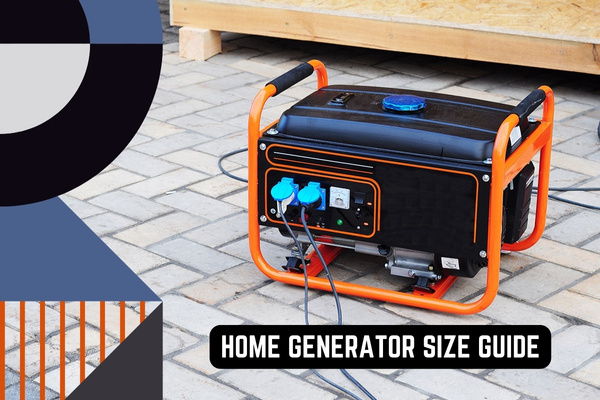
Okay, let's talk generators. Specifically, those whole-house behemoths that promise to keep your Netflix streaming even when the power grid throws a tantrum. How big do you really need? That's the million-dollar question, isn't it?
Most of the time, the answer you get is complicated. It involves calculations and load balancing. But I have a different take. Prepare for my unpopular opinion.
The Great Generator Sizing Conspiracy (Maybe)
I suspect the "right size" is often larger than you actually need. Hear me out. Companies make more money selling bigger generators. Electricians feel safer overestimating. It's a conspiracy! (Probably not, but let's pretend.)
Must Read
Think about it. Do you really need to run everything at once during a power outage? I bet you don't.
Essential vs. "Nice-to-Have" Power
This is where we separate the wheat from the chaff, the needs from the greeds. What's truly essential? Lights, fridge, maybe the well pump. The rest? Well...
Let's be honest. That fancy wine cooler can wait. The hot tub? Definitely a luxury. Time to embrace the simpler things, folks.
We're talking survival here. Not a five-star resort experience in the dark. Unless you have a dedicated butler with a flashlight. Then, maybe you need the bigger generator.
The "I Can Live Without It" Test
This is a fun game. Pretend the power's out. Now, walk around your house. Ask yourself, "Can I live without this until the power comes back on?"

The answer is probably "yes" to a lot of things. The microwave? You can use the gas stove. The electric blanket? Extra layers work just fine.
The television? Books exist! (Gasp!). Embrace the outage. Become one with the darkness. Think of it as a forced digital detox.
The Fridge: A Non-Negotiable
Okay, the fridge is an exception. Losing all that food is a tragedy. A major tragedy. Nobody wants to deal with that stench.
So, definitely factor in the fridge. But even then, consider this: a full fridge stays cold longer than an empty one. Keep it stocked, people!
And for Pete's sake, don't open it every five minutes to see if the ice cream is still frozen. That defeats the whole purpose.
The Wild Card: Medical Equipment
If you rely on medical equipment, that changes everything. No arguments here. Safety first! Get the biggest generator you need to power that life-saving gear.
Consult with your doctor and an electrician. Don't skimp on this. Your health is worth more than bragging rights about saving a few bucks.
Seriously. This is not the time for my unpopular opinion. This is time for serious consideration and professional advice.
The "Neighbor's Generator Is Bigger" Syndrome
Resist the urge to compete with your neighbors. Just because Bob has a generator the size of a small car doesn't mean you need one too. Bob might be overcompensating.
Focus on your own needs. Don't let generator envy cloud your judgment. Be content with keeping the essentials running.
Besides, a smaller generator means less noise. Your neighbors will thank you. Especially Bob, who secretly regrets buying the noisy monster.
The Load Calculation (The Boring Part)
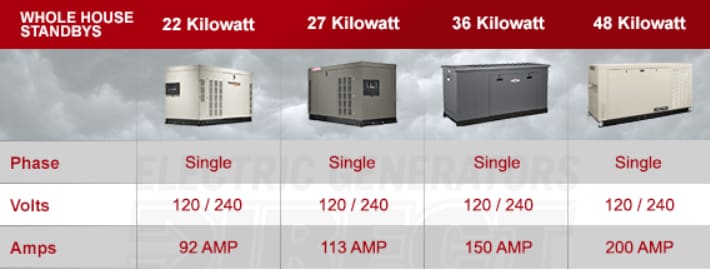
Okay, I can't completely avoid the boring part. You do need to estimate your power needs. But keep it simple.
Make a list of the essential appliances. Find their wattage. Add them up. That's your approximate running wattage.
Don't forget about starting wattage. Some appliances need a surge of power to start up. Factor that in, too. Important note: Always consult a professional electrician for accurate calculations and safe installation.
Embrace the "Less is More" Philosophy
My unpopular opinion? Aim for slightly less than you think you need. Be strategic. Prioritize. You might be surprised at how little you can get by with.
Think of it as a challenge. A power-saving adventure! See how minimalist you can be during an outage. It's actually kind of fun.
And if you occasionally have to turn something off to run something else? So what! It's not the end of the world. It's just a power outage.
The Inverter Generator Option
Consider an inverter generator. They're quieter, more fuel-efficient, and produce cleaner power. Perfect for sensitive electronics.
You might need two smaller inverter generators instead of one big one. But they're easier to move and store. Plus, they're less likely to annoy the neighbors.
They are often overlooked for whole house solutions but worth exploring!
The Unpopular Conclusion
Here it is. My unpopular opinion in a nutshell: You probably don't need as big of a whole house generator as you think you do. Focus on the essentials. Be strategic. Embrace the outage.
Don't fall for the "bigger is always better" trap. Unless, of course, you have a butler with a flashlight. Then, by all means, go big.
Just remember to invite me over for some air conditioning and wine cooler beverages when the power goes out. Disclaimer: I am not an electrician. This is just my (possibly misguided) opinion. Always consult with a qualified professional before making any decisions about generators.