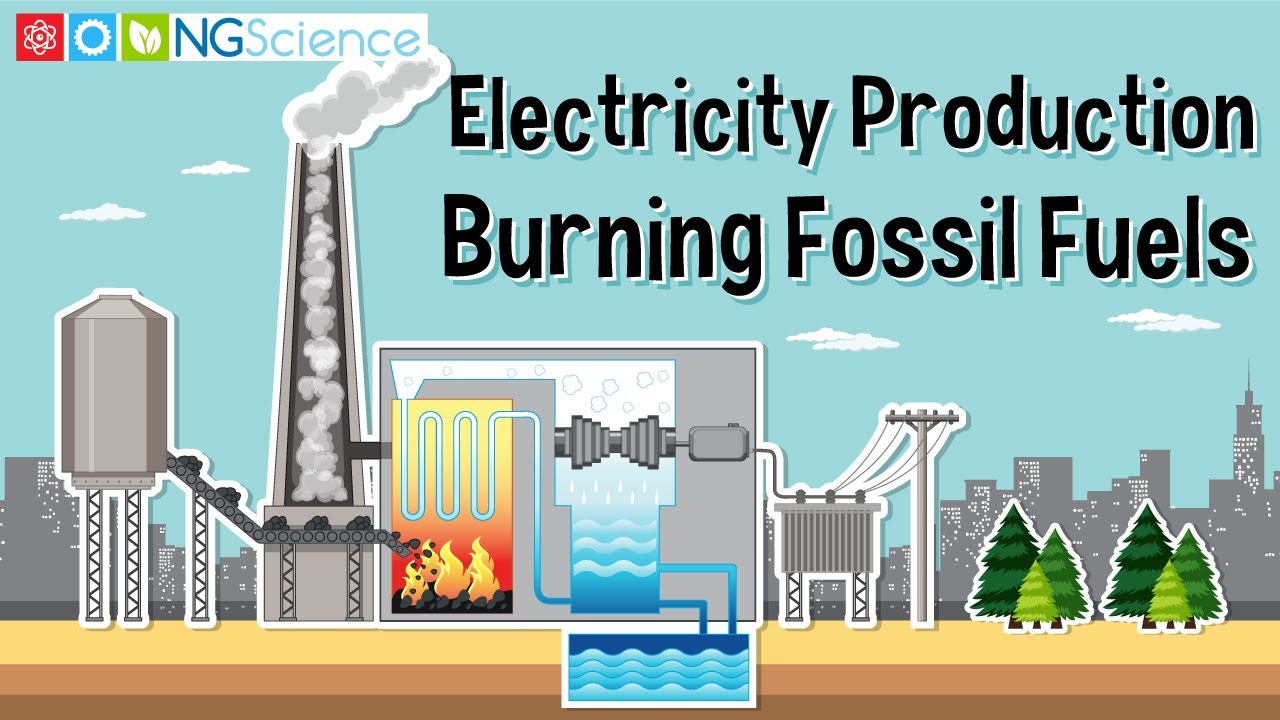
How Are Fossil Fuels Used To Produce Electricity

Ever flick a light switch and just expect, well, light? We take electricity for granted, but behind that simple action is a surprisingly old-school and somewhat…steamy process, especially when it comes to how we use fossil fuels. Think of it like a really, really big, industrial-sized tea kettle!
Okay, maybe not quite a tea kettle. But the core principle is surprisingly similar. We’re basically burning stuff to boil water. Seriously. Let's break it down, step-by-step, without getting bogged down in nerdy engineering jargon.
Step 1: Fuel Up! (and I'm not talking about your car)
First, we need the fuel. That's where our fossil fuels – coal, oil, or natural gas – come in. These fuels are the ancient remains of plants and critters that lived millions of years ago. Imagine a gigantic graveyard of prehistoric ferns and dinosaurs, squished and cooked under immense pressure for eons. Kind of morbid, right? But hey, at least they're powering our Netflix binges now.
Must Read
This fuel is then transported to a power plant. Some power plants are located right next to coal mines, which is convenient. Others rely on pipelines or trains to deliver the goods. Think of it like Amazon, but instead of delivering socks, they're delivering combustible dinosaur goo.
Step 2: Light 'Em Up! (Boiling Point Ahead)
Once at the power plant, the fuel is burned. Yes, literally, set on fire. It's a controlled burn, of course, not some chaotic bonfire. This burning process creates a LOT of heat. And that heat is the key to the whole operation. It's like trying to melt an ice sculpture with a hair dryer, but on a much, MUCH larger scale.
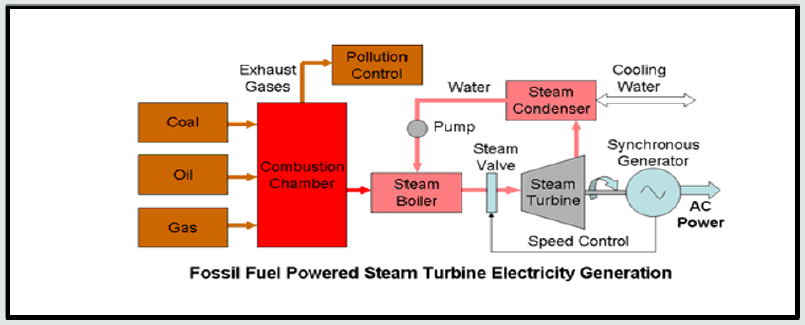
This intense heat is then used to boil water. We’re talking about huge quantities of water, enough to fill Olympic-sized swimming pools. This water is contained in massive tanks and heated until it transforms into…you guessed it…steam! (Told you it was like a tea kettle.)
Step 3: Steam Power! (More Than Just a Punk Band)
Now for the really exciting part. This high-pressure steam is channeled towards a turbine. A turbine is basically a giant fan connected to a generator. The force of the steam blasting against the turbine blades causes it to spin – really, really fast. Imagine sticking your hand out the window of a speeding car – that’s kind of like the steam hitting those blades. Except, you know, hot, and inside a machine.

Step 4: Generator Magic (Where the Electrons Dance)
As the turbine spins, it turns the generator. This is where the electricity actually gets made. The generator uses magnets and coils of wire to convert the mechanical energy of the spinning turbine into electrical energy. Think of it like a tiny electric disco. Electrons are bumping and grinding, releasing energy as they move. It’s all very scientific and electrifying!
Step 5: Powering Your Life (From Dead Dinosaurs to Toasters)
Finally, the electricity produced by the generator is sent out through power lines to our homes, schools, and businesses. It travels through a vast network of wires, transformers, and substations, eventually arriving at that little outlet in your wall.
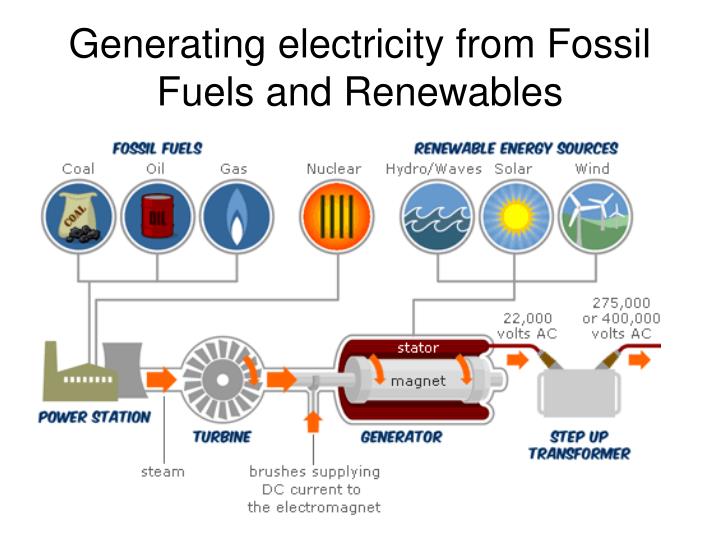
So, the next time you flip on a light switch, remember the journey that electricity took to get there. From the ancient remains of plants and animals, to a roaring fire, to a spinning turbine, to the magical dance of electrons, it's a surprisingly complex and slightly absurd process. And just maybe, consider switching to energy-efficient light bulbs to give those prehistoric critters a bit of a break.
It's a bit mind-blowing to think that something we take so for granted – the simple act of turning on a light – is powered by the ghosts of dinosaurs and the steam of superheated water. But that's the (slightly weird) truth of how fossil fuels are used to create the electricity that powers our modern world.