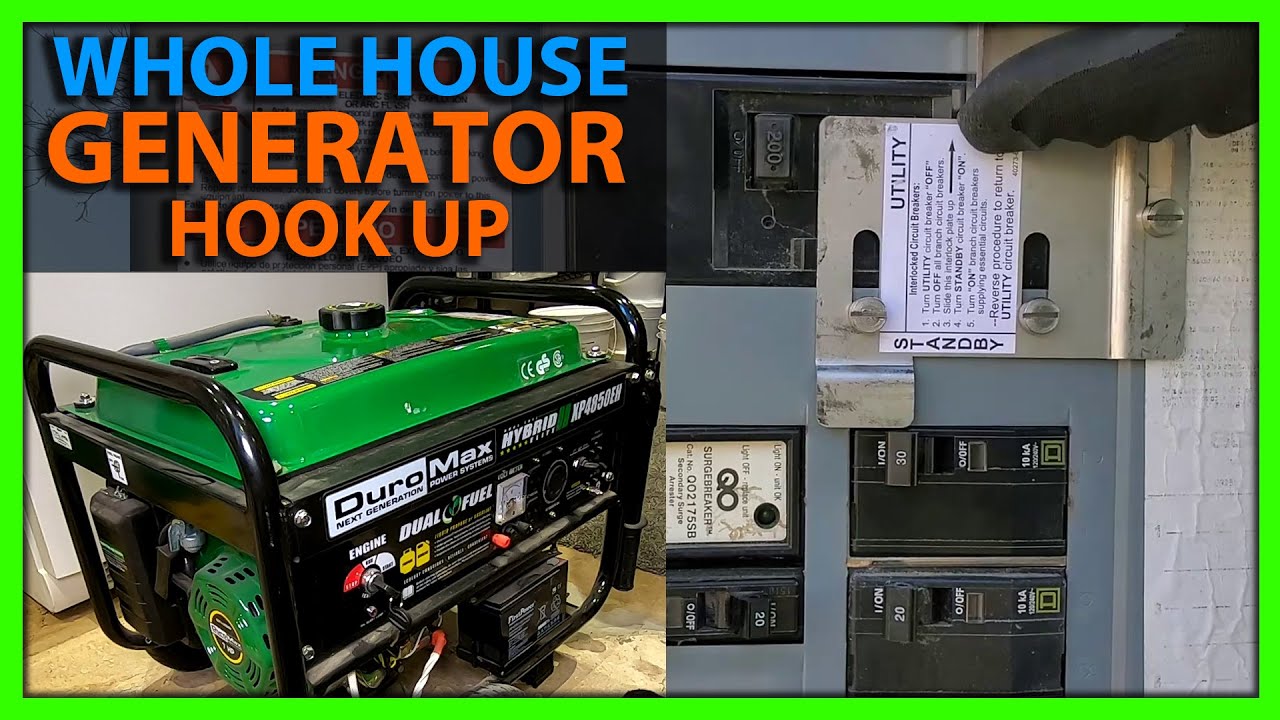
Hook Up Generator To Fuse Box

You know the drill. The storm hits. Lights flicker. Then, boom – darkness. Total silence, save for the wind howling. Your fridge starts giving you the side-eye. You think, "Aha! My trusty generator!" It's sitting there, all gassed up, ready to rumble. But then comes the big question, the one that makes even the bravest DIYer pause: "How do I actually get this thing to power my house?"
We're talking about hooking that powerhouse up to your fuse box, your breaker panel, the very heart of your home's electrical system. Sounds a bit intense, right? Like something out of a sci-fi movie where one wrong wire could, well, you know. But don't fret! We're just having a chat about it, no pressure.
Seriously, Don't Just Plug It In!
Now, let's get one thing straight, and this is super important: please don't just run an extension cord from your generator into a wall outlet in your house. Seriously. It might seem like the easiest fix, a real "MacGyver" moment when the power's out. But trust me, that's a one-way ticket to Trouble Town, population: you and maybe a very confused, very unhappy power line worker.
Must Read
It's called "backfeeding," and it's a huge no-no. It sends electricity backwards onto the grid. Think about it: a lineman is up a pole, thinking the power's off, trying to fix things. Suddenly, zap! Your generator just sent a surge of juice his way. Not cool. Not cool at all. Plus, you could totally fry your own appliances. And who wants that? No thanks!
The "Right" Way: Your Electrical Bodyguard
So, if the extension cord into the wall is out (and it totally is!), what's the safe alternative? We're talking about something called a transfer switch or an interlock kit. Sounds fancy, right? But really, it’s just a clever device designed to keep things super safe.

Imagine it like a bouncer at a club. It only lets one source of power in at a time: either the grid's electricity or your generator's electricity. Never both. It’s a genius little guardian for your home’s electrical system, making sure there's no accidental tango between the utility lines and your generator.
What's Involved (High-Level, No Sweat)
Getting one of these installed usually means calling in the pros. We're talking about a licensed electrician. And honestly, that's probably for the best. This isn't really a "grab a wrench and YouTube it" kind of project. You're dealing with serious amps here, the kind that can make your hair stand on end – permanently! Trust the experts.

They'll install the transfer switch or interlock kit right next to your existing electrical panel. Then, they’ll wire it up so your generator can safely plug into a designated outdoor inlet. From there, poof! – your house gets power, but only through the safe, controlled gateway of the transfer switch.
The Sweet, Sweet Peace of Mind
Think about it. No more fiddling with a million extension cords snaked all over the house. No more worrying about accidental electrocution. Just clean, reliable power flowing to your essential circuits. We're talking fridge, maybe a few lights, the coffee maker (because, priorities!), and perhaps your Wi-Fi router (gotta stay connected, even in an apocalypse, right?).

It's about having that peace of mind when the lights go out. Knowing you've done it the right way. Knowing you haven't put anyone in danger. And knowing your frozen pizza won't thaw. Winning!
A Few Quick Pointers (The Chatty Kind)
- Size Matters: Make sure your generator is the right size for what you want to power. No point in trying to run your central AC with a little portable guy. Be realistic!
- Fuel Up: Generators need fuel, duh. Keep some on hand, safely stored, of course. Maybe enough for a day or two, just in case.
- Ventilation is Key: Always run your generator outdoors, far away from windows and doors. Carbon monoxide is silent and deadly, a real buzzkill. Seriously, don't mess with it.
- Read the Manual: Yeah, yeah, nobody likes reading instructions. But seriously, your generator's manual has some super important info. Give it a quick once-over, at least!
Wrapping It Up (Like a Present!)
So, there you have it. Hooking up a generator to your fuse box isn't about brute force or crossing your fingers. It's about smart planning, using the right equipment, and respecting the awesome power of electricity. It's about being prepared, being safe, and keeping the coffee brewing even when the rest of the neighborhood is in the dark.
Don't cheap out, don't cut corners. Your home, your family, and those poor linemen will thank you. Now, go forth and be a responsible power provider! Maybe even invite the neighbors over for that freshly brewed coffee... from your safely powered home, of course! You’ll be the hero of the block!