
Gmaw And Fcaw Are Semiautomatic Welding Processes
Alright, let's talk welding! Now, before you imagine sparks flying and think, "Whoa, that's intense!" let me tell you, it's also incredibly cool. And today, we're diving into two very popular, and dare I say, fun, welding processes: GMAW and FCAW. Ready? Let's get started!
GMAW: The Smooth Operator (aka MIG Welding)
GMAW? FCAW? What are those acronyms?! Okay, GMAW stands for Gas Metal Arc Welding, but most people call it MIG welding. Think of it as the smooth operator of the welding world. It's versatile, relatively easy to learn, and creates clean, beautiful welds. Seriously, who doesn't love a clean weld?
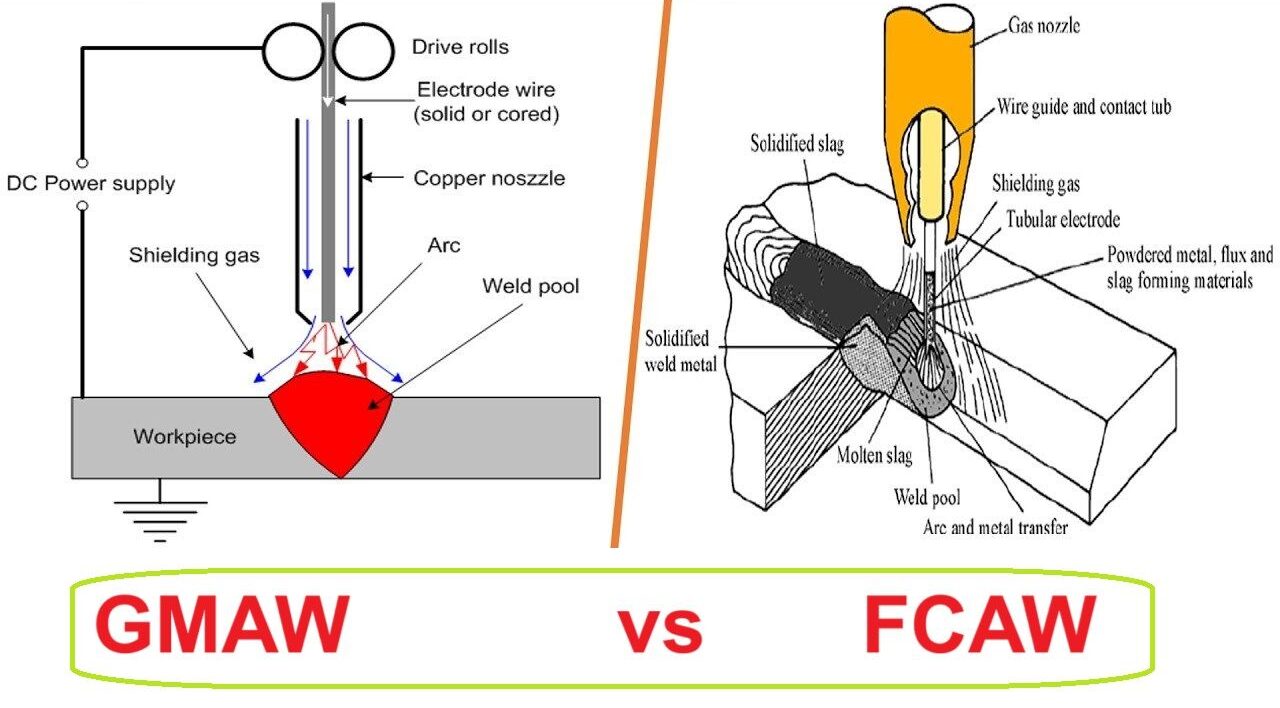
Here’s the deal: MIG welding uses a continuously fed wire electrode, shielded by a gas (usually argon or a mixture of argon and other gases), to create the weld. The gas protects the weld pool from contaminants in the air, ensuring a strong and durable bond. Basically, you pull the trigger on your welding gun, and voila! A beautiful bead of metal starts forming.
Must Read
Why is it great? Well, for starters, it's fairly forgiving for beginners. You can weld a wide range of metals, from steel and aluminum to stainless steel. And because it's semiautomatic, it's faster than some other welding processes. More speed means more projects completed! (And more bragging rights, let's be honest.)
Think of all the possibilities! You could build a custom BBQ grill, repair a car, or even create amazing metal sculptures. The possibilities are truly endless!

FCAW: The Rugged Workhorse
Now, let's move on to FCAW, or Flux-Cored Arc Welding. This is where things get a little more… robust. Think of FCAW as the rugged workhorse of the welding family. It's designed for heavier-duty applications and can handle some seriously tough welding jobs.
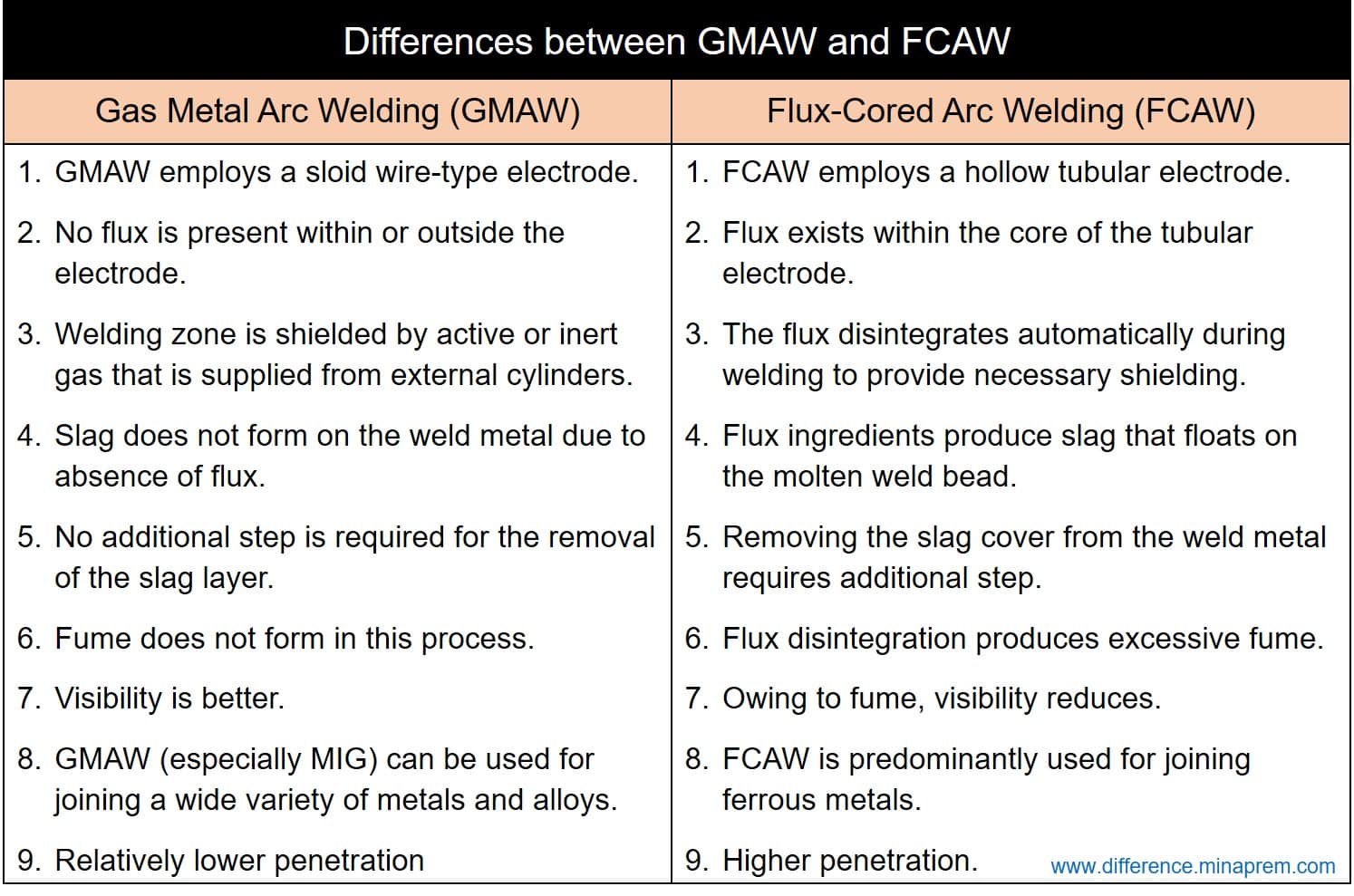
The key difference between FCAW and GMAW is the wire. FCAW uses a special wire that's filled with a flux. When you weld, this flux melts and creates a protective shield around the weld pool, similar to the gas in GMAW but generated internally by the wire itself! Some FCAW wires are self-shielded, meaning you don't even need an external gas supply! How cool is that?
So, when would you use FCAW? Well, it's perfect for outdoor welding, where wind can blow away the shielding gas used in GMAW. Think construction sites, shipbuilding, or heavy equipment repair. FCAW is a champ when the environment gets tough. It's like the ultimate survivor of the welding processes!

It's also incredibly efficient for welding thicker materials. The flux helps to clean the metal and create a stronger bond. This means you can tackle bigger, more challenging projects with confidence.
FCAW does produce a bit more spatter (those little bits of molten metal that fly around) than GMAW, but the strength and versatility it offers are well worth it. Plus, who doesn't like seeing some sparks fly? It just looks impressive! (Just be sure to wear your safety gear, of course!)

Semiautomatic: The Best of Both Worlds
Okay, both GMAW and FCAW are classified as semiautomatic welding processes. What does that mean? Basically, the machine automatically feeds the wire electrode, but you control the welding gun's movement and speed. You're in charge! It's like having a helpful robot assistant that takes care of the tedious stuff, while you focus on the artistic part: creating a strong and beautiful weld.
This gives you a ton of control over the welding process. You can adjust the settings on your machine to match the specific metal you're welding and the desired weld quality. It's a dance between you and the machine, and when you get it right, it's incredibly satisfying.
And let's be honest, there's something deeply satisfying about creating something with your own hands. Welding allows you to take raw materials and transform them into something useful, beautiful, or both! It's a skill that can be both practical and artistic, and it's a fantastic way to express your creativity.
So, are you feeling inspired yet? I hope so! Because the world of welding is waiting for you. Learning GMAW and FCAW can open up a whole new world of possibilities, from fixing things around the house to creating incredible works of art. The only limit is your imagination!
Don't be intimidated! There are tons of resources available to help you get started. Take a class, watch some videos, and most importantly, practice! With a little effort, you'll be laying down beautiful welds in no time. Who knows, maybe you'll even start your own welding business! (Hey, anything is possible!)
So, go out there, grab a welding machine, and start creating! Embrace the sparks, the challenges, and the satisfaction of mastering a new skill. The world needs more welders, and who knows, maybe you are the next great welding artist. Good luck, and happy welding!