
Garage Door Sensors Green And Yellow

You know the drill. You’re running late, coffee’s barely touched, and you hit that garage door button, expecting the satisfying whir of it closing behind you. But instead, it just… stops. Maybe it goes down an inch, then retreats with a frustrated groan. You try again. Same story. Your blood pressure nudges up a notch, and you’re already mentally calculating how many extra minutes this little rebellion is going to cost you.
You probably stomp out, eyes scanning for the culprit. A rogue leaf? A forgotten scooter? Perhaps your cat, Mittens, decided to nap right in the path of the invisible laser beam of doom? (Yes, I speak from experience. Mittens is a menace.)
And then you look down, past the potential feline saboteur, to those two little plastic boxes perched precariously on either side of your garage door opening. And what do you see? Little lights. One’s green. The other’s yellow. And suddenly, your brain goes, "Wait, what do those even mean?"
Must Read
You're not alone, my friend. We've all been there, staring at those silent sentinels, wishing they'd just tell us their secrets. Well, today's the day we demystify the great green and yellow light saga of your garage door sensors!
Green Means Go... Or At Least, "I'm Here!"
Let's tackle the green light first, shall we? This one is usually pretty straightforward, thankfully. Think of the green light as the "hello, world!" of your garage door sensor system.

The green light typically indicates that the sensor it's on is the transmitter. It's the one sending out the invisible infrared beam across the garage door opening. When you see that green light glowing steadily, it's essentially saying, "Yep, I'm powered on, and I'm doing my job of sending out a signal."
So, if your green light is on, that's generally a good sign for that specific sensor. It means it's got power, and it's trying its best to send its signal to its buddy on the other side. No green light? That's your first clue that the transmitter sensor might have a power issue or be totally kaput. Time to check the wiring or perhaps consider a replacement.
Yellow: The Receiver, The Referee, The Red Light (Sort Of)
Now, the yellow light is where things get a bit more interesting, and it's usually the one that holds the key to your garage door woes. This light is typically found on the receiver sensor.
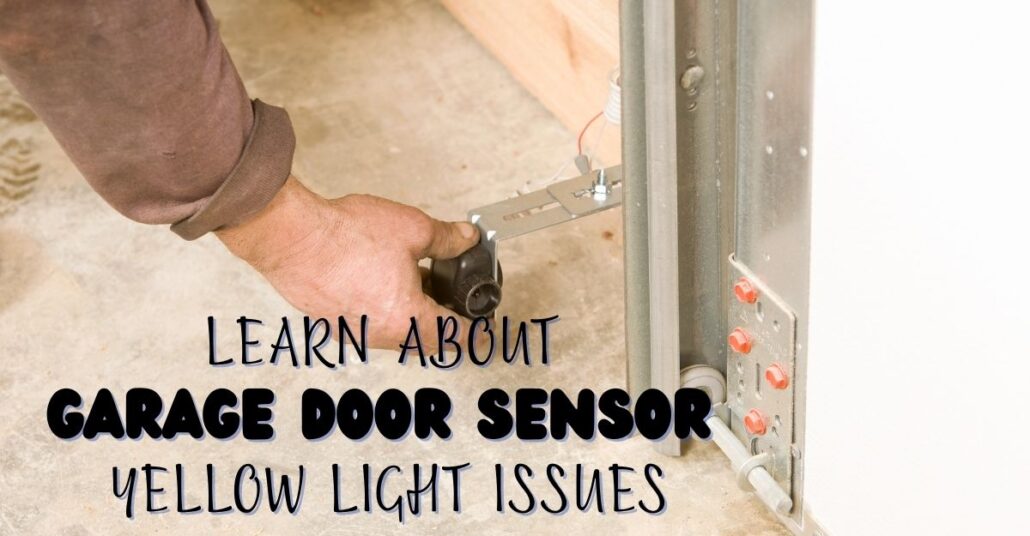
The receiver's job is to catch the invisible beam sent by the green-lighted transmitter. When the yellow light is solidly lit, it means it's successfully receiving that beam. It's essentially saying, "Hey, I see the signal from my friend across the way, and everything's clear! You can close the door!" This is the state you want to see for a happy, closing garage door.
But what if it's not solid? What if the yellow light is flashing, or worse, completely off? Ah, my friend, that's the universal sign for "I'm not closing today, human!"

- If the yellow light is flashing: This usually means the receiver is intermittently getting the signal, or it's confused. It could be a slight misalignment, a flickering power issue, or something barely blocking the beam.
- If the yellow light is off: This is the biggie. It means the receiver isn't seeing the transmitter's beam at all. This is why your garage door won't close – it thinks there's an obstruction, or the sensors aren't aligned.
Why Two Colors, Anyway?
Good question, right? It could have just been two green lights! But having two distinct colors actually helps with diagnostics. If your door isn't closing, you can quickly glance down and see:
- Green is off, Yellow is off: Problem with the transmitter or its power.
- Green is on, Yellow is off/flashing: Problem with the receiver, or more commonly, an obstruction or misalignment. This is your most frequent culprit!
Troubleshooting Tips (Now That You're a Sensor Whisperer!)
So, what do you do when the yellow light is being a diva?
First, check for obstructions. Seriously, get down on your hands and knees. A tiny pebble, a stray piece of grass, a spiderweb (the worst!), or yes, even a sleeping Mittens, can be enough to break that beam. Clear the path!
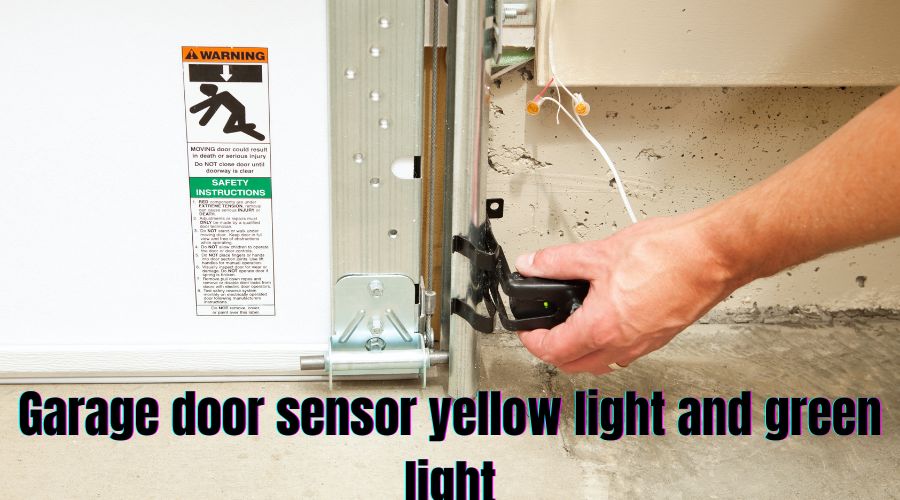
Next, clean the lenses. Dust, dirt, even condensation can obscure the beam. A quick wipe with a soft, damp cloth can work wonders.
Finally, and this is usually the one that requires a bit of patience, check the alignment. Those sensors need to be perfectly pointed at each other. They're like two shy teenagers trying to make eye contact across a crowded room. A gentle nudge (usually there are wingnuts or screws you can loosen slightly) to adjust the angle of the receiver sensor until that yellow light glows solid and strong can often solve the problem. Sometimes just bumping into them with your foot (accidentally, of course) can knock them out of whack.
So there you have it. The secret language of your garage door sensors, revealed! No more guessing, no more futile button mashing. Now, when your garage door acts up, you'll know exactly which light to look at and what it's trying to tell you. You're practically a garage door technician now. Go forth and conquer those rebellious doors!