
Failure Mode Effects And Criticality Analysis
Ever notice how things seem to break at the worst possible time? Like your toaster giving up the ghost right when you're craving that perfect, golden-brown slice?
Or your car deciding today is the day it refuses to start, making you late for that all-important meeting? We've all been there. It's Murphy's Law in action.
Failure: A Fact of Life (and Toasters)
Let's face it: things break. It's an unavoidable part of life. Toasters, cars, even our own bodies – everything eventually succumbs to wear and tear.
Must Read
So, what if we could predict these failures? What if we could see them coming, like a weather forecast for appliance malfunctions?
That's where Failure Mode Effects and Criticality Analysis (FMECA) comes in. Sounds intimidating, right? It isn't as scary as it looks.
FMECA: The Superhero of Problem Prevention
Think of FMECA as a detective for potential problems. It's a systematic way of looking at a system (a car, a toaster, even a process) and figuring out how it might fail.
And more importantly, what the consequences of that failure might be. Basically, it helps avoid those “toast-less Tuesday” scenarios.
It's all about being proactive, like checking your smoke detector batteries before the house fills with smoke (hopefully never!).
Breaking it Down (Like a Faulty Toaster)
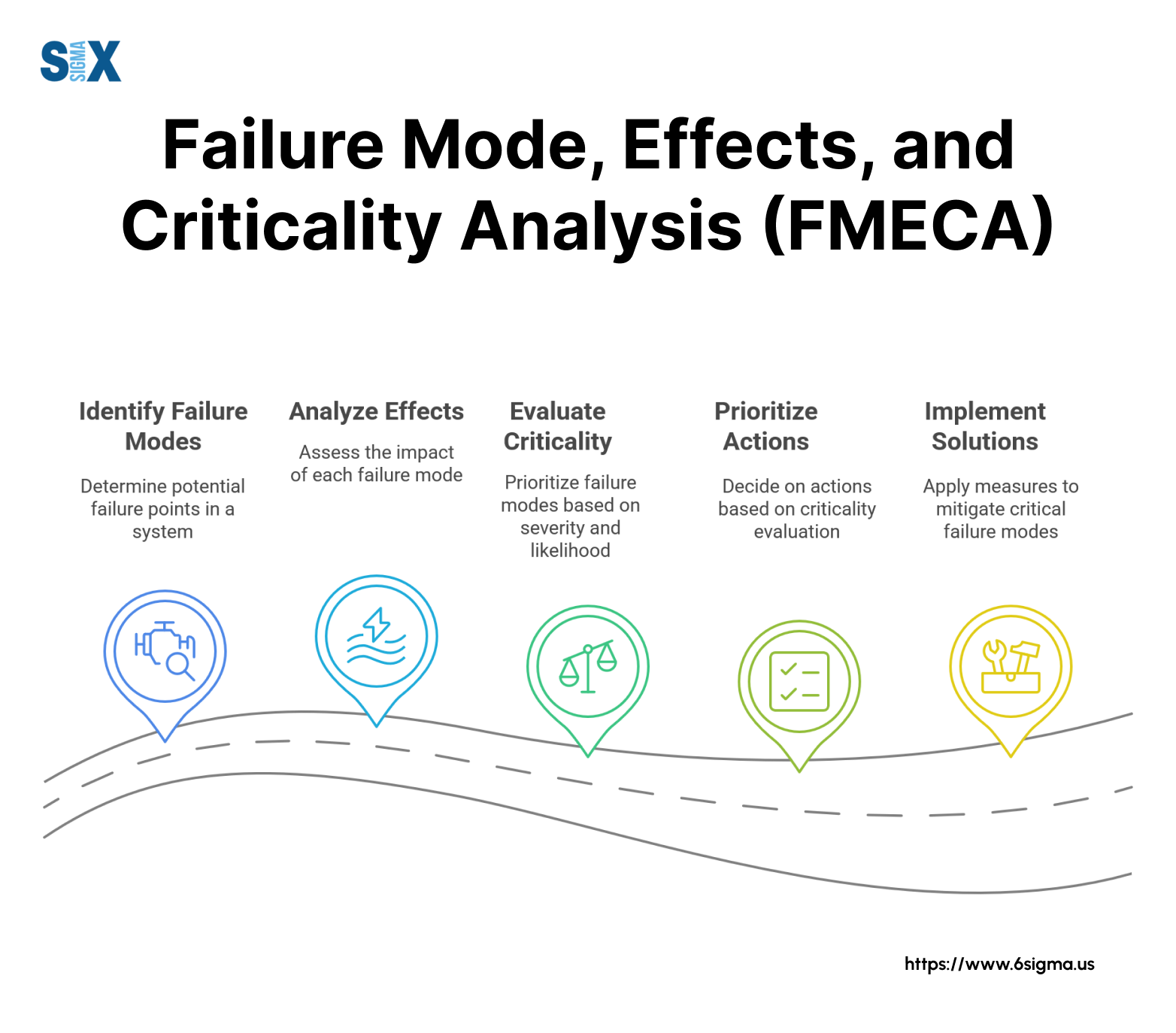
FMECA has a few key steps. First, you identify all the parts of your system. Every single piece, no matter how small.
Then, you think about all the ways each part could fail. The heating element burns out, the lever gets stuck, the bread becomes petrified.
Next, you assess the effect of each failure. No toast? Burnt toast? House fire (okay, maybe a little dramatic)?
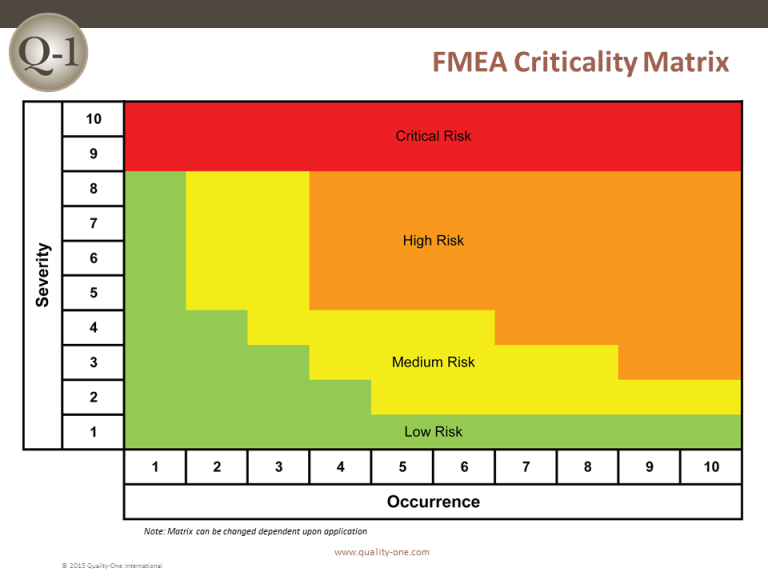
Finally, you look at the criticality. How likely is the failure to happen? How severe are the consequences? Prioritize fixing the most critical risks first.
Unpopular Opinion: FMECA is Actually… Fun?
Okay, maybe "fun" is a strong word. But think about it: it's like solving a puzzle! You're trying to figure out how things could go wrong and how to prevent it.
It's intellectual detective work. And who doesn't love a good mystery? Especially when the prize is perfectly toasted bread.
Plus, it's oddly satisfying to anticipate problems and come up with solutions before they actually happen. It's like having a superpower.
Beyond Toasters: Where FMECA Really Shines
While preventing toaster tragedies is a noble cause, FMECA has far broader applications. It's used in everything from aerospace to healthcare.
Think about designing a new airplane. You definitely want to know about potential engine failures before it takes its maiden voyage.
Or in developing medical devices. Ensuring patient safety is paramount, and FMECA can help identify potential risks and design safer products.
Essentially, any situation where failure could have serious consequences is a good candidate for FMECA.

The "So What?" Factor
So, why should you, a regular person not designing airplanes, care about FMECA? Because the principles can be applied to everyday life!
Think about planning a road trip. What could go wrong? Flat tire? Car trouble? Getting lost? Now, plan for those potential issues.
Pack a spare tire, get your car serviced, download offline maps. Voila! You've done a mini-FMECA for your road trip.
Even simple things, like backing up your computer files. It's a form of FMECA, anticipating the potential failure of your hard drive.
FMECA: Not Just for Engineers
The great thing about FMECA is that it's not just for engineers and scientists. Anyone can use the basic principles to improve their life.
It's about thinking critically, identifying potential problems, and planning for the unexpected. It’s basically structured overthinking, and sometimes that's a good thing!
And let’s be honest, sometimes we all need a little help organizing our worries into a productive action plan.
The Importance of Teamwork (and Toast Lovers)
FMECA is often a team effort. Different people bring different perspectives and expertise to the table.
Engineers, designers, operators, even marketing people can all contribute to identifying potential failure modes.
It’s all about collaboration, sharing knowledge, and working together to build better, more reliable systems.
Plus, having a diverse team ensures you don't miss any potential problems. After all, one person's "minor inconvenience" might be another person's "catastrophe."
Don’t Let Perfection Be the Enemy of Good
FMECA doesn’t have to be perfect. It's a tool to help you think about potential problems and how to mitigate them.
Don't get bogged down in the details. The goal is to identify the most critical risks and focus your efforts on those.
It's better to address 80% of the potential problems than to spend all your time trying to find every single possible failure mode.
My Slightly Controversial Take: Embrace Imperfection
Here’s my unpopular opinion: Sometimes, things are meant to fail. It's how we learn and improve.
If everything always worked perfectly, we'd never innovate. We'd never push the boundaries of what's possible.

So, while FMECA is a valuable tool, don't be afraid of failure. Embrace it, learn from it, and use it to make things better next time.
Maybe your toaster explodes in a magnificent shower of sparks. Okay, that's not ideal. But maybe it inspires you to design a better, safer, even more spectacular toaster!
FMECA: A Lifelong Skill
Learning about FMECA isn't just about preventing failures. It's about developing critical thinking skills that can be applied to all aspects of your life.
It's about being proactive, identifying risks, and making informed decisions. These are skills that will serve you well, no matter what you do.
So, the next time something breaks, don't just get frustrated. Think about why it failed, how you could have prevented it, and what you can learn from the experience.
The Final Toast (Pun Intended)
FMECA might sound complicated, but it's really just a fancy way of saying "think ahead." It's about anticipating problems and planning for the unexpected.
And while it might not prevent every single failure, it can certainly help you avoid some major headaches (and burnt toast).
So, go forth and embrace the power of FMECA. And may your toast always be perfectly golden-brown.
But if it's not, at least you'll know what went wrong (probably).