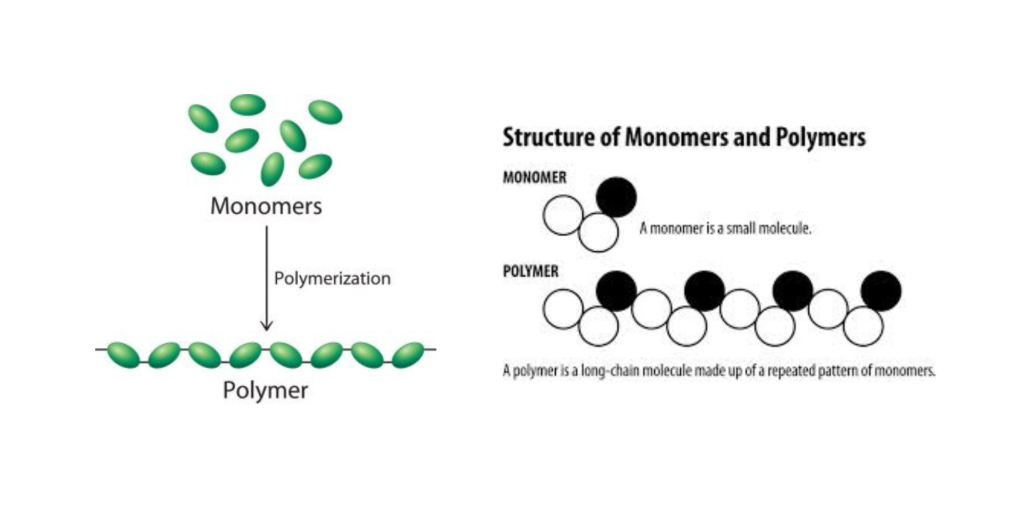
Explain How Monomers Are Related To Polymers
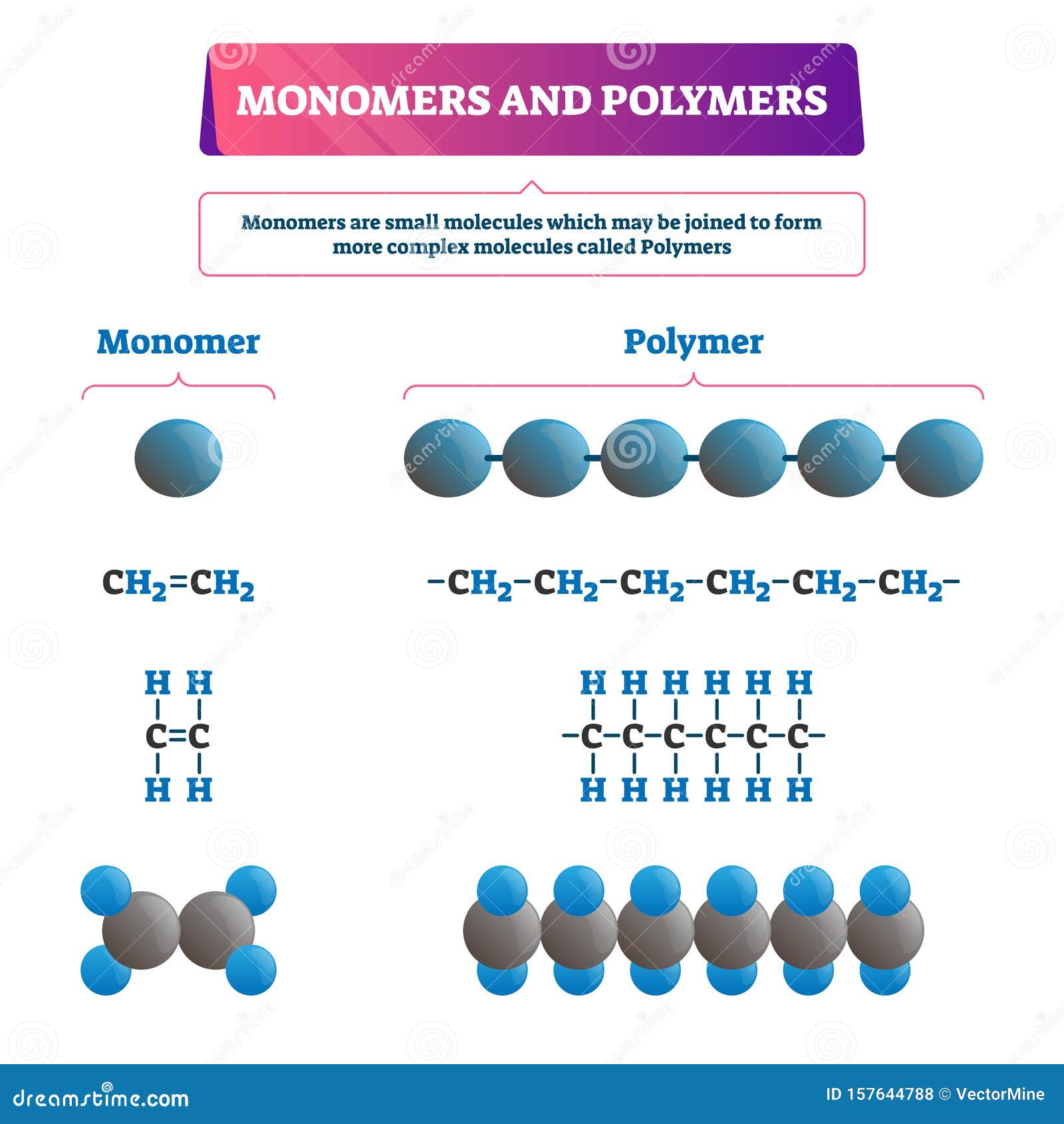
Hey there, friend! Ever wonder about those big, complicated molecules that make up, well, pretty much everything? Like, the plastic in your phone case, the protein in your muscles, even the DNA that makes you you? Turns out, they're all built from smaller, simpler building blocks, kinda like LEGOs. Let’s dive into the fascinating world of monomers and polymers!
Monomers: The Single Units
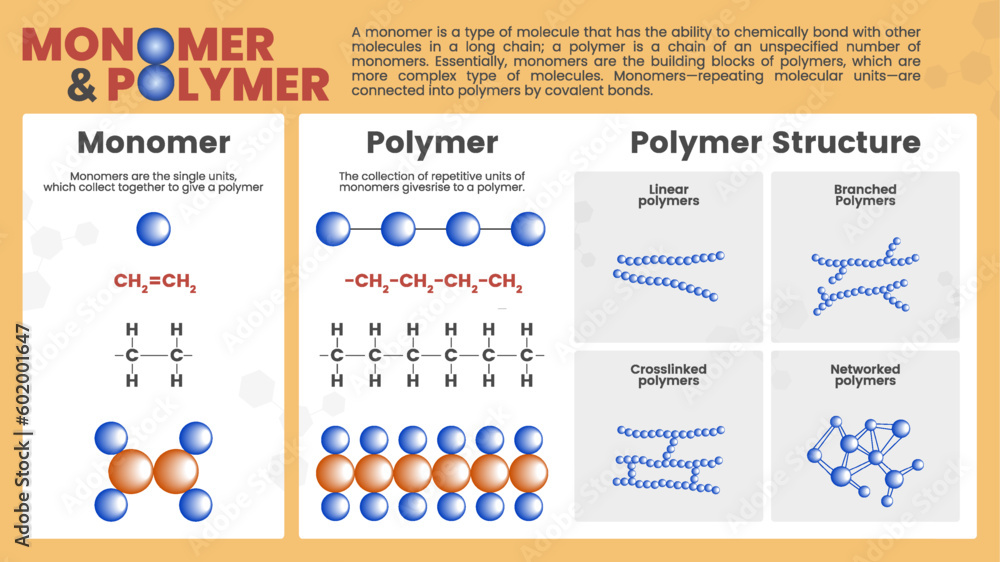
Think of monomers as individual LEGO bricks. They're the small, repeating units that can join together to form larger structures. The word "monomer" itself gives you a clue: "mono" means "one" or "single." So, a monomer is literally a single unit. These little guys are the foundation of all sorts of cool materials. Imagine if LEGO only came in one-brick packs? Pretty boring, right?
For example, glucose is a monomer. It's a simple sugar. Amino acids are monomers, and they're the building blocks of proteins. And nucleotides? Yep, monomers! They make up DNA and RNA. (Remember those from biology class? Don’t worry if you repressed the memory; we're keeping it simple!) Each monomer has a specific structure and properties, just like each LEGO brick has its own shape and color.
Must Read
Polymers: The Long Chains
Now, let's bring in the big guns: polymers! These are the large molecules formed when many monomers join together in a chain. "Poly" means "many," so a polymer is literally "many units" linked up. It’s like taking a whole bunch of those individual LEGO bricks and snapping them together to build a castle, a spaceship, or even a ridiculously oversized duck!
Think of starch, the stuff that makes potatoes starchy. It’s a polymer made up of many glucose monomers linked together. Proteins, the workhorses of your cells, are polymers formed from amino acid monomers. And DNA, the blueprint of life, is a polymer made of nucleotide monomers. Suddenly, biology doesn't seem so intimidating, does it?
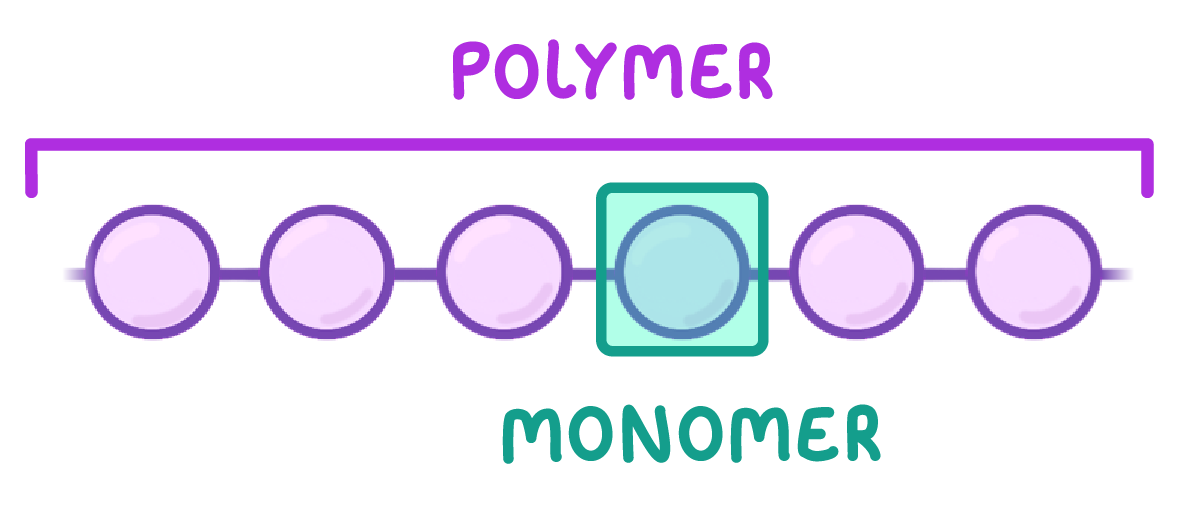
Different arrangements of monomers can lead to polymers with wildly different properties. It's like using the same set of LEGO bricks to build a car or a house. The possibilities are endless!
The Connection: How Monomers Become Polymers
So, how do these monomers link up to form polymers? It's all about chemical bonds! (Don't run away screaming! It’s not that scary.) The most common type of reaction is called polymerization. Imagine a tiny little construction crew inside your cells, grabbing monomers and linking them together, one by one.
Often, this process involves the removal of a water molecule (H2O) for each link that's formed. This is called dehydration synthesis (or condensation reaction). It's like the LEGO bricks clicking together, but also releasing a little puff of water vapor. Other times, the reaction requires energy input – kinda like needing to charge your LEGO power functions!
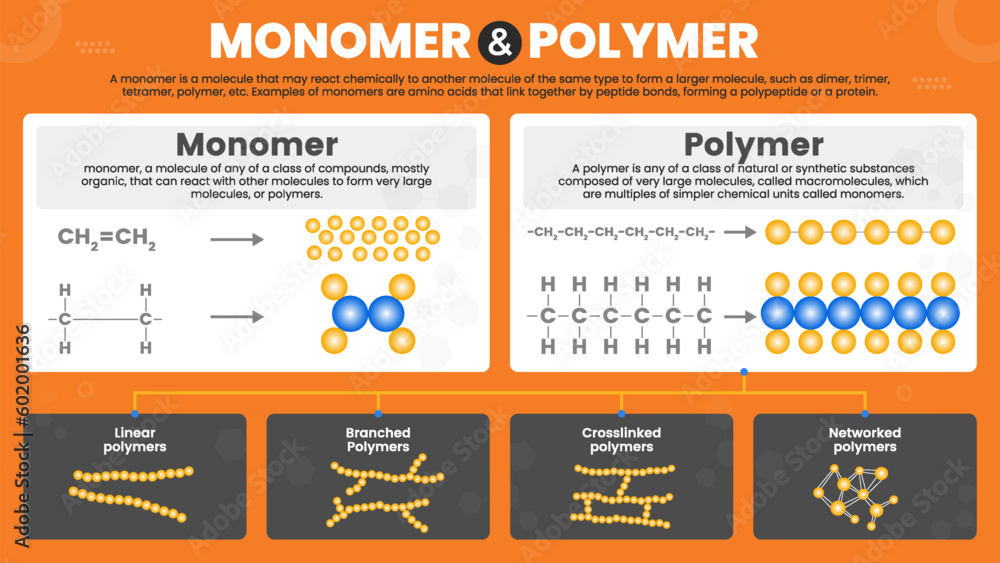
And guess what? The reverse process is also important! Polymers can be broken down into their constituent monomers through a process called hydrolysis. This involves adding water to break the bonds between the monomers. It's like dismantling your LEGO castle piece by piece. (I know, it's a painful thought.)
In short, monomers are the building blocks, and polymers are the structures they create when linked together. Simple as that! Think of it as alphabet. The alphabet is the monomers while words and sentences are the polymers.
Why It Matters
Understanding the relationship between monomers and polymers is crucial in many fields. In biology, it helps us understand how life works, from the structure of our genes to the function of our enzymes. In materials science, it allows us to design new plastics, fabrics, and other materials with specific properties. And in medicine, it plays a vital role in developing new drugs and therapies. Pretty cool, huh?
Who knew that something as simple as linking small units together could lead to such amazing complexity and diversity? The world is full of polymers! Now, go look around. You might be surprised by how many things are made up of these fascinating molecules!
So, there you have it! Monomers and polymers, explained in a way that hopefully didn't make your brain melt. Now go forth and impress your friends with your newfound knowledge of the molecular world! And remember, even the most complex structures are built from simple beginnings. Keep building, keep creating, and keep exploring the wonders of science!