
Explain How Crude Oil Is Formed

Hey there, ever found yourself stuck in traffic, staring at the car in front of you, and just... pondering? Like, where does all this go? And more importantly, where does all the energy come from to make it go in the first place? I mean, we're talking about millions of cars, planes, factories, heating our homes... it's a mind-boggling amount of oomph.
It’s easy to just fill up the tank or flick a switch without a second thought. But what if I told you that the very fuel powering your commute, or heating your living room, started out as tiny, swimming organisms living millions of years ago? Yeah, it’s like a sci-fi movie, but totally real. And a bit mind-bending when you stop to think about it.
So, let's dive into the ultimate slow-cook recipe: how crude oil, that black gold everyone talks about, actually forms. Prepare for a journey back in time, where patience is key and pressure is everything.
Must Read
The Grand Story Begins: Life, Lots of It!
Imagine this: millions and millions of years ago, the Earth’s oceans were teeming with life. Not dinosaurs yet, we're talking about the microscopic stuff. Think tiny marine plants (algae), plankton, bacteria, and other small organisms. These little guys were the undisputed kings and queens of the ancient seas, just floating around, living their best lives, soaking up sunlight.
We're talking about an absolutely massive abundance of these organisms. They bloomed and died in cycles, just like life does today. But here's where their story takes a unique turn towards becoming your car's breakfast.
Step Two: A Sinking Feeling (Literally)
When these tiny marine organisms died (sad, I know, but vital for our story!), they didn't just vanish. Instead, their remains slowly drifted down to the bottom of the ocean. Now, this is the crucial part: in certain ancient marine environments, the bottom layers of water had very little to no oxygen.

Why is that important? Because oxygen is what helps decompose organic matter. Without it, the dead organisms didn’t break down completely. Instead, they formed a thick, gooey layer of organic-rich muck on the seafloor. Picture an incredibly ancient, incredibly slow compost pile, but underwater and without oxygen. It's pretty wild, right?
Over time, this organic muck got buried by layers and layers of sediment. We're talking mud, sand, silt, clay – washed in from rivers and continental erosion. It just kept piling on top.
Deep Burial: The Pressure Cooker Starts
Now, fast-forward through millions of years. As more and more sediment piled up, the layers below got pushed down deeper and deeper into the Earth's crust. And what happens when you pile a mountain of stuff on top of something? That's right: immense pressure.
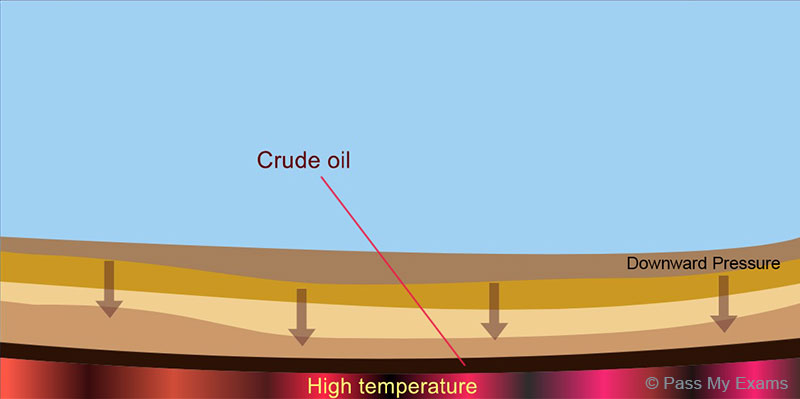
The weight of all that overlying rock literally squished the organic muck. And with depth comes increased temperature, thanks to the Earth's natural geothermal heat. So, our buried organic layers were getting a serious squeeze and a slow, steady bake.
This combination of pressure and temperature started to transform the organic matter. It squeezed out the water, compacted it, and turned it into a waxy substance called kerogen. Think of kerogen as the raw ingredient, the unbaked dough, for crude oil.
The "Oil Window": Where the Magic Happens
Here's where the real alchemy begins. As the kerogen-rich rock continued to sink deeper, the temperatures and pressures reached a critical point. This "sweet spot" is what geologists call the "oil window".

It's not too hot (which would cook it into natural gas or even graphite), and it's not too cold (where it would just stay as kerogen). It's just right. Typically, this means temperatures between about 60°C and 160°C (140°F to 320°F) and depths usually ranging from 2 to 5 kilometers (1.2 to 3 miles) below the surface. Under these specific conditions, the long hydrocarbon chains in the kerogen break down and rearrange, transforming into liquid hydrocarbons – ta-da! Crude oil.
It’s an incredibly slow process, taking millions upon millions of years. No instant gratification here, folks. Imagine waiting that long for anything!
The Great Escape: Migration and Trapping
So, you’ve got this crude oil forming in a source rock (the rock where the kerogen transformed). But here's the thing: crude oil is less dense than water, and it tends to be migratory. It doesn't usually stay put.
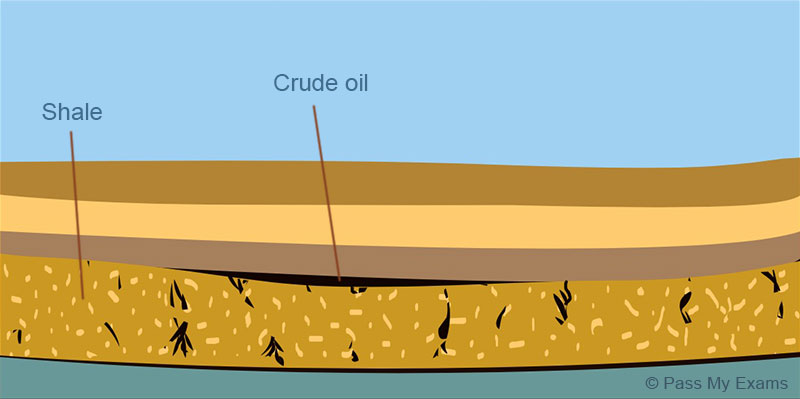
It starts to seep and flow upwards through tiny pores and cracks in the surrounding rock formations. It’s essentially looking for a way out, always trying to move towards the surface. But, thankfully for us, it often runs into a snag: a layer of impermeable rock, known as a cap rock.
This cap rock acts like an umbrella or a lid, preventing the oil from rising further. If the geology is just right – a porous reservoir rock (like sandstone) beneath an impermeable cap rock, often folded into a dome shape – the oil gets trapped. It accumulates in these underground "reservoirs," waiting patiently for someone to drill it out.
And that, my friend, is how those ancient, microscopic organisms, after millions of years of burial, pressure, and heat, end up fueling your modern world. It’s a testament to the Earth’s incredible, patient, and utterly mind-blowing geological processes. Next time you fill up your tank, give a little nod to those plankton. They really put in the time!