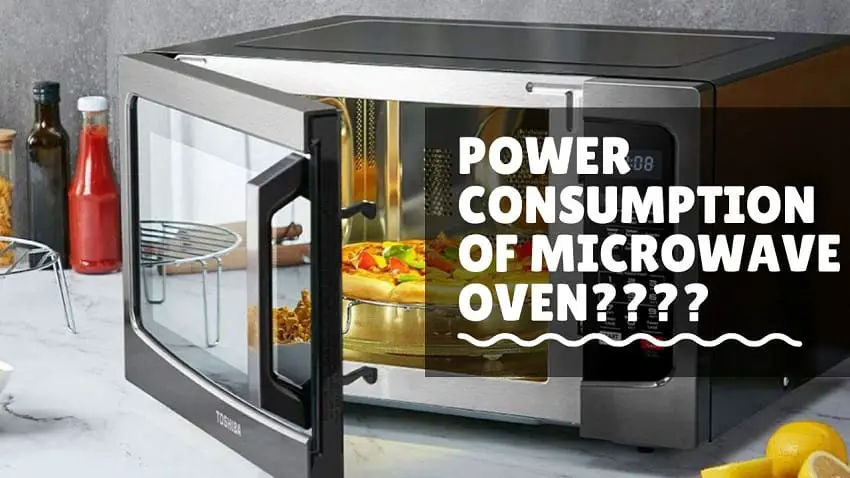
Electricity Consumption By Microwave Oven

Ever paused, mid-Netflix binge, to ponder the secret life of your microwave oven? Probably not. It’s just… there, right? A silent sentinel, waiting to zombify your leftovers. But what if I told you this humble kitchen workhorse has a secret, slightly mischievous habit of sucking up electricity even when it’s just chilling?
Hold onto your popcorn, because we're about to dive into the surprisingly quirky world of microwave electricity consumption. It’s way more fun than it sounds, I promise!
The Power-Hungry Beast (When It's On!)
First things first: when your microwave is actually microwaving, it’s a total power hog. We're talking big numbers. A typical microwave can gulp down anywhere from 600 to 1200 watts. That's a serious surge! For comparison, your average light bulb might be 60 watts. So, when you hit that "start" button, you’re essentially firing up 10 to 20 light bulbs all at once, just to heat up your sad office lunch.
Must Read
But here's the kicker: microwaves are also incredibly fast. Zapping something for 30 seconds uses a lot of power in a short burst, but it’s often more energy-efficient than, say, heating up your massive oven for a tiny baked potato. Efficiency isn't just about raw power, it's also about time. And microwaves are the undisputed champions of speed.
The Sneaky Vampire: Standby Power
Now, this is where the real fun begins. Because while your microwave is a beast when active, it’s a vampire when inactive. Yes, that little glowing clock display? That subtle hum you might hear? That’s your microwave, quietly, persistently, drawing power 24 hours a day, 7 days a week. It’s what we call "phantom load" or "vampire power," and it's shockingly common in household appliances.

Your microwave isn't truly "off" unless it's unplugged. It's always listening, always ready. It needs power to keep that clock ticking, to remember its settings, to power its control panel, and even to just monitor the door sensor. It’s like a tiny, always-on computer, dedicated solely to reheating your coffee.
How much power are we talking? Well, it varies, but many microwaves consume between 2 to 6 watts just sitting there. Doesn't sound like much, right? But multiply that by 8,760 hours in a year. Suddenly, those few watts become kilowatt-hours of wasted energy. It's not going to break the bank, but it's like a tiny, invisible leak in your energy bucket.
The Quirky Details: Why It Matters (Sort Of)
Think about it: how often do you actually use your microwave for cooking versus how long it just sits there, patiently displaying the time? For most of us, the microwave spends far more time in standby mode than it does zapping food. So, while its active consumption is huge, its passive, constant draw can actually add up to a surprising chunk of its overall energy footprint.

Here’s another quirky thought: some older or cheaper microwaves are even less efficient in standby. Their internal transformers hum along, wasting energy as heat. It’s like a tiny, inefficient power plant in your kitchen, just to tell you it's 3:47 PM. And let's be honest, half the time, that clock is probably blinking "12:00" anyway because of a power outage you forgot to fix!
And what about that little interior light that comes on when you open the door? Or the small fan that sometimes spins for a few seconds after the timer goes off? All these little actions, while brief, contribute to its power demands. Your microwave is a surprisingly complex piece of machinery, constantly managing these tiny internal processes.

So, What Can We Do? (Or Not Do?)
Don’t panic! We're not suggesting you live in a world without instantly hot ramen. But being aware of your microwave's secret life is part of the fun. If you're feeling particularly eco-conscious or just love a good gadget hack, you could:
- Unplug it: The most straightforward, if slightly inconvenient, solution. No clock, no hum, no phantom power!
- Use a smart plug: If you’re fancy, a smart plug lets you schedule when the microwave gets power, or you can switch it off with your phone. Pure wizardry!
- Embrace the "off" switch: Some newer microwaves have a true "off" button that cuts standby power. Check your manual!
Ultimately, the energy savings from unplugging your microwave aren't going to make you rich. We're talking pennies, maybe a few dollars a year. But it’s a fantastic talking point! It highlights how many of our everyday appliances are quietly, continuously sipping electricity without us even realizing it. It inspires a little bit of healthy skepticism about what "off" truly means in the modern world.
The Humble Hero, Unmasked!
So, there you have it. Your microwave oven, that unglamorous box of magic, is not just a quick heater but also a subtle energy consumer, even when dormant. It's a reminder that even the most mundane objects have a hidden story, a quirky fact, and a secret life worth exploring. Next time you're waiting for that "ding!", give a knowing nod to its hidden power draws. It's just doing its thing, being a microwave, in all its energy-sucking glory!