
Electric Cars How Do They Work
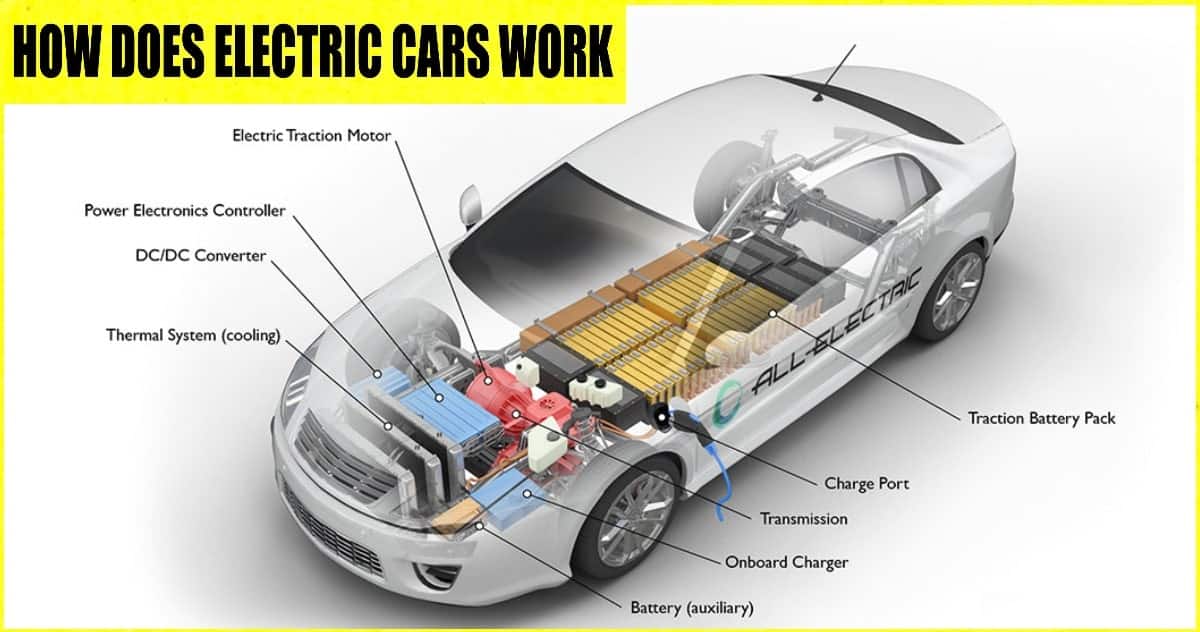
Alright, settle in, grab your imaginary coffee, because we're about to demystify electric cars. You know, those silent, sleek machines that zip past without a single puff of exhaust, making you wonder if they're powered by pixie dust or a tiny hamster on a very fast wheel. Spoiler alert: It's neither! But it is pretty cool.
For years, cars have been about roaring engines, gasoline fumes, and a complex dance of pistons. You put gas in, it blows up (in a controlled way, thankfully!), and boom, you move. Simple, right? Well, electric cars said, "Hold my charging cable," and decided to ditch all that fiery drama.
So, What's Missing?
First off, let's talk about what an electric car doesn't have. No gas tank. No oil changes (well, not engine oil anyway). No exhaust pipe belching questionable fumes. And definitely no internal combustion engine doing its frantic little combustion dance. It's like your old car went on a minimalist diet, and honestly, it's thriving.
Must Read
Instead of all that mechanical chaos, an EV works with a few key players that are remarkably elegant in their simplicity. Think of it as a high-tech, super-efficient gadget on wheels.
The Big Battery Bonanza
Every electric car needs power, and that's where the battery pack comes in. Imagine taking thousands of your smartphone batteries, connecting them all up, making them super robust, and then stuffing them into the car's floor. That's essentially what an EV battery pack is – usually a giant collection of lithium-ion cells, very similar to what powers your phone or laptop, just… on steroids. Lots and lots of steroids.

This big ol' battery is the EV's fuel tank, except it stores electricity instead of liquid gold. When you "fill up" (charge) your car, you're essentially replenishing this giant power reservoir. It’s what gives an EV its range, letting you go from point A to point B without needing to find a petrol station. Instead, you're looking for a charging point, which is usually way less smelly.
The Motor Marvel
Now, how does that stored electricity actually make the wheels turn? Enter the electric motor. This is the heart of the operation, the unsung hero that takes electrical energy and turns it into mechanical energy. No explosions, no pistons, just pure, silent rotational force. It's like magic, but with actual physics involved.

Unlike a traditional engine that often needs a complex transmission to manage its power across different speeds, many electric motors can deliver power smoothly across a huge range of RPMs. This is why EVs often feel incredibly responsive – that famous instant torque! It's like someone gave your car a direct line to the "GO FAST" button.
The Brains and the Translator
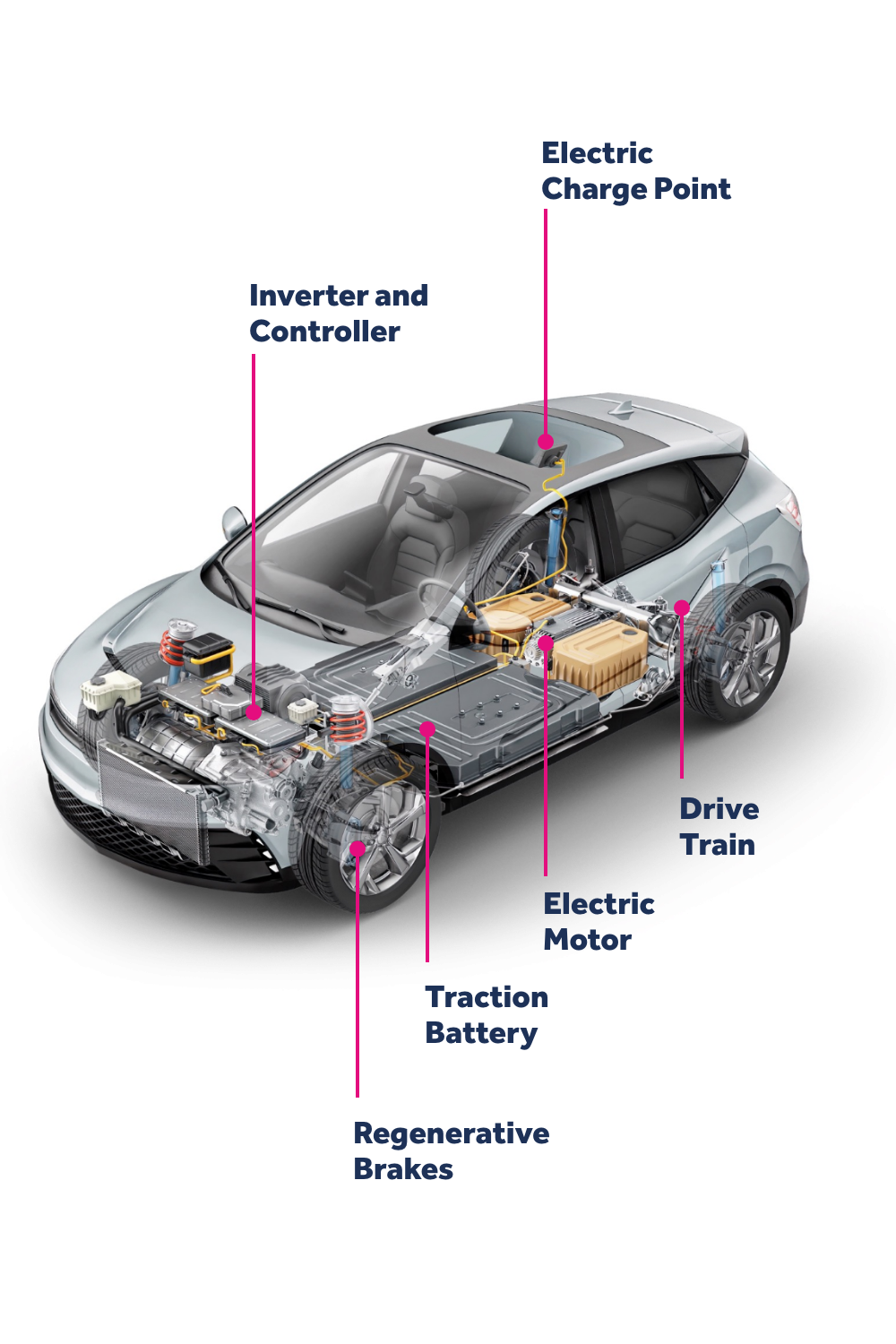
Between the battery and the motor, you have a couple of crucial middlemen. First, the power electronics controller. This is the car's brain, deciding how much power to send to the motor based on how hard you're pressing the accelerator pedal. Think of it as the maestro conducting an orchestra of electrons, ensuring everything runs smoothly and efficiently.
Then there's the inverter. Batteries usually store power as Direct Current (DC), but many electric motors prefer Alternating Current (AC). So, the inverter's job is to be the ultimate power translator, converting DC from the battery into AC for the motor, and vice-versa during charging or regenerative braking. It’s the unsung hero making sure everyone speaks the same electrical language.
Putting the Pedal to the Metal (Electronically)
So, you're in an EV. You press the accelerator. What happens?
- Your foot tells the controller, "Hey, I want to move!"
- The controller consults the battery pack: "Send power, chop chop!"
- The battery sends its DC power to the inverter.
- The inverter, with a flourish, turns that DC into AC and sends it to the electric motor.
- The motor spins like a happy tornado, connected directly (or almost directly) to the wheels.
- Voila! You're moving, silently and swiftly, often leaving your internal combustion counterparts wondering if you just teleported.
It's surprisingly straightforward when you break it down, isn't it? No wonder they feel so zippy!
The Party Tricks: Regenerative Braking and Instant Zoom
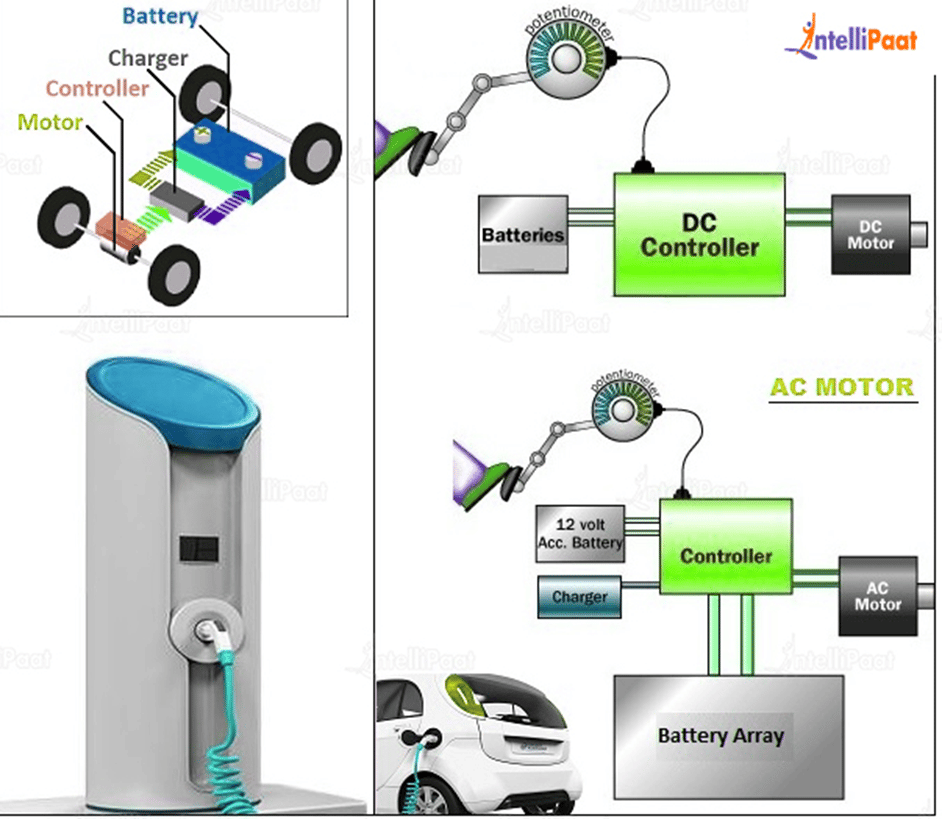
EVs aren't just about moving; they've got some neat tricks up their sleeve. One of the coolest is regenerative braking. When you lift your foot off the accelerator or hit the brake pedal, the electric motor doesn't just stop spinning. Oh no! It reverses its role and becomes a generator, sending electricity back to the battery. It’s like putting a tiny, invisible power plant on your wheels that helps you regain some of that precious energy. Free snacks for your battery!
And then there's that instant torque we mentioned. Because electric motors deliver maximum power from a dead stop, EVs can accelerate with astonishing speed. It's not just for expensive sports models; even modest EVs can feel like they're being gently nudged by a friendly giant when the light turns green. It’s a rush!
So, there you have it. Electric cars aren't some alien technology designed by hyper-intelligent robots (though some designs might suggest otherwise). They're clever, efficient machines that trade explosions for electrons, delivering a smooth, quiet, and surprisingly punchy ride. Next time you see one silently glide by, you'll know it's not magic, just brilliant engineering, powered by a very large, very smart battery.