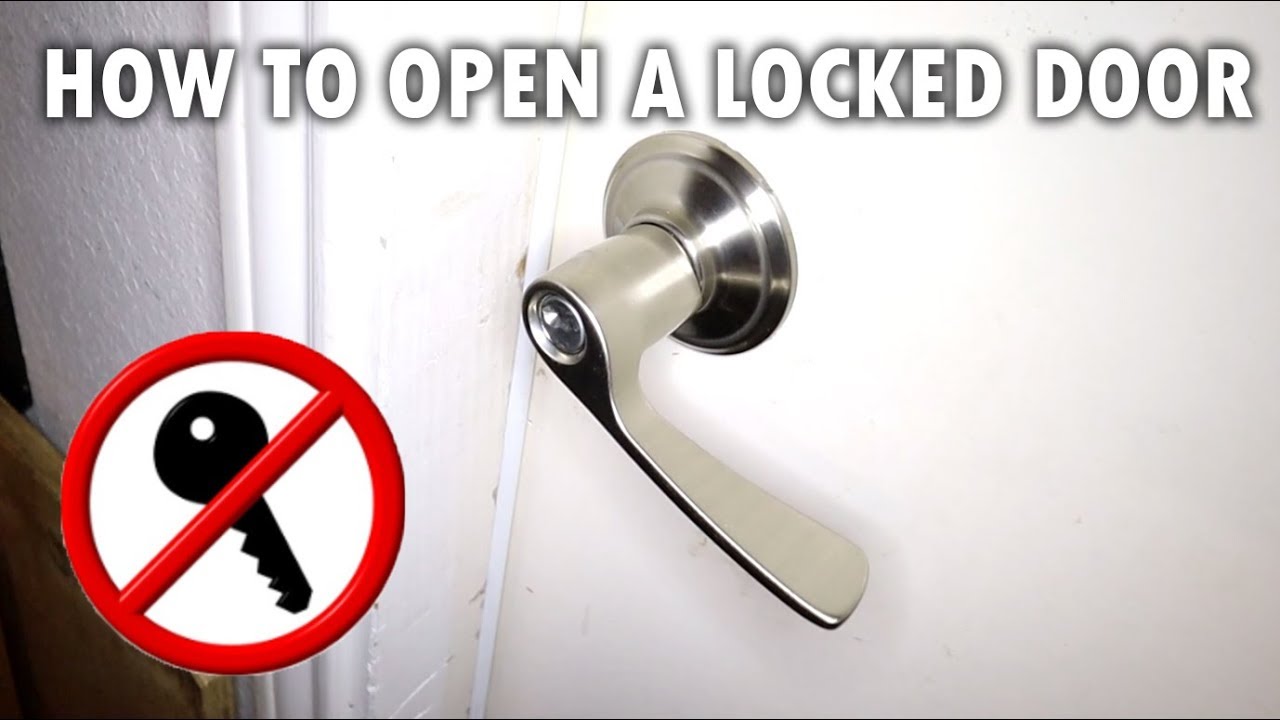
Door Locked From Inside How To Unlock

We’ve all been there, right? That moment when you’re nestled comfortably inside your own sanctuary – perhaps the bathroom, deep in thought, or your cozy bedroom on a lazy Sunday. You reach for the doorknob, ready to re-enter the bustling world (or at least the living room), and… nothing. A gentle turn, a slightly firmer push, and then the sinking realization: the door is locked. From the inside. It’s not the dreaded “locked out” scenario, but its equally inconvenient cousin, the “locked in” puzzle.
Suddenly, your familiar door takes on the air of an unyielding vault. A tiny, internal panic might flutter, especially if you’re, say, on the eleventh floor and the only other human in the house is a cat. But before you start rehearsing dramatic monologues for the eventual rescue team (likely your partner wondering why dinner isn’t ready), take a deep breath. This isn't a high-stakes heist; it's often a charmingly simple oversight, waiting for your inner detective to shine.
The Case of the Stubborn Privacy Lock
Most internal doors, especially those for bathrooms or bedrooms, come equipped with what we lovingly call a privacy lock. These aren't designed to thwart supervillains, but rather to give you a moment of peace. They usually manifest in a couple of forms:
Must Read
The Push-Button or Turn-Knob Wonder: This is the simplest culprit. You might have pushed a button in the center of the knob or turned a small lever on the inside to secure your solitude. The solution? Often, it’s just another push of the same button (it pops out!) or a gentle turn of the lever in the opposite direction. Sometimes, a well-meaning bump against the door frame can jiggle it into a locked position. A firm, but not aggressive, push or pull on the door itself while turning the knob can sometimes persuade it to cooperate.
The Secret Pinhole and Its Tiny Heroes
Ah, but what if there's no visible button or turn, and the handle just spins uselessly? Don't despair, because this is where the magic really happens. Many modern privacy locks, especially those sleek lever handles, have a tiny, almost inconspicuous pinhole on the outside of the door knob or handle. This isn't a design flaw; it's a secret entryway!
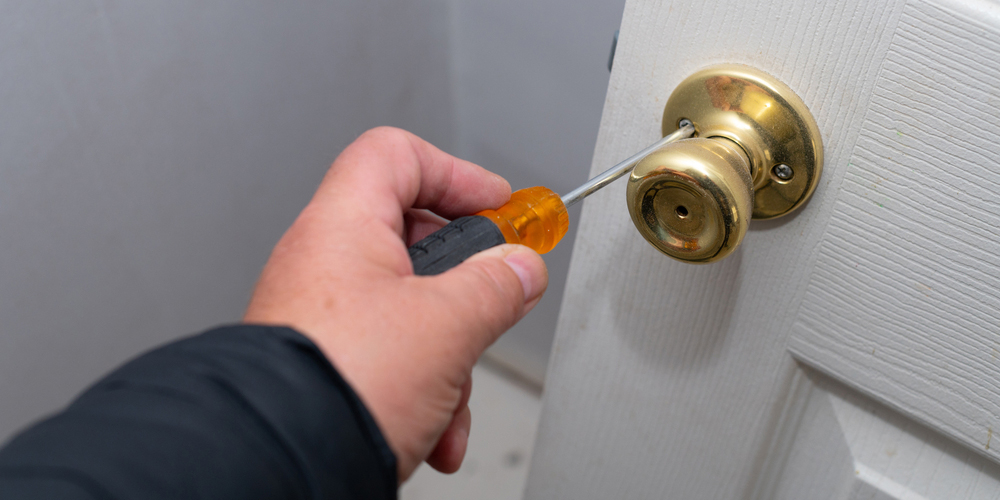
For these, you don't need a locksmith; you need a quest for a humble hero: a paperclip, a small screwdriver, a straightened hair clip, or even the tip of a pen. The idea is to gently insert your chosen tool into this pinhole. You’re not trying to force anything; rather, you’re often just pushing a small internal mechanism or tab that will release the lock. Think of it as pressing a secret button inside the door's brain. Sometimes you'll feel a slight click, or the knob will suddenly turn freely. It’s a moment of pure, unadulterated triumph, often accompanied by a quiet "Aha!" and a feeling of self-reliance that would make MacGyver proud.
The Unexpected Assist: Your Plastic Pal
Now, let's talk about the trickier ones – the doors that feel locked but don't have an obvious button or pinhole, and you're quite sure it's a spring-loaded latch rather than a deadbolt (which is a whole different ballgame and usually isn't an "accidentally locked from the inside" situation). This is where your wallet might come in handy.

Yes, we're talking about the famous credit card trick. From the inside, gently slide a sturdy, flexible plastic card (like a library card, a loyalty card, or yes, a credit card – but maybe not your favorite one!) into the small gap between the door and the frame, right where the latch bolt is. Angle it slightly towards the door handle, and then, with a bit of gentle wiggling and pressure, try to push the sloped edge of the latch bolt back into the door. It's a delicate dance, a subtle nudge, not a forceful ram. You might need to jiggle the door slightly or pull it towards you as you push the card. When it works, it feels less like breaking in and more like whispering a secret password to the door.
A Reminder of Life’s Little Puzzles
So, the next time you find yourself temporarily incarcerated in your own abode, remember: it’s usually not a conspiracy. It’s often a testament to a clever little design or a moment of absentmindedness. These "locked in" scenarios offer a tiny, low-stakes adventure. They remind us that sometimes the solution to a baffling problem is surprisingly simple, requiring only a bit of observation, a common household item, and a dash of patience.
The satisfying click as the door finally swings open, the fresh air (or familiar living room scent) wafting in, is a small victory. It’s a reminder that even the most mundane objects, like your doorknob, hold tiny secrets and offer unexpected moments of ingenuity. And who knows, maybe that little locked door just wanted a bit more quality time with you.