
Does Natural Gas Have A Smell
Okay, gather 'round, folks, and let me spin you a yarn about something we all think we know, but probably don't. We've all been there, right? You walk into the kitchen, or maybe you're near the furnace, and suddenly... BAM! A smell hits you. A truly, utterly, undeniably foul smell. You know the one. That rotten-egg, sulfuric, "something-is-definitely-wrong" kind of funk.
And what's the first thing that springs to mind? "Oh no, a gas leak!" you gasp, probably imagining your house doing its best impression of a giant balloon. You scramble, you open windows, you call the gas company faster than a cat chasing a laser pointer.
But here's a little secret, a fun fact to drop at your next dinner party that will surely blow minds (hopefully not literally, given the topic): that distinctive, alarming smell you associate with a gas leak?
Must Read
It's a complete and utter lie. A brilliant, life-saving deception!
The Great Olfactory Swindle!
That's right, my friends. I'm here to tell you, with the certainty of a cat demanding breakfast, that natural gas, in its pure, unadulterated form, has absolutely no smell whatsoever. Zip. Nada. Zilch. It’s as odorless as a freshly vacuumed sock drawer. You could be swimming in a pool of it, and your nose wouldn't register a thing. Pretty wild, huh?
So, if natural gas is naturally scent-free, why do we all instinctively wrinkle our noses at the mere mention of it? Why does our primal brain scream "DANGER!" when that particular stench invades our nostrils?

Because some truly clever, incredibly foresightful humans decided that an invisible, odorless, highly flammable substance was probably a really bad idea for everyday household use. Can you imagine? Leaks happening all over town, and no one being the wiser until a catastrophic BOOM? Talk about a bad day at the office.
Enter the Stink Bomb: Mercaptan!
To combat this silent, invisible threat, gas companies worldwide adopted a ingenious solution: they added a "stench." They literally infuse natural gas with an odorant, a chemical compound that’s specifically designed to make you say, "Ew! What is that?!"
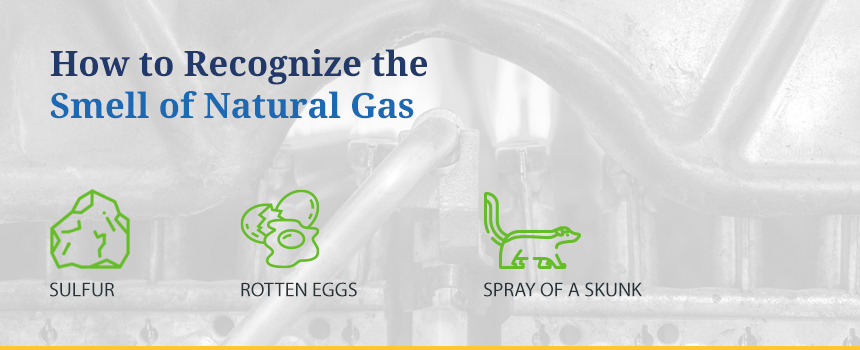
The most common additive is something called mercaptan (often specifically tert-butyl mercaptan, if you want to get fancy). And let me tell you, mercaptan isn't messing around. This stuff is the heavyweight champion of bad smells. It's often described as smelling like rotten eggs, sulfur, or decaying cabbage. Some folks say it smells like a skunk had a particularly rough morning after eating nothing but spoiled broccoli.

It’s potent enough to make you regret every life choice that led you to inhale it, and that’s precisely the point. It’s a literal warning sign, pumped directly into your gas line.
A Little Stink Goes a Long Way
And here's another jaw-dropper: the amount of mercaptan added to natural gas is unbelievably tiny. We're talking about a mere whisper of the stuff. It's measured in parts per million, sometimes even parts per billion! Imagine trying to find a single grain of sand on an entire beach, and then imagine that grain of sand could make the whole beach smell like dragon's breath.
That's how powerful this stuff is. Just a smidgen is enough to trigger your brain's "emergency stinky alert" system. It's an economic way to ensure safety – a small investment in odor, a huge return in preventing explosions and saving lives.
.png?sfvrsn=65697670_0)
Can Everyone Smell It?
Now, while mercaptan is a superhero in the world of public safety, it's not foolproof. Believe it or not, some people have a reduced ability to smell mercaptan. This could be due to a cold, allergies, certain medical conditions, or even just individual differences in olfactory sensitivity. So, if you're ever with someone who says they smell gas and you don't, don't just shrug it off!
Always take a potential gas leak seriously. Your nose might be playing tricks on you, or it might just be having an off day. If you don't smell it, but someone else does, or if you suspect a leak for other reasons, it's better to be safe than sorry.
Beyond the Nose
Speaking of other reasons, remember that while the smell is our primary alert system, it's not the only one. Other signs of a natural gas leak include:

- A hissing or roaring sound coming from a gas appliance or pipeline.
- Dust or debris blowing from a hole in the ground or near a gas line.
- Bubbles in standing water, indicating gas escaping from an underground pipe.
- Dying or discolored vegetation over or near a gas pipeline.
And, of course, the truly modern solution: natural gas detectors! These gadgets are like your nose's highly sensitive, un-congestible sidekick, standing guard 24/7.
So, What Have We Learned?
Next time you catch a whiff of that familiar, pungent odor, don't just think "gas leak." Think, "Ah, the brilliant, intentionally terrible scent of mercaptan, doing its job to keep me safe from invisible, odorless natural gas!" It's a reminder of human ingenuity, a testament to the power of a really, really bad smell, and a crucial component of our everyday safety.
So, the answer to "Does natural gas have a smell?" is a resounding no. But thanks to some clever folks and a truly dreadful chemical, you can bet your bottom dollar you'll always think it does. And for that, we should all be incredibly grateful!