
Does Cold Air Rise In A House

Alright, settle in, grab a virtual cuppa, because we're about to tackle one of life's great mysteries, or at least, one that keeps your toes perpetually chilly: Does cold air rise in a house?
It's a question that pops up more often than an unexpected pop-up ad, usually when you're bundled in three sweaters, eyeing that draft coming from under the door. You might think, "Well, the heat rises, so maybe the cold air does the opposite, like some kind of cosmic air-elevator gone rogue?"
The Big Reveal: A Scientific Slap-Down (with a Feather)
Let's not beat around the frosty bush. The answer, my friends, is a resounding, definitive, and scientifically proven: absolutely not.
Must Read
I know, I know! It feels like a betrayal of everything you thought you knew about indoor thermodynamics, right? But think of it this way: if cold air rose, your attic would be an igloo, and your basement would be a tropical paradise. Which, frankly, sounds like a very confused and inconvenient way to run a house.
Why Cold Air is the Introvert of Gasses
Here’s the deal, simply put: cold air is denser than warm air. Think of it like a crowded elevator. When it's cold, all the air molecules are tightly packed together, shivering, creating a much heavier, more substantial mass. A bit like trying to squeeze everyone into one corner of a room during a game of musical chairs.

Now, what do heavy things do? They sink! It’s the law of gravity, folks, and air is no exception. So, cold air, being the dense, introverted type, prefers to huddle close to the floor, quietly minding its own business, perhaps whispering about how much it dislikes small talk and prefers a good book by the baseboard.
Warm air, on the other hand, is the life of the party! It’s lighter, less dense, with all its molecules buzzing around excitedly, spreading out. It’s got that buoyant, "let's float up to the ceiling and mingle!" energy. It loves to ascend, carrying its heat with it like a proud, gaseous peacock flaunting its fabulous feathers.

This is precisely why you always hear, "Heat rises!" – because it absolutely does. It’s called convection, and it’s basically the air’s way of saying, "Whee! Up we go to get away from all that dense, cold grumbling down there!"
Your House: A Real-Time Science Experiment
Don't believe me? Take a casual stroll through your own abode, especially during those glorious winter months. Where’s the coldest spot in your house? Nine times out of ten, it’s the basement or the lowest floor. You might find yourself saying, "My basement is always a freezer!" And that's not just hyperbole; it's cold air doing what it does best – sinking, pooling, and settling down like a well-fed houseguest that just won't leave the comfy couch.
Ever notice how your feet are always colder than your head, even when you're cozied up on the sofa? That’s cold air making itself quite at home on the floor, practically spooning your rug. It's not trying to sneak up on you for a chilling surprise attack; it’s just being gravitationally responsible, fulfilling its destiny as the heaviest gas in the room.
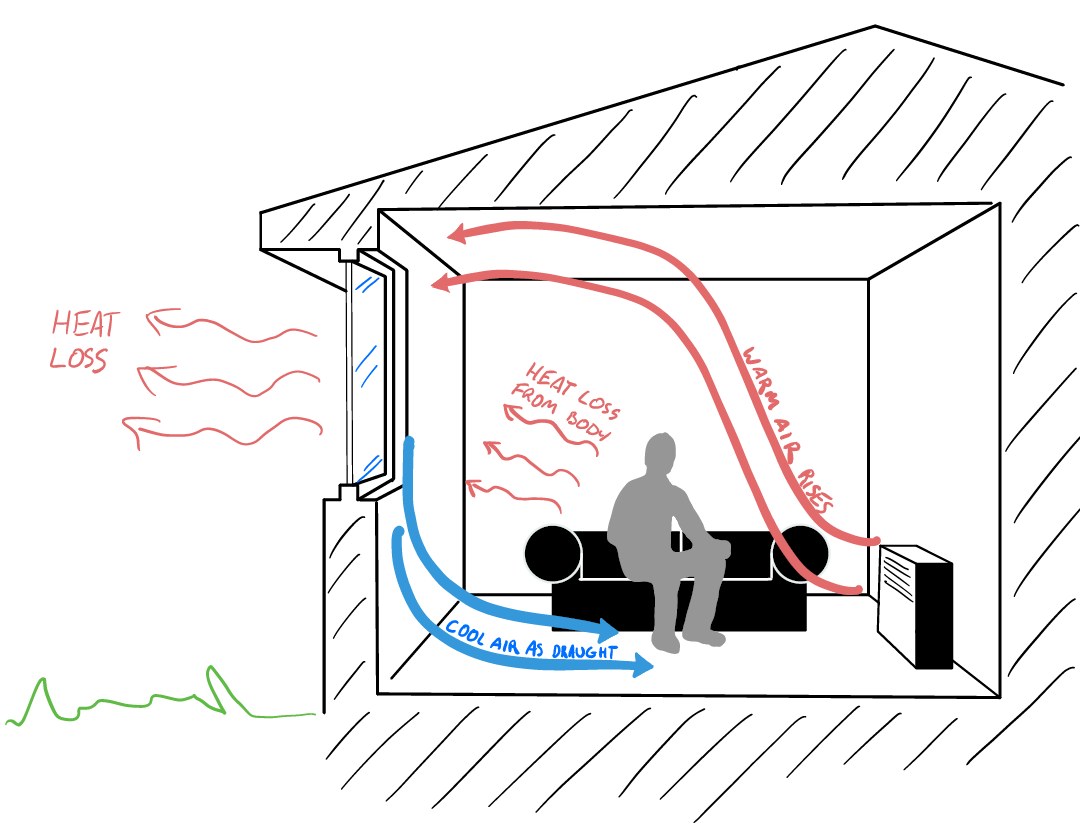
And those pesky, villainous drafts? Where do you feel them most acutely? Often at floor level, creeping in under doors, through tiny gaps in window frames, or perhaps from that mysterious crack behind the skirting board. That's not just air entering your house; that's cold air making a bee-line for the lowest available space, setting up its chilly camp without so much as a by-your-leave.
The Air Conditioner's Little Secret
Here's a fun, slightly counter-intuitive fact that actually proves our point: have you ever noticed where air conditioning vents are usually placed? Often high up on the wall or in the ceiling!

Why? Because the brilliant minds behind HVAC systems know that cold air will naturally sink. So, they blast that lovely cool air out from above, let gravity do its thing, and watch as it cascades down, efficiently cooling the entire room. If cold air rose, they'd be putting those vents in the floor, and we'd all have chilly ankles and sweltering ceilings!
So, How Do We Fight the Floor-Hugging Chill?
Now that we’ve debunked the myth and given cold air its proper, floor-level respect, what can you do about it?
- Seal those drafts! Since cold air loves to sneak in low, focus on weatherstripping around doors and windows at floor level. Think of it as putting up velvet ropes to keep the cold air from crashing your party.
- Wear slippers! Seriously, they're not just a fashion statement for staying home; they're your first line of defense against the floor-dwelling cold. Embrace the fuzzy foot warmth!
- Layer up, especially on your lower half. Your legs and feet are in the cold air's prime territory. Think woolly socks, sweatpants, or even one of those delightful wearable blankets.
- Consider an area rug. It can provide a nice, insulating barrier between your feet and the chilly floor. Plus, it adds a touch of décor!
- Don't block your heat vents. Let that warm, buoyant air do its job and rise freely! Don't be the person who puts a couch in front of the only heat source.
So, the next time you feel a shiver run up your spine (or more likely, just your shins), remember: it's not cold air defying gravity with some sort of anti-establishment uprising. It's just doing what nature intended – chilling out on the bottom, exactly where it belongs. And now, you're officially smarter (and hopefully warmer) for knowing it!