Does A Ceiling Fan Use A Lot Of Electricity

Let's face it, we all love a good bargain, especially when it comes to our electricity bill. And in the heat of summer (or even a mild winter!), the question inevitably pops up: does that trusty ceiling fan really make a dent in our energy consumption? It's a fun question because the answer might just surprise you, and a useful one because understanding your energy use empowers you to make smart choices and save some cash! Plus, with rising energy costs, this topic is more popular than ever.
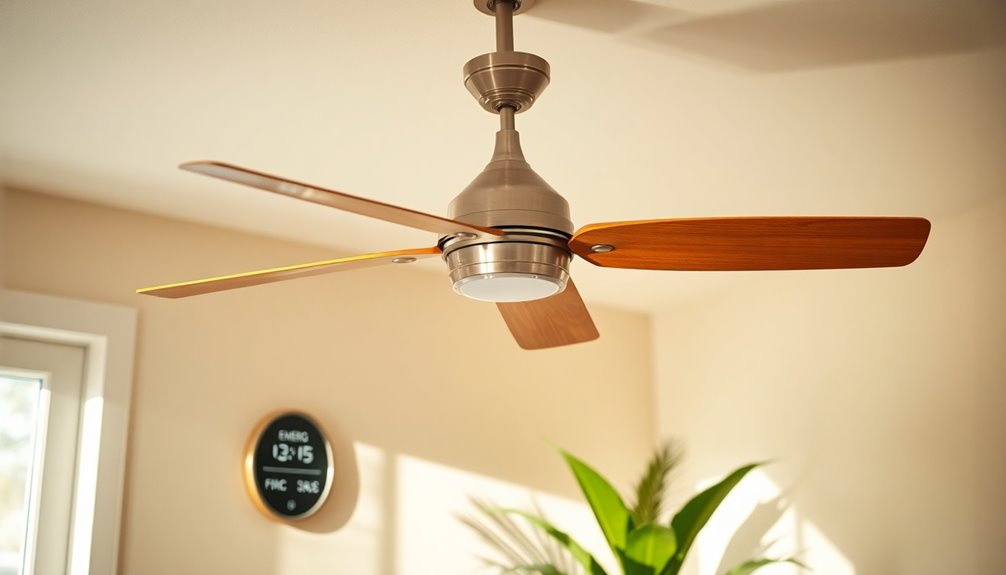
So, what's the deal? The primary purpose of a ceiling fan isn't actually to cool the air itself, like an air conditioner. Instead, it's designed to create a breeze. That breeze helps to evaporate sweat from your skin, which is a surprisingly effective way to cool you down. Think of it as a personal, localized air conditioner powered by your own body! The benefits are numerous. Beyond the immediate cooling effect, ceiling fans can also help to circulate air throughout a room, preventing stagnant air pockets and making your space feel more comfortable overall. In winter, reversing the fan direction pushes warm air trapped near the ceiling back down, helping to distribute heat more evenly and potentially reducing your reliance on your heating system. Bonus: they're usually much cheaper to run than AC units!
Now for the big question: are they energy hogs? The short answer is: absolutely not! Compared to other appliances, especially air conditioners, ceiling fans are incredibly energy-efficient. The average ceiling fan uses about as much electricity as a low-wattage light bulb. We're talking somewhere in the neighborhood of 15 to 75 watts, depending on the speed setting and the fan's age and design. To put that into perspective, an incandescent light bulb can easily use 60 watts, and a central air conditioning unit can guzzle hundreds or even thousands of watts!
Must Read
Think of it this way: running a ceiling fan all day might cost you only a few cents. Leaving your air conditioner on all day? That could add up to dollars! That's a significant difference. Of course, the exact cost will depend on your local electricity rates, but the general principle remains the same: ceiling fans are relatively inexpensive to operate.
However, there are a few things to keep in mind to maximize your energy savings. First, only run the fan when you're in the room. Remember, the fan cools you, not the room itself. If no one is there to benefit from the breeze, you're just wasting energy. Second, consider investing in a more energy-efficient fan. Newer models often use DC motors, which are significantly more efficient than older AC motors. Finally, make sure your fan is properly installed and maintained. A wobbly fan can waste energy and even pose a safety hazard. So, give your ceiling fan a little love and enjoy the cool, breezy, and energy-efficient comfort it provides! You can relax knowing you're not breaking the bank just to stay comfortable.