
Do You Push Or Pull A Mig Welder
Have you ever seen those amazing sparks flying in a workshop? People are joining metal together like magic! It’s all thanks to machines like the MIG welder, and let me tell you, it's a blast to watch, and even more fun to try.
There's a friendly little riddle that welders often ponder. It's about how you move the torch while you're laying down that glowing molten metal. Do you push it, or do you pull it?
Yes, it's true! This simple question sparks many lively chats among welding enthusiasts. It might sound like a minor detail, but it's part of the charm and skill of welding. It adds a touch of mystery to the creative process.
Must Read
The Magic of Metal Joining
Imagine holding a tool that shoots out a tiny, controlled lightning bolt. This bolt melts metal right before your eyes. Then, as it cools, it becomes solid again, creating a strong bond.
It’s like being a sculptor, but with fire and electricity! You are literally building something from scratch. The satisfaction of seeing your first successful joint is just incredible.
A MIG welder uses a continuous wire electrode. This wire feeds through the torch, melting as it goes. A shielding gas protects the hot metal from air, making for a cleaner, stronger weld.
The Great Push or Pull Debate
So, back to our burning question: push or pull? It’s not just a silly argument. Each technique has its own feel and creates slightly different results. That’s what makes it so fascinating!
Think of it like drawing. You can push your pencil or pull it across the paper. Both make lines, but they might feel different. The angle and pressure can change everything.
With welding, the difference isn't about artistic flair, but about how the molten metal behaves. It’s about how the heat gets into the material. It's a dance between your hands and the metal.

Embracing the Push Technique
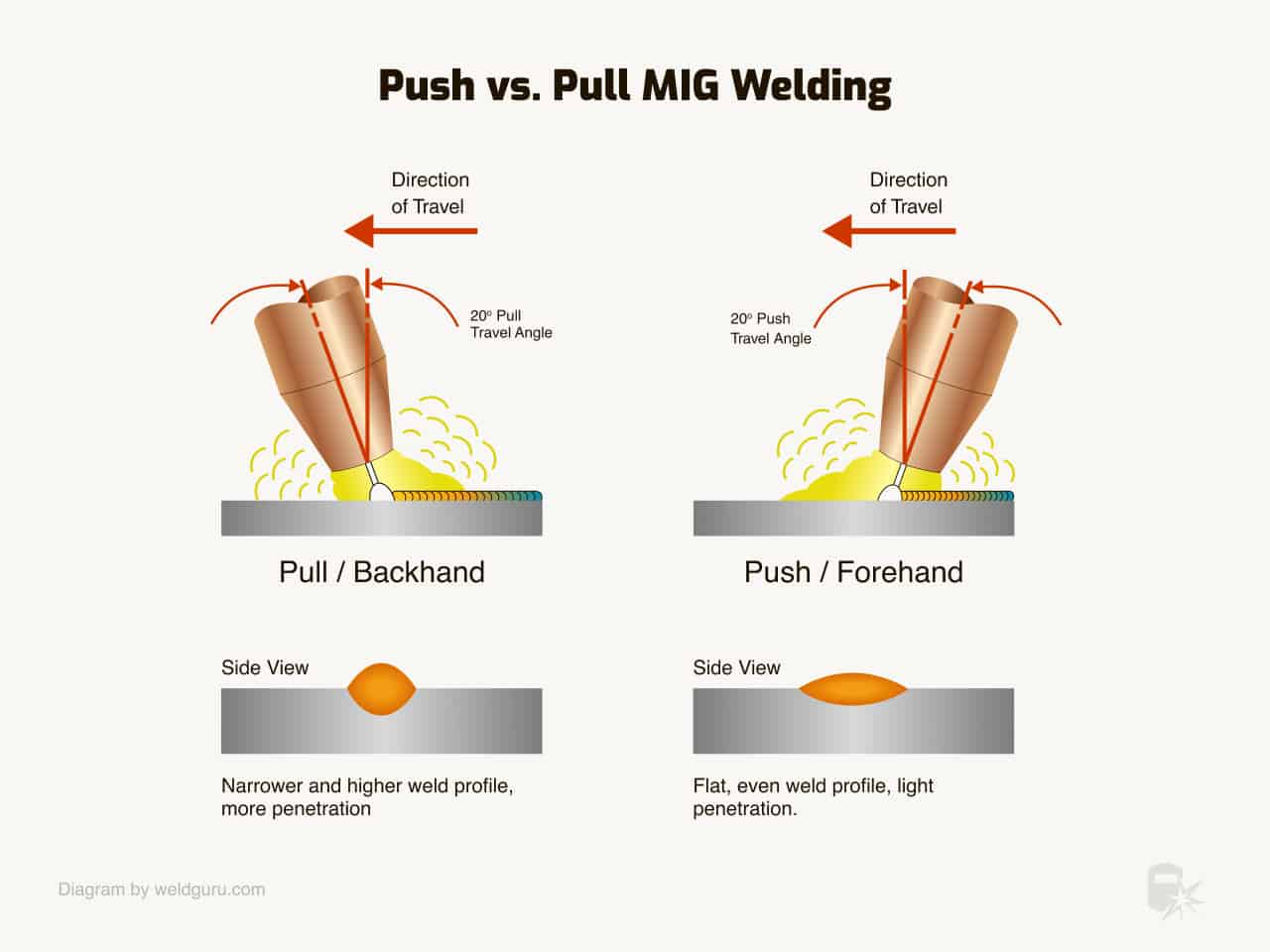
When you push your MIG welder torch, you're moving it away from the finished weld bead. It's a bit like pushing a broom ahead of you. The torch leads the way.
This method is often said to give you a wider, flatter weld. The shielding gas flows ahead of the molten puddle, pushing impurities away. It feels very controlled and steady.
Many beginners find pushing a comfortable starting point. It allows a good view of the joint you are about to create. You can really see where you are going.
"Pushing forward, creating new paths in metal."
It creates a very clean-looking weld. The heat is less concentrated, spreading out nicely. This can be great for thinner metals where you don’t want too much heat building up.
The experience feels smooth and deliberate. You guide the machine into its work. It's like watching a tiny, fiery bulldozer clearing a path.
The Art of the Pull Technique
Now, let's talk about the pull technique. Here, you drag the torch behind the growing weld bead. Imagine pulling a wagon behind you. The finished part follows the torch.

This method often results in a narrower, taller weld. It can create more penetration into the base metal. That means a stronger bond!
When you pull, the molten puddle of metal is exposed to the gas for a bit longer. This can sometimes create a slightly rougher, but very sturdy, surface. It has a rugged appeal.
"Pulling strength from the heart of the metal."
Many experienced welders prefer pulling for structural welds. They often say it gives them better control over the molten puddle. You are dragging the heat right into the joint.
The view is a little different, as you're looking back at the completed weld. It's like admiring your work immediately. You can see the magic happen right behind your nozzle.
Why Does It Matter? The Joy of Choice!
So, which one is "right"? That's the beauty of it – there isn't just one "right" way for every situation! It really depends on what you're trying to achieve. It adds to the hands-on fun.
Sometimes, for a nice smooth finish, you might push. Other times, for maximum strength, you might choose to pull. It's all about learning and experimenting.

This choice is part of what makes welding so engaging. It’s not just pressing a button. It's about understanding the material, the machine, and your own touch. It's truly a craft.
Think of it as adding another tool to your mental toolbox. The more techniques you know, the more versatile you become. It's a continuous journey of discovery.
Each weld you make teaches you something new. You learn what angles work best. You discover how fast you need to move. It’s a very satisfying learning curve.
The Entertainment of Experimentation
This push or pull question isn't just for serious pros. It's a fantastic part of learning for anyone! You get to try both and see the immediate results with your own eyes. It’s a mini science experiment every time!
Grab some scrap metal, put on your safety gear, and start experimenting. Lay down a bead pushing. Then lay down another one pulling. See the difference!
It’s incredibly rewarding to feel that control develop. You move the torch and watch the metal transform. It feels like you’re wielding a superpower.
The MIG welder is surprisingly user-friendly. It’s often called the "hot glue gun" of welding. This makes it perfect for curious beginners. You can jump right in.
Once you get the hang of it, you can create anything. Repair broken garden tools? Build a custom shelf? Make metal art? The possibilities are endless!
This "push or pull" debate just highlights how much subtle skill goes into welding. It’s not just brute force. It’s finesse, observation, and practice. It truly makes it special.
So, next time you see a welder at work, remember this little secret. They're not just making sparks fly. They're likely making a thoughtful decision. They are choosing to push or to pull.
Isn't that just a little bit cool? It adds a layer of depth to an already awesome skill. It's a conversation starter, a friendly challenge, and a path to better welds.
Perhaps it's time you tried holding that torch yourself. Experience the sparks, feel the heat, and decide for yourself. Will you be a pusher, or a puller? The adventure awaits!
It’s a truly satisfying journey, creating something strong and lasting with your own hands. The joy of a perfect weld bead, whether pushed or pulled, is unmatched. Give it a shot!