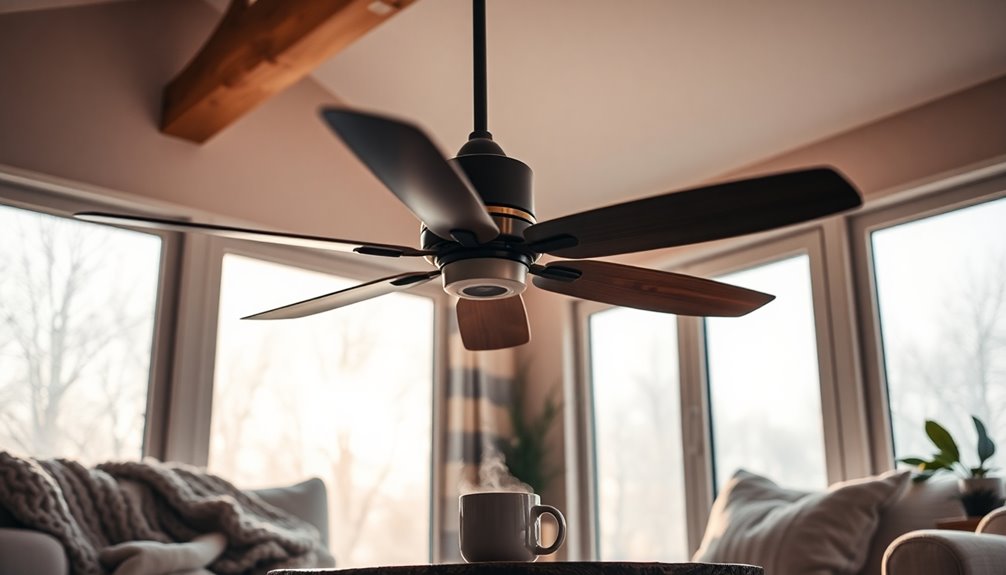
Do Ceiling Fans Help In Winter
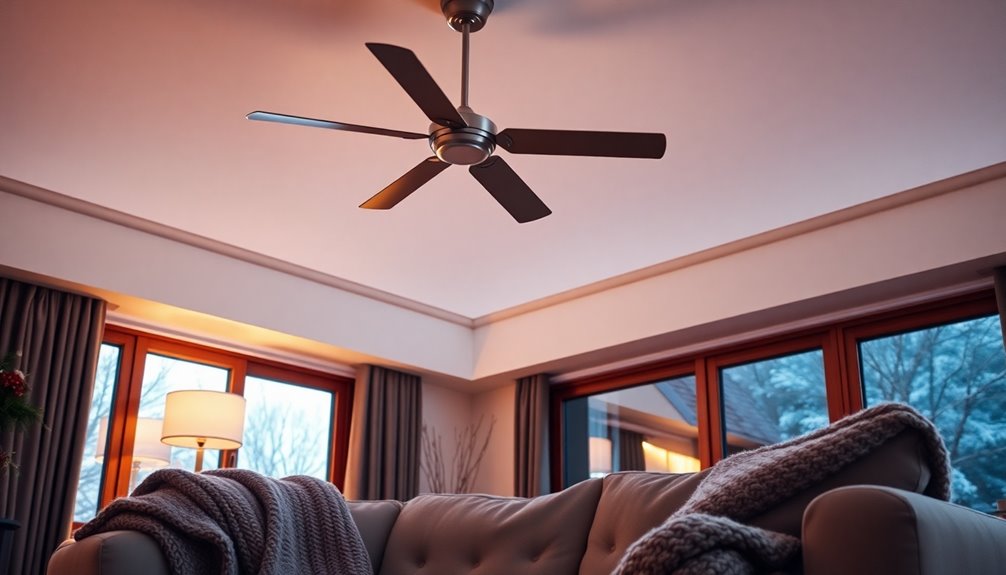
Alright, let's talk about something that often gets overlooked once the crisp air arrives: your ceiling fan. Most of us associate these trusty whirligigs with scorching summer days, a welcome breeze keeping us cool as we sip iced tea. But what if I told you your ceiling fan isn't just a fair-weather friend? It's actually a secret weapon in your winter arsenal, ready to help you battle the chill and maybe even save a few bucks on your heating bill. Mind. Blown?
It’s true! That graceful spinner above your head has a whole other superpower it unveils when the temperature drops. Forget the image of a fan making you feel colder – that’s its summer job. In winter, it's all about recirculating warmth, not creating a draft.
The Magic of Reverse Motion: A Warm Hug for Your Room
Here’s the lowdown: heat rises. It’s a fundamental principle of physics, much like why hot air balloons soar or why you're always slightly warmer on the top floor of a building. Your heating system pumps out lovely warm air, which then dutifully floats up to the ceiling, leaving the lower parts of your room, where you actually live, feeling a bit nippy. This phenomenon is called thermal stratification, and it’s basically your heated air throwing a party up near the ceiling without you.
Must Read
This is where your ceiling fan steps in like a superhero. Most modern ceiling fans come with a small switch – often on the motor housing itself – that changes the direction of the blades. For winter, you want your fan to spin clockwise. This creates an updraft, gently pulling the cool air from below upwards and pushing the trapped warm air down along the walls and into your living space. It’s not a forceful blast; it’s a subtle, constant circulation that evens out the room temperature.
Why Bother? Hello, Energy Savings!
So, you’re moving air around. Big deal, right? Huge deal! By bringing that toasty air down where you can feel it, you effectively make your room feel warmer without your heater having to work overtime. This means you can often lower your thermostat by a degree or two (some say even more!) and still feel just as comfortable, if not more so. A study by the U.S. Department of Energy suggests that using a ceiling fan in winter can help you save up to 10-15% on heating costs. Imagine what you could do with that extra cash – maybe an extra latte, a new book, or just a smug feeling of being energy-smart!

Think of it like this: instead of your heater constantly trying to warm the air from scratch, your fan is simply helping it distribute the existing warmth more efficiently. It's about working smarter, not harder.
Practical Pointers: Getting Your Fan Winter-Ready
Ready to flip the switch? Here’s a quick guide:

- Locate the Switch: Most fans have a small toggle switch on the motor housing, often near where the blades attach. You might need a step stool to reach it.
- Flip It: Make sure the fan is off before you flip the switch. You want the blades to be rotating clockwise. If you stand directly underneath, you should feel a gentle pull upwards, not a downward breeze.
- Speed Matters: Unlike summer when you might crank it to high, winter mode is best on a low speed setting. You want a gentle, continuous circulation, not a wind tunnel. Too fast and it will create a cooling draft.
- Clean Those Blades: A quick dusting before you start using it for winter is always a good idea. No one wants dust bunnies raining down!
This simple adjustment is often overlooked, but it's a fantastic example of getting more out of the appliances you already own. It's like finding a secret mode on your favorite gadget!
A Dash of Fan History & Fun Facts
Did you know the first successful electric ceiling fan was invented in 1882 by Philip Diehl? He also invented the electric motor for sewing machines – talk about a busy guy! Early fans were often ornate, a real statement piece in a room, and they quickly became a symbol of modern comfort. From the grand colonial homes in India to bustling speakeasies in Prohibition-era America, fans have always been there, quietly doing their work. Today, they come in every style imaginable, from sleek minimalist designs to rustic farmhouse chic, proving their enduring appeal.
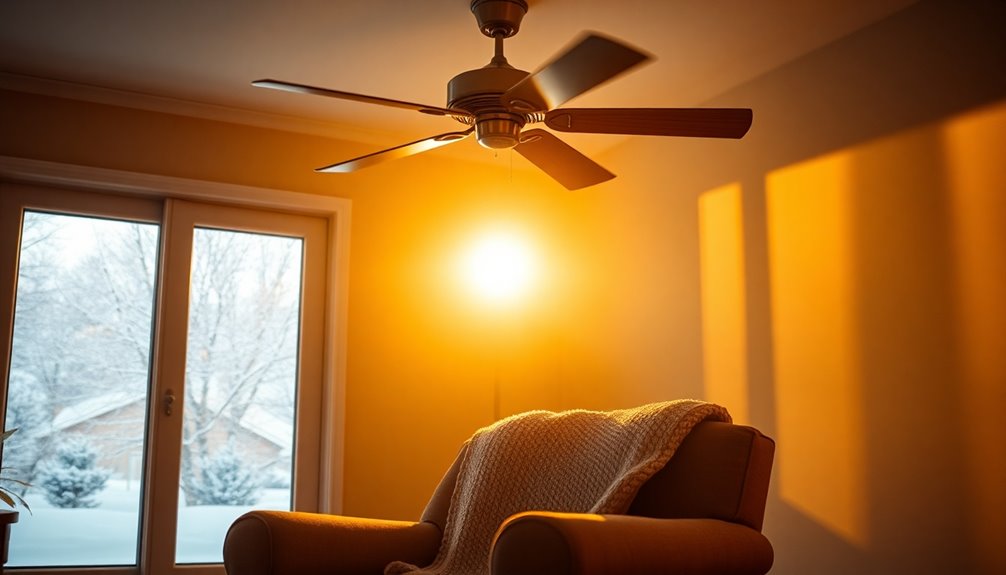
Connecting the Dots: Comfort, Coziness, and Smart Living
So, do ceiling fans help in winter? Absolutely! They're not just for cooling; they're for creating a more uniform, comfortable living environment year-round. It's a subtle change, not a dramatic blast of heat, but one that contributes significantly to that elusive feeling of coziness we all crave when the days get shorter and the nights get colder. By engaging with your home’s existing features in smarter ways, you’re not just saving energy; you’re cultivating a more mindful, comfortable, and efficient lifestyle.
Next time you're snuggled up with a warm beverage, consider giving your ceiling fan a new winter job. You might just find it becomes your new best friend for those chilly months, quietly making your home a little bit warmer, a little bit cozier, and a lot more energy-efficient. Who knew a simple fan could do so much?