
Disaster Recovery Plan Sample For Small Business

Okay, so you're a small business owner, hustling hard, making things happen. You're basically a superhero. But even superheroes need a plan for when kryptonite hits, right? That's where a Disaster Recovery Plan (DRP) comes in. Think of it as your super-secret shield against…well, disasters. And no, I'm not talking about that time you accidentally ordered 500 rubber duckies instead of 50. Though, okay, maybe that could have used a DRP too.
Seriously though, what happens if a fire breaks out? Or a flood? Or even something less dramatic, like a major power outage that lasts for days? (Cue the collective groan from everyone who relies on Wi-Fi for survival.) A DRP helps you bounce back quickly and minimize the damage. It's all about keeping your business running, even when the world throws a curveball your way.
Why You Absolutely, Positively Need a DRP
Let's be honest, nobody wants to think about bad things happening. It's much more fun to brainstorm unicorn-themed marketing campaigns. (Unless you're in the rubber ducky business, then maybe think about those 499 extras first). But neglecting disaster planning is like driving without insurance. It's fine...until it's not.
Must Read
A good DRP helps you:
- Minimize Downtime: Every minute your business is offline costs you money. A DRP helps you get back up and running fast.
- Protect Your Data: Data is the new gold, baby! Losing it can be catastrophic.
- Maintain Customer Confidence: No one wants to deal with a business that's constantly struggling. A DRP shows your customers you're prepared.
- Sleep Better at Night: Seriously, knowing you have a plan in place is a huge stress reliever.
Okay, I'm Convinced! Now What? (A Super-Simplified Sample)
Don't panic! Creating a DRP doesn't have to be a Herculean task. Here's a super simple sample you can adapt. Remember, this is just a starting point. Tailor it to your specific business needs.
![52 Effective Disaster Recovery Plan Templates [DRP] ᐅ TemplateLab](https://templatelab.com/wp-content/uploads/2017/04/Disaster-Recovery-Plan-Template-30.jpg)
1. Identify Critical Business Functions: What are the absolute essentials you need to keep running? Sales? Customer service? The coffee machine? (Okay, maybe not the coffee machine…unless you’re in the coffee business!).
2. Risk Assessment: What are the most likely disasters that could affect you? Fire? Flood? Cyberattack? Angry squirrels chewing through your cables? (Hey, it happens!). Prioritize the most likely and impactful risks.
3. Data Backup and Recovery: This is huge. How often will you back up your data? Where will you store it? (Cloud, external hard drive, secure underground vault?). Who's responsible for ensuring backups are working?
![Free Printable Disaster Recovery Plan Templates [Excel, PDF, Word]](https://www.typecalendar.com/wp-content/uploads/2023/05/disaster-recovery-plan.jpg)
4. Communication Plan: How will you communicate with employees, customers, and vendors during a disaster? Create a contact list and establish clear communication channels. (Remember, social media can be your friend here, but don't rely solely on it!).
5. IT Infrastructure Recovery: How will you restore your computer systems, servers, and network? Do you have a backup server ready to go? What’s the process for getting everything back online? Document everything clearly.
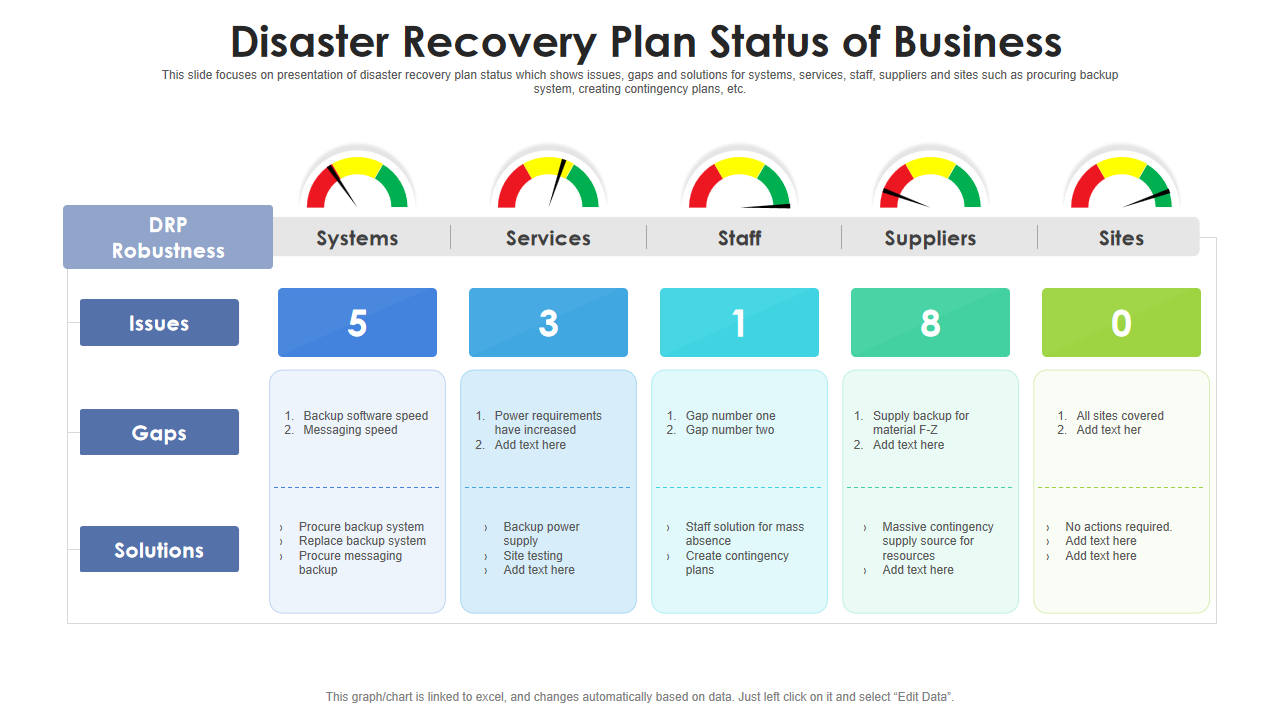
6. Alternate Work Locations: Can employees work from home? Do you have a backup office space you can use? (The local library with free Wi-Fi? Just kidding…mostly!).
7. Emergency Contact Information: A list of key personnel, their phone numbers, and their roles in the disaster recovery process. (And maybe their favorite superhero – for morale!).
8. Testing and Maintenance: This isn't a "set it and forget it" kind of thing. You need to test your plan regularly to make sure it works. (Run a fire drill, simulate a power outage). And update it as your business changes.

Don't Be a Lone Wolf – Get Help!
You don't have to do this all alone. There are tons of resources available to help you create a DRP. Talk to your IT provider, your insurance company, or even a business consultant. Don't be afraid to ask for help!
Think of building your DRP as investing in your business's future. It's a little bit of effort upfront that can save you a whole lot of heartache down the road. So, take a deep breath, grab a cup of coffee (or tea, or whatever your preferred beverage of choice is), and start planning! You’ve got this!
And hey, even if disaster strikes, remember: You're a small business owner. You're resilient. You're resourceful. You'll figure it out. And you'll probably have a pretty good story to tell afterwards (just maybe not about the rubber duckies).